
Jerusalem Walking Tour - Tower of David Museum
Community
From the point of view of Judaism, the Tower of David Museum is not just a museum, but a place where you can literally touch the history of Jerusalem and the Jewish people. Located in an ancient citadel near the Jaffa Gate of the Old City, it tells the story of over 4,000 years of Jerusalem's history.📌Why is this place important for Jews?In Jewish tradition, Jerusalem is not just a capital. This is the city chosen by the Almighty for the Temple, the place of the presence of the Shekhinah (Divine Presence) and the spiritual center of the Jewish people.📌The museum shows:the period of the First Temple;the period of the Second Temple;the destruction of Jerusalem;expulsion and return of Jews;revival of modern Israel.📌Is it really the Tower of David?There is an interesting historical nuance here. The fortress itself was not built by King David. The name arose much later due to the erroneous identification of this place with the palace of David. Today, the name "Tower of David" has become historical and symbolic."Guardian of the Holy City"This name is sometimes used in reference to the museum, as it stands guard over the memoryof Jerusalem. For centuries, the fortress guarded the entrance to the city, and today it protects its history. This place preserves traces of different eras — from biblical times to the present.📌The View of JudaismIn traditional Judaism, the value of this place lies not in the building itself, but in the fact that it resembles: King David, who made Jerusalem the capital; Beit HaMikdash (Holy Temple); the continuous connectionof the Jewish people with Jerusalem;hope for the future Redemption and rebuilding of the Temple.Therefore, for a religious Jew, visiting the Tower of David is not just an excursion. This is an opportunity to see how, millennia later, the memory of the city was preserved, which is mentioned three times a day in prayers: "And to Jerusalem, Your city, return with mercy."

Ayom Yom: 25 Sivan
Community
Today is 25 Sivan 5786Iom-yom“If there is anxiety in a man's heart, let him overcome it” ( Mishlei/ Proverbs 12:25). Our sages, blessed with their memory, give this two interpretations based on the play of words in the wordjaschchen:Take her away from her mind (switch her attention to something else).Say it to another (share it with your neighbor).Tsemakh Tzedek explained: "To the Other" is the one who is separated from him only bodily, but spiritually one with him, who truly feels his condition and sincerely empathizes with his situation. source: 📖 Lubavitcher calendar.
Figures of the Jewish world: Rabbi Mordechai Eliyahu.
Community
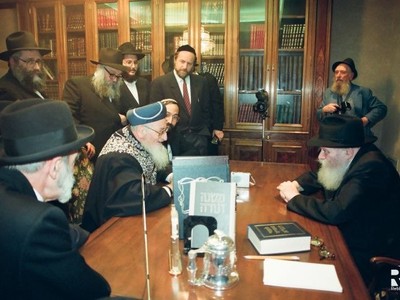
THE JERUSALEM ORPHAN WHO BECAME ISRAEL 'S CHIEF RABBIToday, 25 Sivan, the Jewish world honors the memoryof one of the most beloved and revered sages of our era — the Chief Sephardic Rabbi of Israel, an outstanding judge and cabalist Mordechai Eliyahu.He was born in the Old City of Jerusalem on 21 Adar I 5689 (1929). His childhood was extremely difficult: at the age of 11, the boy lost his father and grew up in extreme poverty. Despite this, thanks to his phenomenal perseverance, he became a real giant of the Torah, studying with prominent righteous people, including Baba Sala.After going through the Israeli War of Independence, during which he participated in the construction of the defensive borders of Jerusalem, Rabbi Eliyahu became the youngest religious judge (Dayan) in the history of the country. In 1983, he was elected to the highest office of Chief Rabbi of Israel (Rishon LeZion). He combined strict halachic precision with an incredible warmth for each person, and his prayers were credited with numerous overt miracles.Rabbi Mordechai Eliyahu passed away on 25 Sivan in 5770 (2010), leaving behind hundreds of thousands of disciples.📜 Error in the book that connected heartsAmong the many pages of his biography, a special place is occupied by his deep and sincere connection with the seventh Lubavitcher Rebbe.Their communication began with an unusual detail.Rabbi Eliyahu read a conversation from the Rebbe in which he called for gatheringkimha de pischa(assistance to the needy before the holiday) not only before Passover, but also before all the holidays of the year. Rabbi Eliyahu was surprised: why did the Rebbe present this as his own idea, if this rule had already been described by the great cabalist Arizal?Because of the Hasidim, this remark was transmitted to New York. The Rebbe's answer came quickly: he confirmed that he had referred to Arizal, but due to a technical error of the typists, the corresponding line simply did not make it into the book. It was this event that marked the beginning of their long-standing spiritual union.👑 "He is taller than an angel"Rabbi Eliyahu came to Brooklyn several times. His audience (yehidut) with the Rebbe lasted for hours and often dragged far beyond the north.Returning to Israel, he spoke enthusiastically in his lectures:The Talmud says, “If a rabbi is like an angel, the Torah is sought from his mouth.” Before I met Rebe, I thought he looked like an angel. Now I know he's taller than an angel. The angel simply stands and waits to be asked, and the Rebbe himself, with complete selflessness, spreads the Torah throughout the world.The Rabbi was impressed by the Rebbe's genius: he quoted any layers of the Talmud and the Cabal with such ease as if the entire Torah were open before his eyes just at that moment.🤝 Faithful defender of Chabad initiativesThis fascination prompted the Chief Rabbi of Israel to use all his authority to support the Rebbe and his initiatives.When the Rebbe began Rambam's daily Mishneh Torah study cycle, Rabbi Eliyahu strongly opposed critics of the idea, calling it “brilliant and heavenly.” He also ardently supported the project of writing Torah scrolls for children, emphasizing that only a true leader of a generation could unite millions of Jewish children through the purchase of one letter in a scroll.He also openly criticized politicians for not listening to the Rebbe's position on the law "Who is a Jew?", which, in his opinion, caused a serious crisis in the country in the field of hyuries.🤫 The Mystery of the Coming of the Messiah and the Testimony of His GrandsonThe main topic of their conversations has always been the approach of the final Deliverance (Geuli) The Rebbe bluntly told the Rabbi that the Messiah was already standing on the threshold.Rabbi Eliyahu took this as a call to action. After his death, it became known that he headed a secret rabbinical court, which made an official halakhic decision every year:“The Jewish people have done all that is necessary. Mashiach must come immediately.”According to the rabbi's will, copies of these documents were buried with him.His devotion to the Rebbe is best conveyed by a story recently told by his grandson, Minister Amihai Eliyahu. He recalled how as a child, his grandfather called him to himself and quietly but firmly said the words that the family keeps as a special spiritual covenant:“Both you and I are both disciples of the Rebbe.”🕯️ May the merits of this great righteous man protect the entire Jewish people!📸 In the photo: photos from the meeting of the Rebbe and Rabbi Mordechai Eliyahu on March 6, 5752.Source:Lubavitcher Calendar
Figures of the Jewish World: Yosef Rosenblatt
Community
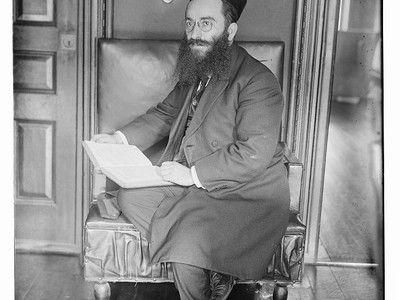
The legendary cantor who conquered the hearts of two Lubavitcher RebbeYosef (Yosele) Rosenblatt (1882–1933) was a legendary cantor (chazan) and world-famous composer, whose voice is still considered the standard of cantorial art today. However, few people know about his special spiritual connection with the Chabad movement.🌟 Meeting with the Sixth Lubavitcher RebbeIn 1930 (5690 according to the Jewish calendar), during the historic visit of the Sixth Lubavitcher Rebbe, Rebbe Rajac (Rabbi Yosef Yitzchak Schneerson), to the United States, a festive paint brand in honor of Simhat Beit ha-Shoev took place.Josele Rosenblatt was invited to this meeting as an honorary guest. In the midst of Paintbrangen, the great cantor began singing the original Chabad niguns right in front of the Rebbe.📰 From a reportage of that timeDavid-Leib Meckler, editor of the Der Morgen Magazine, described this moment as follows:“Josele sang with as deep a feeling and soul as he alone can. But it seemed that the real Chabad niguns, who came from the heart, made even his own skill pale..."📻 The special treatment of the Seventh RebbeThe Seventh Lubavitcher Rebbe, as you know, was very demanding of music and preferred only authentic Chabad melodies that carry a special holiness.However, an exception was made for Yosele Rosenblatt: from time to time, the Rebbe listened to recordings of his singing, paying tribute to the incredible sincerity and spiritual purity of his performance.🎶 We highly recommend listening to his recordings.source: 📖 Lubavitcher calendar.


Psychologist's page: Not all the blame really belongs to you.
Community
Sometimes guilt is the way another person holds control, intimacy, or power in a relationship. Manipulative wine rarely sounds straightforward.📌It comes through phrases:"after everything I've done for you","you upset me","normal kids don't behave like that",“if you loved, you would…”And then a person begins to live in constant internal conflict:between your needs and the fear of disappointing someone.This is how the habit of taking responsibility not only for oneself is formed,but also for other people's emotions, expectations, insults and dissatisfaction.📌But it is important to distinguish:guilt is not always an indicator that you have really done something bad.Sometimes it's just an indicator that you've stepped out of a role that was convenient for others.When a person begins to set boundaries, refuse, choose himself, not save everyone around him — in a system where he is used to being “comfortable”, this often causes tension.And that's when she can get her guilt back as a way to get her back into the old scenario.📌There is an important understanding in the Gestalt approach:feelings of guilt often arise on the verge of contact, where a person betrays himself for the sake of preserving the relationship — or vice versa, risks losing affection, remaining himself.Therefore, growing up in the psyche is not about never feeling guilty.📌And about the ability to check:is it really my responsibility?are these other people's feelings that they taught me to carry instead of someone else?Because where chronic guilt ends, a live meeting with oneself often begins.source: InstitutPsihoterapiiResurs
Getting to know the Jewish heritage
Community
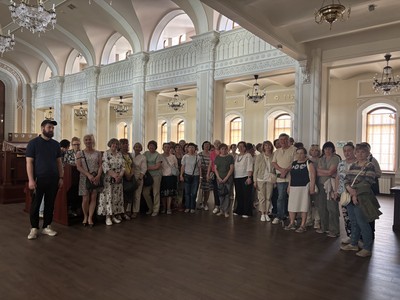
✨ Our Community is always open to those who seek to learn more about Jewish history, traditions and spiritual heritage.At the request of the Territorial Center for Social Services of Holosiivskyi District of Kyiv, we responded with pleasure and conducted a tour of the Central Synagogue for the wards of the center — people who found themselves in difficult life circumstances, low-income citizens and persons with disabilities.Guests had the opportunity to get acquainted with the history of the synagogue, learn more about Jewish traditions, see the prayer hall and ask questions that interested them.We sincerely rejoice in each such meeting, because it helps to build mutual understanding, destroy stereotypes and discover the beauty of the centuries-old Jewish heritage for everyone.We thank the Territorial Center for Social Services of Holosiivskyi District for cooperation and trust. We look forward to meeting you again! 🤝💙
Lubavitcher calendar: 26 Sivana
Community
Today is 26 Sivan 5786Iom Yom"And they went down alive into the abyss" — that is, even in the abyss (Sheol) they consider themselves alive.The blessing hidden in the words “descended alive into the abyss” is similar to the fate of the sons of Korah, who did not die: a special place was created for them, where they were able to carry out teshuvah — the return to the Almighty. After all, the power of teshuvah works only as long as a person is alive.This is where the blessing lies: that even in the deepest fall, a person remains spiritually alive and does not lose the opportunity to correct his path and return to the Almighty.Source:📖 Lubavitcher calendar
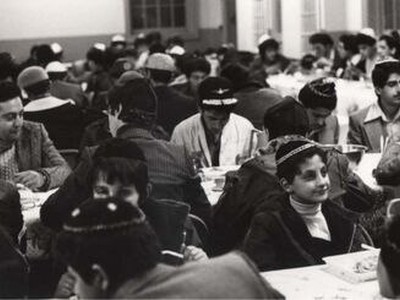
Chabad Stories: Operation "Save the Children of Iran"
Community
✈️Operation Saving Iran's Children: The Secret ExitAt the end of 1978, the flamesof the Islamic revolution flared up in Iran. For Persia's thriving Jewish community, the ground was literally burning beneath their feet. Khomeini's radical slogans left no illusions: the children had to be rescued until the borders were closed forever. It was at this critical moment that one of the most impressive and most secret rescue operations in the history of Chabad unfolded under the personal guidance of Lubavitsky Rebbe.🕵️♂️Young ambassadors and cry for helpIt all started when the young rabbis Herzl Ilulian and Sholom Ber Yeht arrived in Tehran. The situation on the streets deteriorated rapidly, protests erupted. Seeing the envoys, the Chief Rabbi of the Iranian Jews, Yehuda Azrakhian, addressed them with a desperate request:“Find a way to get the kids out of a country whose future is plunging into darkness!”Another activist, Yosef-Itzhak Reitschik, immediately joined the mission. Acting without budgets and developed infrastructure, they began urgent registration of children and young people aged 8 to 30 years.Via Rome to New YorkThe first groups still managed to fly to the United States on direct flights, but soon the crowd burned down the American consulate in Tehran. The straight path was cut off.The organizers developed a workaround: children were taken to Europe on temporary Italian visas.In Rome, refugees were met by a representative of the Rebbe — Rabbi Benjamin Gorodetsky. It was there that a real miracle happened: the American consul in Italy, deeply touched by the tragedy of children, violated strict instructions. He personally gathered hundreds of exhausted teenagers in one hall and issued them documents to enter the United States in just two hours.Crown Heights Royal ReceptionIn total, more than 1,200 children were evacuated from Iran.The colossal work on their reception in New York was undertaken by Sholember's father, the legendary Rabbi Yaakov Yehuda Yecht. To accommodate so many people, he bought new buildings, expanded classrooms at Adar HaTorah and Mahon Khan, and encouraged residents of Crown Heights to open the doors of their homes.Many Hasidic families accepted Oriental boys and girls as relatives. Rabbi Yeht plunged into astronomical debts, but the Rebbe blessed him for this holy mission and assured him that all financial obligations would be repaid.🌾"Inshallah!" and rice on the Easter tableThe Rebbe personally controlled even the smallest details of the children's life, insisting on respect for their traditions.This was especially evident during Passover. Despite the strict custom of Chabad not to eat kitniyot (legumes and rice), the Rebbe categorically ordered to cook traditional rice for Iranian children, stressing:“Don't you dare change their parents' customs.”Moreover, the Rebbe asked Rabbi Yehta to bring him eight servings of maror from the tables of Iranian pupils.On the festive night, the Rebbe personally came to the children for the Easter Seder. At the end of his speech, he asked the translator how the word “Amen” would be in Persian. He recalled the expression "Inshallah" ("if it is the will of the Almighty").As the Rebbe completed the blessing, hundreds of children's voices exclaimed joyfully:“Inshallah!”To which the Rebbe replied with a smile:"Amen" is in the eastern, Sephardic pronunciation.🎁Gifts from the Rebbe and RebbetzinOn Purim 1979, the Rebbe paid in full from his own funds for large holiday baskets of sweets (“mishloah manot”) for each child, and his wife, Rebbetzin Khaya-Mushka, personally supervised their filling.The gifts were so large that young children had to help carry them from the Rebbe's house.During the festive meal in the synagogue 770, the Rebbe put the Iranian young men in places of honor, raised a glass of "Lechaim" with them and asked them to sing.The young people sang the Sephardic anthem "Igdal Elohim Chai", and the Rebbe seized the whole hall with energetic hand movements, after which they all sang the march "Mi Mizraim Gealtanu".Today, most of the participants in that legendary exit have become successful citizens living in Los Angeles and New York. They created beautiful families, but forever kept in their hearts the memory of the amazing salvation that pulled them out of the bursting revolution just a moment before the closure of the borders.📸 In the photo: Iranian children in Crown Heights.📖 Lubavitcher calendar.
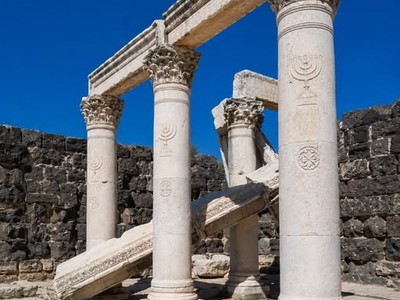
✡️ Roots through the Ages: The Story of the Kfar Nahum Synagogue
Community
☀️ These columns have been standing for more than one thousand six hundred years. The synagogue they once maintained was built on the site of an even older synagogue. And the village around them was already ancient even when this synagogue was new.The ruins of Kfar Nahum (Capernaum) on the northwest coast of the Sea of Galilee are one of the most interesting multi-layered archaeological sites in the Jewish world. The white limestone synagogue, the columns of which have been preserved to this day, dates back to approximately the IV-V centuries AD. It was built directly over the remains of an earlier synagogue of the 1st century AD. e. This means that Jewish public prayer took place in this same place during at least two major historical epochs of construction, and the Jewish presence here lasted for about two thousand years.The special uniqueness of Kfar Nahum is provided by the striking contrast that can be seen in the ruins themselves. An exquisite white limestone synagogue, decorated with carved menorahs, Jewish symbols and decorative elements of the Greco-Roman style, reflecting the cultural complexity of the Jewish life of the Roman era, rises among the black basalt walls of the village of the 1st century. This contrast is a clear indication of how the community has changed over the centuries, remaining rooted in the same place.Carved decorations on limestone columns are among the best preserved examples of Jewish religious art from the Roman period. Among them is one of the oldest known images of the menorah, carved as part of the architectural decoration. ✡️The Jewish community built, rebuilt, and continued to pray in the same place for six centuries before the settlement was finally abandoned.source: HiddenTribeStories

Today, 27 Sivan 5786. Saturday Eve — Shabbat Mevarhim.
Community
In Israel, they read a weekly chapterKorach, and in the diaspora —"Schlach"c74(97A29.4'Saturday, 28 Sivan 5786🔹5656 (1896)— engagement has been entered into (engagement agreement —Tnaim) between Rebbe Yosef-Yitzchak (Rebbe Raiats) and Nehama Dinah.🔹5701 (1941)— The seventh Lubavitcher Rebbe and his wife, Rebbetzin Khaya-Mushka Schneerson, arrived in the United States from Europe as a result of a rescue operation.🔹5707 (1947)— Rebbetzin Hana Schneerson arrived from France to New York, accompanied by her eldest son, the Rebbe, who flew to Paris to bring her.🔹5751 (1991) year— The Rebbe handed out a special collection (kuntres)"Kovets 28 Sivana — 50 years", dedicated to the fiftieth anniversary of his salvation and arrival in the United States.Iom YomWritten by:“And the Lord your God will bless you in all that you do.”. A person should only create a “vessel” for his subsistence and make every effort to ensure that this vessel is clean from any flaw, impurity or deceit, that is, that everything is strictly in accordance with the laws of the Torah. Then this vessel will become worthy of the Supreme Blessing, which will be manifested in two things: in generous abundance and in the fact that this abundance will be used for right and good deeds. ”Source:Lubavitcher calendarc74(97A29.4'