
Our dates: 14 - 15 Iyar
Community
📌14 Iyar 2449 (1311 BC) — Passover sheni (second Passover).On this day, Jews who were in a state of ritual impurity at the time of the Exodus (such as Michael and Elzaphan, who carried Yosef's body) were able to purify themselves and offer Passover sacrifices.An important lesson of this holiday is that nothing is lost and the Almighty gives us another chance to fulfill our duty.Iyar 📌14 circa 3900-4000 (2nd century) — Yorzeit (anniversary of the departure from this world) to Rabbi Meir Baal HaNes (Meir the Wonderworker).Rabbi Meir belonged to the fourth generation of Tanaim (sages - compilers of the Talmud). He was a descendant of Gers - people who accepted Judaism (in the Talmud it is said that his ancestor was the emperor Nero, the same arsonist of Rome), but Rabbi Meir was able to become one of the most outstanding sages in the history of the Jewish people. His teacher was Rabbi Akiva, but he also studied under Rabbi Ishmael ben Elisha and Rabbi Elisha ben Avua (Elisha-Acher) and was a soifer, that is, he earned his living by copying sacred texts (and he had a unique memory and could reproduce from memory any scroll of Scripture with all the peculiarities of spelling).Rabbi Meir was one of those five disciples of Rabbi Akiva to whom Rabbi Yehuda ben Bava passed on laughter. Laughter (literally "covering", "laying on of hands") is an act in which an authoritative teacher announces to a student that from now on he too has the right to independently make halachic decisions of any level of complexity and responsibility; for example, such as the awarding of fines, which it is known that not every judge can impose. Having received laughter, the student himself became an authoritative rabbi and, in turn, could transmit laughter to his future studentsThese five were the last Jews in the continuous chain of receiving the laughter from Moshe (in all subsequent generations, rabbis simply receive the required amount of knowledge, but the laughter procedure, which is required from a formal point of view to confirm the status of a rabbi, is no longer carried out (it is like defending a PhD thesis, but not getting a PhD "crust")). Attempts to revive smihut were made in the 16th century, and now the rabbis of Eretz Israel are making a second attempt to revive the tradition, but so far it is not recognized by everyone.During the persecution of Emperor Hadrian, Rabbi Meir was forced to flee from Eretz Yisrael, and upon his return he became one of the heads of the Sanhedrin, located in the city of Usha. In the Talmud, there are 335 halakhot (laws) and sayings belonging to Rabbi Meir, although they all begin with the words “others say” (as a consequence of Rabbi Meir's conflict with other sages). Rabbi Meir adorned his speeches and lessons with witty parables, and his listeners calculated that he knew more than 300 parables about foxes alone!His wife was Bruriah, daughter of Rabbi Hananiah ben Tradion, an extremely wise woman, the only woman mentioned in the Talmud. Since the 18th century, in almost every Jewish house, one could find a “Meir Baal HaNes cup”, where the hostess of the house lowered a small coin before lighting the Sabbath candles.The grave of Rabbi Meir is located in Tver, on the shore of Lake Kinneret, according to his will, so that "the waves washing the Land of Israel wash the stones of his grave"📌14 Iyar 5662 (May 21, 1902) — The second imprisonmentof the previous Lubavitcher Rabbi Yosef-Yitzhak (Rabbi Rajac).The Rebbe, who at that time was the head of the Tomhay-Tmimim yeshiva, was arrested on the basis of a denunciation alleging that there were students in the yeshiva who evaded military service for bribery.Nine days later, a police officer brought a report that there was no incriminating evidence against Rebbe.📌15 Iyar 2448 (1313 BC) — The Jews arrived at the Mara site and received the Sabbath commandment. On the same day, manna (manna from heaven) fell for the first time — the "heavenly bread" that the Jews ate all 40 years of their stay in the desert.source: chabad.odessa

Our dates: 10 Iyar
Community
10 Iyar circa 2600-2700 (891 BC) — Yorzeit (the anniversary of the departure from this world) of the high priest Eli. The Ark of the Covenant was taken prisoner by the Philistines.Eli lived in the so-called era of Judges, who led the Jewish people after the departure of Joshua bin Nun from this world, and he himself was a judge. In addition, he, a descendant of Aharon (more precisely, his son Itamar), was a cohen and for 40 years held the post of high priest.Eli's disciple was Shmuel, the prophet and future head of Israel, who anointed first Sha 'ul and then David to reign. Unfortunately, the sons of Eli, Hofni and Pinchas turned out to be unworthy people, and one day Eli received a prophecy that his sons would die in one day, and no one in his family would live to old age. This prophecy retained its power and after a thousand years — the descendants of Eli, the sages of the Talmud, Rabbi Bar Nahmani and Abaye died quite young; only Rava, the son of Rabbi Bar Nahmani, managed to live to an old age.Ali himself died on the same day as his sons. Then the Jews, accompanied by the Ark of the Covenant, went to battle with the Philistines at Aphek. During the battle, the Philistines captured the ark that was on the battlefield and killed those who accompanied it — Hofni and Pinchas. Learning about this, 98-year-old Eli fell out of his seat, broke his spine and died.The descendants of Eli (the sons of Ahituv Ahijah and Ahimelech, the sonof Ahimelech Evyatar, the son of EvyatarJonathan) continued to play an important role in the social and political life of Eretz Israel for another centuryIyar 10, 4863 (April 20, 1103) — Yorzeit (anniversary of the departure from this world) to Rabbi Yitzhak ben Yaakov Alfasi (Rif).Rabbi Yitzhak Alphas, also known as the Rif, is considered the greatest legislative authority of the 11th centuryBorn in Algeria (Kalat Hamad near Constantine), Rabbi Yitzhak studied for some time in Kairouan, and then moved to Moroccan Fez (hence his nickname Alfasi — “From Fez”). At the age of 75, because of the denunciation of enemies, he was forced to flee to Spain, where he remained until his death. Among his disciples were Rabbi Yosef ibn Migash and Rabbi Yehuda ha-Levi.Rabbi Yosef Karo, creating his famous code "Shulchan Aruch", relied on the opinions of three sages, one of whom was Rabbi Rif (the other two are Rambam (Rabbeinu Moshe ben Maimon) and Rosh (Rabbeinu Asher)).source: chabad.odessa
Chabad history: PART 💎 3. LESSONS OF THE SPLIT: How the Rebbe looked at Cabbage and how this story ended
Community
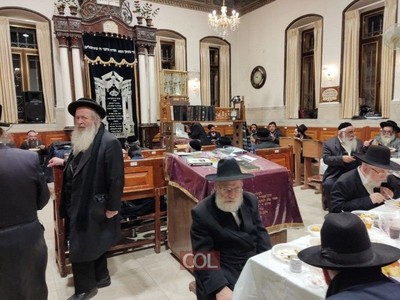
The history of Chabad knows difficult times. When the last Rebbe of the "cabbage" branch passed away in 1923, and most of his followers recognized the leadership of the Sixth Rebbe (Rabbi Yosef Yitzchak), it seemed that the point was put. But how to erase decades of controversy? How to treat the legacy of those who once chose their path?The Seventh Rebbe taught a profound lesson of nobility and unity in this matter.🤝Recognition without limitsThe Sixth Rebbe always stood guard, but he valued the family ties and the sanctity of the Schneerson family above all else. In his writings on the “Hasidim of Tsemakh Tzedek,” he listed all of his sons — including those who headed individual branches — calling each one a “Rebbe.” For him, they remained holy teachers, despite the former division.And in 1929, during the visit of the Sixth Rebbe to Eretz Yisrael, the Hasidim of the cabbage direction officially accepted his leadership — the circle closed.🔬Removal of ancient prohibitionsThe attitude of the Seventh Rebbe is particularly revealing.For a long time, Lyubavych had a "caution" (a strict warning) regarding the study of books of other branches. Even RASHAG (Rabbi Shmarjau Gorelik) admitted that he was afraid to open the book "Magen Avot", written by the Rebbe from Cabbage, until he heard from the Sixth Rebbe that it was based on Maamarim Tzemach Tzedek himself.The Seventh Rebbe explained: during the split, such restrictions were "oraat shaa" — a temporary measure. But today these books can and should be studied. The Rebbe called the texts from Cabbage "zey is full of geshmak" — "they are really tasty", emphasizing their spiritual value.📚Books that brought togetherNot only did the Rebbe allow these works to be read, he contributed to their publication. When the manuscripts of the last Rebbe from Bobruisk were handed over to him, he ordered them to be printed, and so the book Chemin le Maor appeared. For many, this was a sign of final reconciliation. Moreover, in the collections of Yagdil Torah, the Rebbe included the words of the leaders of other branches in the section "Our Rebbe", recognizing their status in the history of the dynasty.🌊The river has returned to its courseAlmost a century of parallel worlds: Cabbage, Lyady, Nizhyn. It was not enmity in its pure form — the Hasidim were friends, created families, communicated. But it was the loss of a single center. The story of Cabbage is a lesson about how the human factor and ambitions of the environment can lead to a crack in unity.Today, Chabad is a powerful monolith. There are no more “separate” synagogues of different branches in Jerusalem or New York. The river returned to its course, because the love of truth and fidelity to the common source turned out to be stronger than the previous disagreements.💡What is the message for us?The history of Chabad-Kapust teaches how important it is to preserve unity and listen to unified spiritual guidance. The split was not because of hatred, but because personal sympathy and pressure from the outside had prevailed over the Rebbe's word.The great power of the return that the Rebbe showed us is the ability to appreciate the entire holy inheritance, cleansing it of its former “politics.” As the fourth Rebbe (Maarash) said: “Lehathila ariber” — from the beginning to go above the obstacles, overcoming them on the way to unity.🕯️ May the memoryof all the righteous of the Schneerson dynasty be a blessing to all the people!📸 In the photo: The Baal HaTanya Synagogue in Jerusalem, which belonged to the Cabbage Hasidim, and now the Hasidim of Chabad-Lubavitch pray in it.📖 Lubavitcher calendar

Ayom Yom: 10 Iyar
Community
Today is 10 Iyar 5786 — the 25th day of Omer📌 5530 (1770) was born Rebetzin Rachel Scheines, daughter of the Alter Rebbe.It is customary to soak a piece of bread ("ha-mochi") in salt three times, and not sprinkle the bread with salt.On the second day of the holiday of Shavuot in 5621 (1861), during a meal, Tsemakh Zedek said:On the second day of Shavuot 5555 (1795), during a meal, my holy grandfather (Alter Rebbe) said:On the second day of Shavuot 5528 (1768), during a meal, my teacher and mentor (Magid from Mezherich) said:"And count for yourself" (u-sfartem lachem) — the wordsphartem(count) comes from a root meaning "radiance" (sapphire) and "light". “And count for yourself” means that you need to make your “yourself” (lachem) shine. ”After that, my holy grandfather (Alter Rebbe) leaned on his holy hands and sang Nigun in four parts (Dalet Bavot) with great self-immersion (two-sided). Then he raised his holy head and said in a questioning tone:— And how do they cleanse (make radiant) this "themselves"?And immediately answered in the affirmative:— “Seven full weeks” (sheva shabbatot thmimot) — by clarifying and purifying the seven emotional qualities (midot) so that each quality includes all seven. And then these seven qualities themselves will become like "seven Saturdays", because the Sabbath does not need purification.📖 Lubavitcher calendar
Chabad History: The 📜 Cherkasy Dynasty
Community
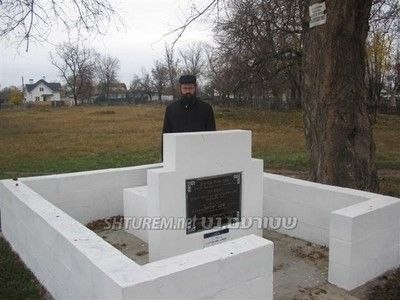
The Cherkasy dynasty occupies a unique place in the history of the Hasidic movement, being a living link between the two largest schools of thought in Eastern Europe — the intellectual depth of Chabad and the "regal" authority of the Chernobyl branch.The founder of this line was Rabbi Yaakov Israel Tversky from Cherkasy, son of the legendary Rebbe Motl from Chernobyl. His status in the Jewish world was cemented by his marriage to Dvora Leya, the daughter of Rabbi Dov-Ber (the Mitler Rebbe), the second head of the Chabad movement. This union was the embodiment of the agreement between their great grandfathers - the Alter Rebbe and Rabbi Nahum of Chornobyl, who sought to combine rational contemplation with popular spiritual authority in their descendants. Most of the leaders of this dynasty were direct descendants of both great houses, which created a unique amalgamation of traditions preserved for centuries.Tomashpil 🏰 branch: the legacy of the Schneersons in the Chernobyl styleOne of the most prominent lines of this union was the Tomashpil branch. Its founder, Rabbi Mordechai Dov of Tver, was the son of Rabbi Menachem Nahum and the grandson of the Mitler Rebbe. The historical uniqueness of this branch lies in the fact that its leaders were direct descendants of the founder of Chabad on the male line ("ben ahar ben") and bore the surname Shneerson-Tverskyi, although they headed the Hasidic court according to Chernobyl customs. After the Holocaust, the last Rebbe of this line, Rabbi Moshe Chaim Yeshua, moved his activities to New York, in the Crown Heights area. He maintained a close relationship with the Seventh Lubavitch Rebbe, who was personally present at his funeral. As a mark of special respect, Rabbi Moshe Chaim Yeshua was buried in Queens, directly behind the "Oel," the tomb of the Sixth Lubavitcher Rebbe, symbolizing the inextricable connection between these two worlds.Hornostaipil 🦌 branch: from Ukraine to the shores of AmericaThe central place in the heritage of Cherkasy was occupied by the Gornostaypil branch, which was headed by Rabbi Yaakov Israel's grandson, Rabbi Mordechai Dov. Orphaned at an early age, he was brought up in his grandfather's house in Cherkasy and at his request changed his surname to Tversky. Rabbi Mordechai Dov became a prominent halachic authority, and his works Emek Sheela and Peleg Elohim gained recognition throughout the Jewish world. In the 20th century, his successors went through ordeals traveling through Europe until Rabbi Yehuda Leib Ben-Zion managed to emigrate to the United States just before the Nazi invasion of Belgium. His son, Rabbi Yaakov Yisrael of Milwaukee, continued the dynasty in America and maintained a deep spiritual intimacy with the Rebbe Rayatz. This family also gave the world rabbi Dr. Avraham Yeshua Heshel of Tver, who became a famous psychiatrist and author of books that combined science with Hasidic wisdom.✡️ Modern revival and preservation of traditionsToday, the legacy of the Cherkasy and Gornostaypil dynasties continues to develop in Israel and the United States. The current spiritual center of the community in Jerusalem is managed by Rabbi Shalom Shahna Friedman, son-in-law of the previous Rebbe. The spiritual image of this school continues to demonstrate the harmony between different ways of serving the Most High. A visual symbol of this persistence is the weekly lesson from the main book of Chabad - "Tania", which the current Rebbe from Gornostaypol regularly conducts in his beit midrash. This is a confirmation that the testament of the founders to combine the "mind" of Chabad and the "heart" of Chernobyl remains a living reality that unites followers of different currents around their common historical roots.📖 Lubavitcher calendar: (https://t.me/+8KbDy9dQVqAxZWE8)

Invites you to a lecture-discussion: "Golda Meir: Strong woman = wise leader?"
Community
Fiddler on the Roof Gallery invites you to a lecture-discussion: "Golda Meir: Strong Woman = Wise Leader?" The event is dedicated to the birthday of Golda Meir, a woman who was born in Kyiv and became one of the most influential figures in world politics of the 20th century. In the format of a lecture-discussion, we will try to look at her not as a symbol, but as a person: with character, habits, tough decisions and doubts. In particular, at times when the price of the option was at its maximum. Let's talk about what really stands behind strength: whether it's inner clarity, or the ability to withstand pressure, or the willingness to be alone with your decisions. And is there a balance between responsibility for the country and personal life? Is it always a no-compromise choice? Let's discuss together: is a strong woman really a wise leader. Do strength and wisdom sometimes diverge, and if so, where exactly is that line drawn. Lecturers Eliezer Feldman, founder of the Fiddler on the Roof gallery, artist, founder of the Institute for the Development of Civil Society named after Goldie Meir

Invites to the opening of the exhibition "Golda Meir. Roots from Ukraine"
Community
The Fiddler on the Roof Gallery invites you to the opening of the exhibition "Golda Meir. Roots from Ukraine"The exhibition is dedicated to the birthday of Golda Meir — an outstanding woman whose life and path are inextricably linked with the Ukrainian land.📅 Opening: April 30 at 18.00🖼 The exhibition will last until May 26A special atmosphere awaits you, an art that reveals history, strength and heritage, as well as a new look at the figure of Golda Meir through Ukrainian roots.
10 Iyar Twenty-fifth Day of Omer
Community
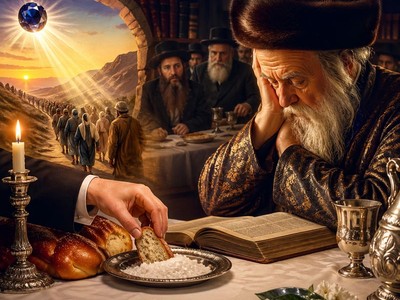
10 IyaraTwenty-fifth day of OmerThey follow the custom of soaking a piece of bread in salt three times, rather than sprinkling the bread with salt.Bread and saltDuring a meal on the second day of Shavuot in 5621 (1861), Tsemakh-Tzedek told the following story: on the second day of Shavuot 5555 (1795), Alter Rebbe said at a meal:"On the second day of Shavuot 5528 (1768), Magid from Mezhirich said during a meal that "...and count yourself..." — you need to make yourself shine like a sapphire."Alter RebeAnd Alter Rebbe stuck his head on his holy hands and sang "nigga of the four gates." Then he raised his holy head and asked:“What will make you shine?”And he immediately replied:“'Seven Saturdays without a defect' — the purification of the seven emotional qualities of the soul, so that each of them contains all seven qualities, and so that they become 'seven full weeks' — like Saturdays that do not need purification.”Notes:.Let yourself shine like a sapphire. Here there is a game of words: "countdown" and "sapphire" — one-rooted words.Passover is a revelation from above. The Almighty brings us out of Egypt, freeing us from our limits and limitations, but on His terms. It is said that the Almighty took only a moment to bring the Jews out of Egypt, but forty years to bring Egypt out of the Jews.Liberating our identity from our personal Egypt is part of the ongoing task expressed in the above Magisterium message…source: urokitorijew

Miracle #21 — A Personal Conversation with G-d Who Works Miracles
Community
When I was 22 years old, I made the decision to only look for a serious relationship. Only a Jewish girl — to create a Jewish family.Honestly? At the time, I still didn't fully understand what it meant in practice. But there was a clear feeling inside: I have Jewish roots — and I want this chain not to be interrupted.As the Talmud says, what did not begin with us is not for us to interrupt.I was sure that everything would happen quickly. I started to get to know each other, correspond, meet...But again and again - not that.There wasn't the same spark. That feeling: "this is my person."And it was then that the first important change took place in my life. 📌THE MIRACLE OF MEETINGI read Rabbi Shalom Arush's book on personal prayer - itbodedut.The main idea that struck me:you must speak to G-d in your own words.As with the Father. As with a friend. As with the One who is next to you every second. And he wrote:if you talk to G-d for 10 minutes a day, for two weeks in a row, you will see miracles.I decided to give it a try.Right behind the stopwatch.Every day - 10 minutes.The structure was as follows:- 2.5 minutes - thanks. Even for "bad".(Because, as he explains, everything is for good, even if we don't understand it.)- 2.5 minutes - a request for forgiveness.For thoughts, words, actions.- 2.5 minutes - remorse.— And the last 2.5 minutes — a request. The most important thing.I was just saying:“G-d, please send me my wife.My other half.I want to create a family, live correctly, please You."Two weeks have passed.And then... a miracle happened.I met the girl who became my wife.I went to her. We started talking.And it was completely different.There was a sense of unity.There was the same "chemistry".There was a feeling that everything was not accidental. 📌WONDERFUL SOLUTIONBut even then I had doubts.This is a lifelong choice.Responsibility. Fear. Uncertainty.I decided to go to her again - and this time to think about the proposal.I stopped by to buy a ring on the way...And all the time he continued to talk to G-d:"If it's her, give me a sign.It's hard for me without him."I walked to the train repeating this over and over.Got into the car.Found my compartment.I opened the door...And froze.My cousin was sitting in front of me.The same one with whom we are close, but these weeks we did not communicate at all.And so — from all carriages, from all trains, from all possible coincidences —we find ourselves in the same compartment.And this very moment was the answer for me.I understood: this is not an accident.This is a sign.This is Ashgaha Pratit, personal divine providence.At that moment, my doubts disappeared.I knew exactly why I was going. 📌CONCLUSIONWhen a person begins to speak sincerely to G-d -she begins to see answers.Sometimes not immediately.And sometimes — just like that, instantly.Through people. Through events. Because of "coincidences" that no longer seem random. 📌TRY10 minutes a day.14 days in a row. ❗Just speak. In his own words.And see what will change. source: urokitorijew

Iyom-yom: 11 Iyar
Community
Today — 11 Iyar 5786.26th day of OmerIn prayer they say:“…wehayn (read with a voweltiireand not …………...patah) schnee hesuvym" — "If two passages..."¹“…hisisOni (read with a vowelkometsand not …………...patah) my lord of war " — "You saved my life..."²"ZECHER" (read with a vowelsegoland not …………...tiire) rav tuvkho" — "Memories of Your great mercy..."³"Mashlikh kArhei (read with a vowelpatahand not …………...komets) chefitim" — "He dumps pieces of ice on the ground..."It should also be pronounced:“And His kingdom and His faithfulness endure forever” after the Shema Isroel prayer.📖 Lubavitcher calendar
Malachi: The Story of Those Who Left Chabad to Create Their Own World
Community
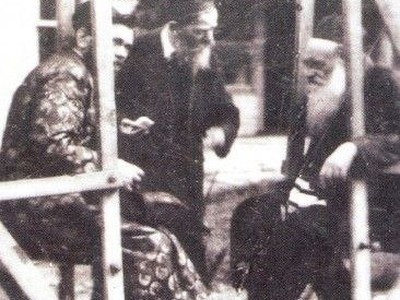
At the beginning of the twentieth century, a quiet but deep split occurred in the history of Lubavitcher Hasidism, which gave rise to one of the most closed and mysterious communities in New York — Malakhim. It is important to understand that this is not just one of the directions within Chabad, but a group that consciously left the movement, completely breaking ties with its subsequent leadership in order to preserve the way of life and thinking that they considered the only correct one.⚡️Point of No Return: The Ideological DivideIt all began with the figure of Rabbi Avraham Dov-Ber Levin, a prominent Torah scholar and Hasid of the Fifth Rebbe, the Rashab. The conflict came to a head in 1902, when the young Yosef Yitzchak (the future Sixth Rebbe) began to actively introduce new orders in the Tomhei Tmimim yeshiva. Rav Levin, being a radical conservative, did not accept this way and management methods. His position was rigid: he declared that the Third Rebbe, Tzemach Tzedek, was the last true head of Chabad, and refused to recognize the authority of all subsequent leaders. After an open confrontation, he left Lubavitch and moved to the United States.🧥The image of "Angel" in the stone jungleIn America at the time, Rav Levin looked like a visitor from another dimension. His majestic appearance, long beard and the strictest observance of traditions against the background of secular New York earned him the nickname "Der Malach" - the Angel. So his disciples and followers began to be called "Malachim". Despite their Chabad roots, they created a completely different visual and ideological code. Unlike today's Chabadniks in short jackets, the "Malachim" wear long Hasidic frocks, large woolen tzitzits, and emphatically long peysas. Even in their studies, they maintain their isolation — in principle, they use only rare editions of the Talmud from the Slovut and Zhytomyr printers, completely ignoring the standard Vilna editions.🚫Radicalism and loyalty to traditionPolitically, this group took a position that today is considered more radical than that of the well-known Satmar anti-Zionists. They live in almost complete isolation, do not recognize the state structures of Israel and remain committed to their way. At the same time, history also preserved unexpected moments of their intersection with the Lubavitches. According to legend, one of the Malachim was so eager to hear the Seventh Rebbe speak that he climbed onto the roof of the sukkah. The boards broke under his weight, and he fell straight onto the festive table. The Rebbe, with a fine sense of humor and insight, only smiled and remarked in Yiddish, "Look, an angel (malach) has fallen from heaven." Later, this man left his group and returned to Chabad.📍The legacy of Malachim todayToday, the Malachim community continues to exist in Williamsburg and Mons. This is a living monument to the great ideological controversy of the past — people who have preserved the intellectual depth of Chabad's teachings, but embodied it in the form of the strictest asceticism and complete separation from the movement from which they once emerged. For them, time seems to have stopped in the middle of the nineteenth century, and they carry this torch through the decades, remaining one of the most resilient communities in the Jewish world.📸 In the photo: Rabbi Chaim Abraham Dov-Ber Levine (sitting on the right) with students.📖 Lubavitcher calendar

Ayom Yom: 12 Iyar
Community
Today is 12 Iyar 5786.27th day of OmerIn prayer they say:"...monu maamor" (read through the vowel "komets") — "...listen to our plea...","...keime... neemar" (read through the vowel "patah") — "as on the day of which it is said..."."Zohur (read through the vowel " malepum ") ki ophor anohnu" — "...remembers that we are gunpowder.""...unetAltAnu" (read through the vowels "patach", "shvo", "patach") — "...and the wind picked me up"."Weavsho lei sosur" — instead of "...al tosir" — "...and let not Your love leave us forever."📖 Lubavitcher calendar