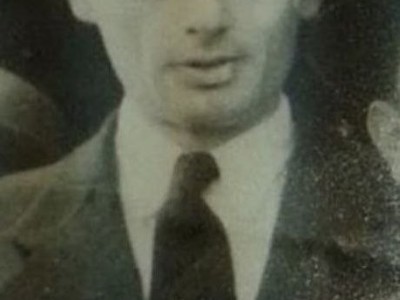
Chabad history: Rabbi Yisrael Arie-Leib (Label) — Rebbe's brother
Community
🧠 Childhood of a child prodigyLeibl was born in 1906 in Mykolaiv. From early childhood, he impressed those around him with his phenomenal abilities. Already at the age of three, he knew whole chapters of the Mishnah by heart, being an absolute autodidact with a brilliant photographic memory. His mother, Rebbetzin Hana, often said that she had to literally pull him away from his books by pulling his sleeve to force him to eat. His father, Reb Levi-Yitzchak, said of him: "He has the head of Tsemach-Tzedek" (the Third Lubavitch Rebbe, who was famous for his outstanding intellect).There was a unique division of thinking styles in the Schneerson family. Contemporaries recalled that when the three of them communicated, the father spoke the language of mysticism and the Cabal, the Rebbe spoke the language of Hasidism, and the Label analyzed everything through the prism of philosophical research.🕵️♂️ Escape, someone else's name and the self-sacrifice of the familyIn 1930, when a ring of Soviet intelligence services began to squeeze around the family of Rabbi Levi-Itzhak, Label was forced to flee. He crossed the border according to the documents of Mark (Mordechai) Gurariy, a Hasidic young man who had recently drowned in the river. From then until the end of his life, Israel Arie-Leib lived under this name.In Berlin, he fell seriously ill with typhus. The Rebbe and Rebbetzin Khaya-Mushka gave him their bed in a tiny apartment and nursed him until he fully recovered. Later, when Leibl needed documents to repatriate to Eretz Yisrael while in Paris, Rebetzin Chaya-Mushka showed incredible self-sacrifice. She personally went to Nazi Germany, risking her life to obtain for him the necessary certificates from the state institutions of the Third Reich.🌴 Living in Tel Aviv: modesty and insightArriving in Eretz Israel in 1935, he settled in Tel Aviv. For most, he was a humble librarian and the owner of a small shop on Nahalat Benyamin Street. Only a few knew who he really was.When the Rebbe published his first work, the Ayom Yom calendar, in 1943, the Label received one copy. After reading it, he enthusiastically said that he had always known about the light mind of his brother, but did not even know about such a scale, and that it was a pity that the world did not yet know what was hidden behind the pages of this book. It was Label who, realizing the scale of his brother's personality, asked the influential Hasidim to do everything possible so that after the departure of Rebbe Raiats, it was our Rebbe who would become the next Rebbe.⚛️ Secret Mission: Nuclear ProjectThe most intriguing part of Israel Arie-Leib's biography begins in the late 1940s. According to testimony, he became the first research scientist at the Weizmann Institute in Rehovot. He had no formal higher education in physics, but his ingenious mind was thinking in formulas.In 1950, with the support of future Israeli President Zalman Shazar and Prime Minister David Ben-Gurion, he was sent to Liverpool. Officially — to complete studies at the university. Unofficially, he wrote a unique article on nuclear physics, which he sent to the British Atomic Energy Commission. It was only on the basis of this article that he was invited to join their work. Historians believe that the Label was part of a top-secret group that laid the foundation for Israel's future nuclear program.💔 Sudden withdrawal and 12 years of secrecyHis life ended tragically early. In 1952, at the age of 43, he died in Liverpool of a heart attack. Shortly before his death, he spoke for two hours with the chief rabbi of Liverpool, and the rabbi agreed to give the details of this conversation only personally to the Lubavitcher Rebbe, which indirectly confirms the secrecy of his scientific activities.Label's death was a heavy blow to the Rebbe. But he was even more worried about his mother, Rebbetzin Khan, who had already lost her husband in exile in Kazakhstan and her youngest son, Dov-Ber, killed by the Nazis. The Rebbe made an unprecedented decision: he hid the death of her son from the mother. For 12 years, until the death of Rebbetzin Hana, the Rebbe regularly wrote letters to her on behalf of the Label and sent them through Europe so that they would bear the appropriate postmarks.InheritanceAfter Label's death, Rebbe handed over his notebooks on higher mathematics to the American professor Rosenblum for publication. The Rebbe noted an interesting detail: his brother liked to derive all the formulas independently, and only then looked for confirmation in the scientific literature.The body of Israel Arie-Leib, on the personal and very detailed orders of the Rebbe, was transported to Israel and buried in the ancient cemetery at Safed. Today, thousands of Hasidim come to his grave on the anniversary, remembering a man who combined Hasidic depth and outstanding scientific genius.source: 📖 Lubavitsky Calendar (https://t.me/+8KbDy9dQVqAxZWE8)


Ayom-yom: 23 Iyara
Community
The 38th day of Omer's countdown.“The fall, God forbid, begins with a lack of ministry in prayer. Everything becomes dry and cold. The commandments that a person fulfills " out of habit"are even worse. Everything is done in haste. Studying the Torah, a person loses the feeling of pleasure. The air seems to get rough. And there is no need to say — such a person is not at all able to positively influence others."

Ayom-yom: 24 Iyara
Community
39th day of Omer's countdown.“It is said, 'If you follow My ordinances.' ¹ Our sages explain the word "im" ("if") as an expression of request² — "Oh, if only you had followed My ordinances!"This supplication of the Almighty to Israel — to preserve the Torah — essentially helps a person and gives him the strength to show firmness in choosing the good. Moreover, "according to My decrees you will go" means that the soul becomes "walking", such that it is exalted.With the coming of the Messiah, all the greatness of simplicity and sincerity in the service of ordinary people will be revealed — those who pray and read the Psalms with pure, relaxed devotion.”source: chabad.org

Ayom-yom: 25 Iyara
Community
The 40th day of Omer's countdown.Of the Maamarim Alter Rebbe delivered in Liozno in 5555 (1795):“It is said, 'The reward of the commandment is the commandment.' ¹ The commandment itself is essentially a reward. This essence will be revealed in the Coming Times. This is the“inevitable inheritance of the commandment”, but “ the fruits of his man reap in this world also ”,² — in accordance with the content of each commandment; and when a man needs something, he receives it.”source: chabad.org

Ayom-yom: 26 Iyara
Community
The 41st day of Omer's countdown.The commandments "Instruct your neighbor"¹ precede the words "Do not hate your brother" — and this is a prerequisite for exhortation. The Torah continues: "...and you will not bear sin for him", because if the admonition did not bring results, you are certainly responsible for this, because your words did not come from the heart.


Ayom-yom: 28 Iyara
Community
The 43rd day of Omer's countdown."In the thirty-day period of mourning after the death of Alter Rebbe, in one of the night visions in which he appeared to Tsemakh Tzedek, he said to him the maamar"Al shlosha dvirim aolam omed".After completing the maamar, Alter Rebe said, “If a man gives birth to a family first, she (the woman) gives birth to a girl,” this is about your mother; “if a woman gives birth to a family first, she gives birth to a boy,” this is about you. ”chabad.org

Punishment and redemption
Community
A violator of the law who performed one of the prohibited works on Shabbat is liable under Torah law. Thus, the deliberate performance of work prohibited on Shabbat is punishable by death. And if a person violated the prohibition in the eyes of two or more witnesses who warned him that this act is prohibited by the Torah and punishable by death, then a court authorized to consider such cases may pronounce a sentence of stoning (skila) (Rambam, "Shabbat", 1:1).The Torah says, “Let the seventh day be holy to you, the day of rest dedicated to G-d-everyone who does work on that day will be put to death” (Shemot 35:2). And in another place, where it is about the violator of the laws of Shabbat, it is specified: "This person will be put to death — let the whole community beat him with stones outside the camp" (Bemidbar, 15:35).Cases in which the death penalty could be imposed were considered only during the Temple period, when the Sanhedrin acted. To consider such a case, a court of at least twenty-three wise men is required (Sanedryn, 2a). Before sentencing, the court conducts an investigation, which includes the examination of witnesses, as well as other necessary investigative actions. At the slightest contradiction in the testimony of witnesses, the defendant was acquitted, so death sentences were rarely pronounced (see Makot, 7a).In a period when there is no Temple and no court that can pronounce the death penalty, punishment is carried out from Heaven. The Talmud states that someone who is stoned for his crime dies in similar circumstances — for example, falls from a roof and breaks or becomes a victim of a predator, etc. (Ketubah, 30a-b).If an intentional violation of the Torah prohibition was committed without witnesses or in front of one witness (or even if there were two witnesses who did not give a warning), then even during the Temple period, the death sentence is not pronounced. But such a transgressor of the Torah law is punished “out of the hands of Heaven” — this punishment is called a carriage (“cutting off the soul”), as it is said: “The soul of everyone who works (on Shabbat) will be cut off from his people” (Shemot, 31:14; Rambam, “Shabbat”, 1:1).Punishment by "cutting off" can manifest itself in the fact that a person will remain childless. And if she has children, they, God forbid, die at an early age (Yevamot, 55a; Rashi, Vaikra, 20:20). Caret also shortens a person's life, and he does not live to be sixty years old (see Moed Katan, 28a). At the same time, the soul of a person is “cut off” from life in the Future World (Rambam, Teshuva, 8:5; Mishna Brura, 257:49) — the connection with higher spiritual levels is interrupted.If a person performed one of the forbidden works on Shabbat unintentionally — for example, did not know that such work was forbidden, or did not know that Shabbat had already come — he is obliged to bring a hatat (that is, to cleanse his sin by sacrifice) (Rambam, Shgagot, 1:1).In a period when there is no Temple where atoning sacrifices are made, and there is no court that can impose the death penalty, the only punishment for intentionally performing work prohibited by the Torah is a carriage. And for the one who performed the forbidden work unintentionally, the only way of redemption is teshuva (repentance).The basis of teshuvah is the firm decision to “forsake one's sin… and do not do so again” (Rambam, “Teshuvah”, 2:2). Full and sincere teshuvah will atone for any guilt — including those punishable by a carriage (ibid., 1:3). And he who has made teshuvah must commit himself to a deeper study of the laws of Shabbat, so as not to stumble any longer and not to violate them — then his redemption will be complete and perfect (Maor ha-Shabbat 1, 1:13/30–31/).Author of the material: Rav Oleksandr Katz


Mazal tov!
Community
April gave us another warm reason to get together — to congratulate our dear birthday people.Today we pay special tribute to the jubilee — Boyakivska Svitlana Volodymyrivna on the occasion of her 80th birthday.It is the age of wisdom, dignity, and light that she generously gives to the people around her.Let there be many good days ahead, warm meetings and joyful moments in the circle of loved ones.Mazal tov!

🥖 Passover Sheni — the power of "second chance" and the energy of correction
Community
Today we celebrate one of the most amazing days of the Jewish calendar - Pesach Sheni (Second Passover), which falls on the 14th of Iyar. If the regular Passover in the month of Nisan is a celebration of our birth as a people, Pesach Sheni is a celebration of our ability to change, to grow beyond ourselves, and to never give up. Its history is unique in that it did not begin with an initiative from above, but thanks to the "initiative from below" - ordinary people. A group of Jews who were ritually impure by participating in the burial did not accept that they were missing the commandment. They came to Moshe with a brave and holy question: "Why should we be worse than others?". In response to this sincere cry of the soul, the Almighty established a new day, showing that for Him there is nothing more precious than our desire to be with Him.Nothing is impossible. This day is based on a fundamental principle that the Sixth Lubavitcher Rebbe (Rajac) expressed in a famous phrase:there is nothing irretrievably lost in this world.This message is addressed to every person, no matter what situation they are in. Passover Sheni reminds us that even if you were “unclean” (committed a serious offense), even if you were “on a distant road” (deliberately distanced from the Almighty), and even if it happened “lachem” — that is, by your own will and with full awareness — you still have the opportunity to fix everything. This day teaches that the past is not a final verdict, and sincere repentance and the pursuit of good can rewrite the history of life.🥨 Practical customsThe main and most famous custom of this day is the consumption of matzah. In the Hasidic tradition, especially in Chabad, it is customary to eat matzo during the daytime meal. Why do we eat matzo today? This is a living memory of the sacrifice that was offered on the Second Passover in the Jerusalem Temple. Although the meat of the sacrifice was eaten at night together with the matzah, the Rebbe explained that the essence of the holiday and the offering of the sacrifice itself began during the day, so we celebrate it precisely during daylight hours. It is important to remember: unlike the usual Pesach, today there is no prohibition on the possession of chametz, but the matzah on the table reminds us that even in the mundane there is always a place for the "bread of faith" and spiritual purity.🌈 Joy and Removal of Restrictions in PrayerSince Shenyi Passover is a day of triumph of mercy and victory of the soul over circumstances, it has a festive character. We do not read Tahanun because the light of correction today is so great that it overshadows any bitterness of the past. The joy of this day is the feeling that the Almighty believes in us more than we believe in ourselves. We celebrate not only the fact of “second chances”, but also the fact that through corrections we can reach heights that would be unattainable if we were never mistaken.🦁 Passover of Sheni and our aspiration of GeulaThe Rebbe often emphasized the deep connection of this day with Final Liberation (Geulah). The story of Pesach Sheni teaches us how to deal with the current exile (Halut). We must not passively wait for Mashiach to come himself. We must look upon the absence of the Temple and the imperfection of the world with the same pain and determination with which the Jews cried out in the desert, "Lama nigara?" — "Why should we be deprived?". It is our active desire for Liberation, our unwillingness to put up with darkness, and our desire for perfection that is the force that brings the revelation of Mashiach closer now.📖 Lubavitcher calendar