Hanukkah Second Candle - Military
Community
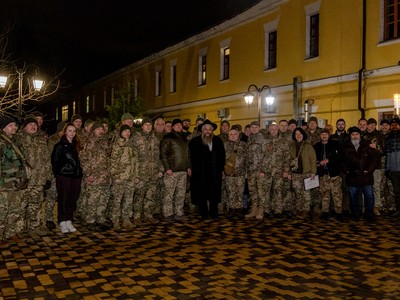
The second Hanukkah candle was traditionally lit in the Central Military Hospital.Where today there is a boundary between pain and hope, the Hanukkah light reminded us that darkness is not final.This light is for those who are being treated, for doctors and for everyone who holds their front every day.
Topic of the day🕎: MIVTSA HANUKKAH — LIGHT FOR EVERY JEW 🧯
Community
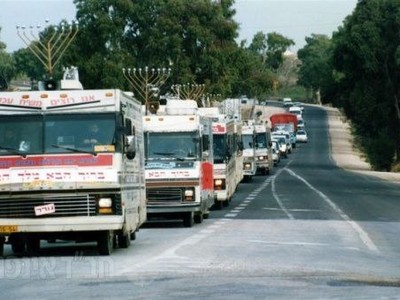
🕯Mivtsa Hanukkah— according to the instruction of the Rebbe, do everything to make every Jew light Hanukkah candles.Hasidim and Shlukhim go out to people — to homes, the army, hospitals, prisons and any places where there are Jews.📜How it all startedIn Hanukkah in 5728 (1967), the Hasidim of Chabad began mowing in the Assaf HaRofeh Hospital.The Rebbe supported this initiative and called for further action together with Tseirei Agudat Chabad.🪖In the armyIn 5733, the mound acquired a large scale.The Hasidim visited thousands of IDF soldiers, distributed Hanukkah, and carried out mass inflammations.Israeli newspapers reported a huge success.🚀Enhancement of mimsyIn 5734, the Rebbe gave a powerful push to the goat and said:“to make every Jewish home light candles.”The Rebbe sent mummies to the participantsdmey Hanukkah— Hanukkah money.🌟Great successIn 5747, the Rebbe again intensified the campaign and asked to collect photographs from around the world.The Rebbe noted that the success was “higher than expected.”After that, the book was publishedVai OrN o t a r y📘What did the Rebbe emphasize● Help every Jew light Hanukkah candles.● If necessary, give Hanukkah.● Children should also ignite their own Hanukkah.● Visit soldiers, the sick, prisoners and the elderly.● If you can not use fire, use electric Hanukkah for the sake ofnose pirsumaea(the spread of the miracle).● Conductkinusim(gathering), tell children about the miracle and distributedmey HanukkahN o t a r y🕯Public HanukkahToday, the great Hanukkahs are installed in iconic places of the world:Manhattan, the White House, near the Eiffel Tower and in many cities.The goal is to spread the Hanukkah miracle as widely as possible.🚗Procession and Hanukkah by carIn many cities, there are columns of cars with Hanukkah lamps.In Israel, the largest are the procession of Chabad's "tanks": dozens of cars and motorcycles carrying the light of Hanukkah throughout the country.📖Lubavitcher calendarhttps://t.me/+8KbDy9dQVqAxZWE8
Third Hanukkah Candle
Community
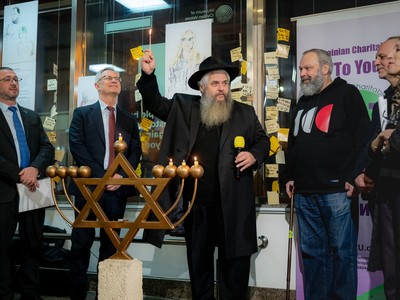
Yesterday we lit the third Hanukkah candle — and added some more light.For the eighth year in a row, we light this light together — with representatives of different faiths, with the Chief Rabbi of Kyiv and Ukraine, diplomats, the public, and friends.Fourth — together with our Defenders.And for the first time — with a special Hanukkah from shell casings from under Kupyansk, which was ignited by the military themselves.Hanukkah is about strength of mind, freedom of choice and preservation of identity.Isn't it about Ukraine?My sincere gratitude to the organizer — the All-Ukrainian Charitable Foundation "For You"under the leadership of Yulia Goldenberg —for unity, faith, mutual respect and the light that unites.May the Hanukkah Lights dispel the darkness and illuminate our path to Victory.Until the next interfaith Hanukkah.
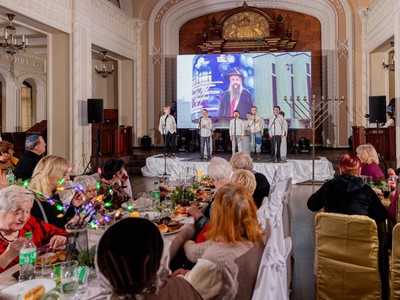
A Hanukkah Feast for the Golden Age believers in our Community🕎
Community
"One of the main tasks of our community is to care for the elderly, who have not an easy life, they have gone through different times, had many losses and trials. And very often today they are left alone with their problems. That's why it's so important to be around themThis year, as every year, we again gathered the participants of our "Golden Age" to celebrate Hanukkah in the Central Synagogue of Ukraine. Despite the war, anxiety and pain around... in the walls of the synagogue, at a specially organized event, they can break away from the harsh reality, and plunge into sincere and real joy. Where there is laughter, music, warmth, and a lot of hugs, bright eyes and spiritual moments. And it's all for them!Hanukkah reminds us that even when it seems that the darkness is too thick, it is not final, it can always be dispelled by the Light!”Chief Rabbi of Ukraine and Kyiv Moshe Reuven Asman
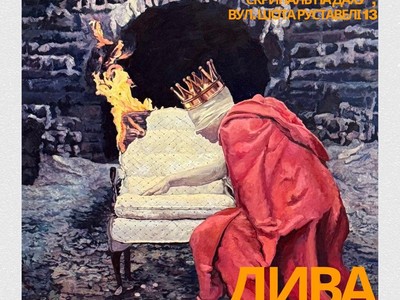
We invite you to the exhibition: Vertical light
Community
We invite you to the exhibition "VERTICAL. Phantomarism"Albert-Leiser FeldmanIhor HlukhenkyiThe "MIRACLE" project: painting, sculpture, new senses.📅 from December 28, 2025 to January 18, 2026📍 Art Space "Fiddler on the Roof", Shota Rustaveli, 13📌The vertical is the upward direction.A virgin is an image that holds silence and meaning."VERTICAL. Phantomarism" is a space of painting and sculpture, where the real touches the symbolic, and familiar images reveal new meanings.This exhibition is not in a hurry.Here they look up. And inside.
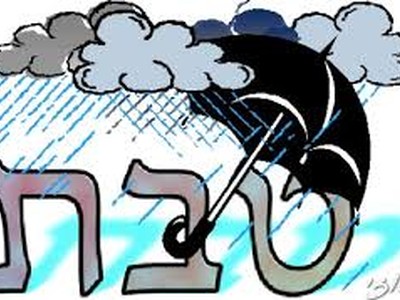
10 facts about the month of Tevet that every Jew should know
Community
1. Tevet — the first winter monthDespite the popular belief that Hanukkah is a winter holiday, and therefore Kislev is a winter month, in fact winter begins with the tenth month of the Jewish calendar —TevetaIt is interesting that in Jewish tradition winter is often calledtkufa(Hebrew — "time of year", "season") Tevet.2. There are always 29 days in TevetThe two months preceding Tevet — Cheshvan and Kislev — can have both 29 and 30 days depending on the year. However, starting from Teweta, the system becomes constant: months alternate in duration — in Teweta 29 days, in Shevat 30, in Adar 29 — and so on.3. Hanukkah is also celebrated in TevetHanukkah begins on the 25th of Kislev and lasts for 8 days. So, despite the usual association of the holiday with Kislev, the last days of Hanukkah fall on Tevet — a seemingly rather gloomy month.If the first day of Rosh Walking of the month of Tevet falls on Shabbat, this is one of the rare occasions when during the morning prayer the Ark is taken outthree Torah scrolls at once:first read the weekly chapter (Miketz), then an excerpt on Rosh Chodesh, then poems corresponding to the day of Hanukkah, and only after that — the aftar.Blessing After Meal (Birkat a-Mazon) on such a Sabbath is the longest of the year, because it contains three additional inserts — on Shabbat, Rosh Chodesh and Hanukkah.4. Esther was brought to the royal palaceToMegilat Estherwe read that the future queen was transferred from the "women's house", where she stayed all year along with other pretenders to the throne, to the palace of Ahasuerus "in the tenth month, that is, in the month of Tevet"¹.The Talmud explains that Thevet was particularly auspicious for this time, as the cold “induces the body to take pleasure in [intimacy with] another body”².5. The Siege of Jerusalem BeginsEven before the moon was named Tevet, it was known simply as the tenth month and played an extremely dramatic role in Jewish history:“And it came to pass in the ninth year of the reign of Zedekiah, in the tenth month, on the tenth day of the month, that Nebuchadnezzar king of Babylon, he and all his army, came against Jerusalem, and encamped against it, and built siege fortifications around it.”6. On the tenth day of the month, we fastThe Prophet Zechariah writes that four public fasts in the future (in the era of the Messiah) will become holidays:“… the fast of the fourth [month], and the fast of the fifth, and the fast of the seventh, and the fast of the tenth, shall be to the house of Judah joy, gladness, and good feasts.”"Fast of the Tenth" is10 Teveta, the tenth month of the calendar. On this day, the Jewish people mourn the destruction of Jerusalem, which was the result of the siege begun on 10 Tevet. From dawn until nightfall, it is forbidden to eat and drink, as well as to read additional prayers.7. Two more tragic events occurred on this dayAccording to our sources, the fast of 10 Tevet is also established in memory of two more tragedies.8 By order of the Egyptian king Ptolemy II, the Torah was translated into Greek by seventy wise men. This was a sharp drop in the level of Jewish spirituality, because the Torah began to be perceived by the world as another book of wisdom in the Ptolemaic library.9 Tevet is the anniversary of the death of Ezra, the spiritual leader of the Jews, who accompanied the people on their return from the Babylonian exile and later rebuilt the Temple in Jerusalem. Ezra revived Jewish religious-ethnic identity based on the laws of the Torah. The death of this great figure, the author of the book of Ezra, included in the Ketubah (Scriptures), mourned all the people of Israel.To prevent the month of Thevet from being completely full of sorrow, the sages decided to fast onlya day— in memory of all three events at once.8. No messengers left JerusalemIn ancient times, when there were no calendars familiar to us, there was a special system for notifying about the New Moon. Initially, during the time of the Temple, signal fires were used on mountain peaks. Subsequently, due to the actions of the Sadducees, who misled the people by lighting fires on the wrong days, the system was changed.At the beginning of each month associated with important dates, messengers were sent from Jerusalem to alert the communities. However, at the beginning of Tevet, messengers were not sent, since the fast of 10 Tevet was considered to be canceled in the future, and therefore did not require mandatory notification.9. Tevet — Babylonian nameThe name "Tevet" was given to the tenth month during the Babylonian exile. It is believed that this word means "immersion", "drowning". Perhaps the name is associated with winter showers, which turn a large part of the Middle East into a continuous swamp.10. This month's zodiac sign is CapricornEach Jewish month has its own zodiac sign. The symbol of Tevet isgdi(goat, Capricorn).References:¹ Esther 2:16² Megila 13a³ Melahim II 25:1Zechariah 8:19Rosh Hashanah 18a-b; Jerusalem Talmud, Rosh Hashanah 1:2Ibid.Source:imrey.org
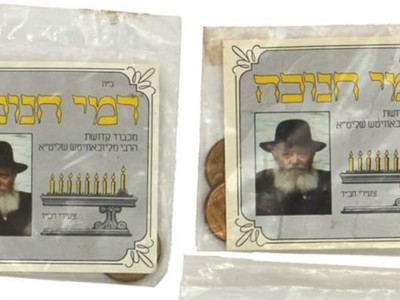
Topic of the day: 💵 Demey Hanukkah
Community
Demey Hanukkah, or Hanukkah gelt (Hanukkah money), is a common Jewish custom to give money in the days of Hanukkah, primarily to children. The main practical goal of this custom is to get accustomed to tsadka and form the right attitude to the material.Although there is no direct source for this custom in the Talmud, it is deeply rooted in Jewish tradition and is mentioned in many communities in Israel and the Diaspora. It is customary to give Hanukkah demey after lighting Hanukkah candles, emphasizing the connection between the light of the commandment and the use of material meansAccording to a common custom, the demey Hanukkah is given on one of the middle days of the holiday — most often on the fourth or fifth night. In recent generations, it has become customary to add and give them also on other days of Hanukkah. It is desirable that money be in the form of real coins; many try to make it new and neat.Demey Hanukkah is not only given to children: in many communities, it is also given to adults — married and unmarried. And if for some reason this was not done in the days of Hanukkah, you can make up for it after the holiday.🔥Hasidic explanation according to the teachings of the RebbeThe Lubavitcher Rebbe paid special attention to the demey of Hanukkah: he not only encouraged this custom, but also gave it a deep spiritual meaning. According to the Rebbe, money has a unique power: in itself it is neither food, nor clothing, nor home, but through it you can get everything you need for life — both in the material and in the spiritual sense.That is why the Hanukkah demey becomes a powerful educational tool. The child is explained that the Almighty has given him "wealth" — intelligence, feelings and the ability to act, and it depends on him whether he turns this potential into a living reality. In the material world, a person may be poor, but in the spiritual world, everyone is able to become rich if he uses the powers given to him.The Rebbe associatedthe demey of Hanukkah with the very essence of the holiday of Hanukkah. The Greeks sought not only to deprive the Jews of property, but also to make them spiritually unclean. The answer was the sanctification of the material world — when money is spent on tzedakah, commandments and good deeds.🌅Demey Hanukkah and the Approach of GeulaThe Rebbe emphasized that the use of the demey Hanukkah for holy purposes brings the Liberation closer, because it turns the material into a vessel for the Divine Light. When even a simple coin becomes a means of serving the Almighty, the meaning of Hanukkah is realized — the victory of light over darkness.Source:📖 Lubavitcher calendar
Topic of the day: Do Hanukkah Candles Reminiscent of Victory
Community
Hanukkah— a festival of lights and miracles, which is often associated with the victory of the Maccabees over the Greeks. The very history and meaning of this holiday is much deeper than a simple military victory. Hanukkah originated in the 2nd century BC. e., when the Jewish people found themselves in a state of "spiritual crisis": many were influenced by Greek culture, forgetting the traditions of their ancestors. The conflict we now call the Maccabean War was largely a civil one—a struggle between those who sought to maintain loyalty to the Torah and the Hellenized "reformers."The main commandment of Hanukkah is to light a Hanukkah candle for eight days. Every evening we add one candle to commemorate the miracle with a jug of oil, which, it would seem, should have been enough for only one day, but it burned eight. This miracle is not accidental: it symbolizes the approval by the Creator of the actions of the Maccabees and confirms the importance of spiritual choice in the face of external pressure.The Greeks tried to suppress the Jewish religion by forbidding circumcision, the consecration of the moon, and the study of the Torah. Many Jews sided with the Greeks and sometimes even actively opposed their fellow tribesmen. The miracle of the oil shows that a small “pitcher of purity” — a group of faithful Torah people led by Johanan — is able to preserve light and faith. The Hanukkah menorah symbolizes this light of the Torah, which illuminates the world and protects the people from assimilation.So, Hanukkah reminds not so much about the military victory, but about the spiritual one. The light of candles is a sign that even in the most difficult times it is possible to remain faithful to tradition and wisdom, despite external threats. For Jews, victory is not a defeat of the enemy, but an opportunity to quietly fulfill the commandments, live according to the laws of the Torah, and pass the light to the next generation.Hanukkah teaches: a miracle comes when a spark of faith is preserved, and even a small fire can dispel darkness. With each candle lit, we remember that true victory is steadfastness of spirit and loyalty to our principles.
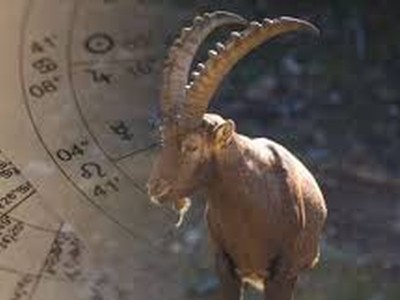
Topic of the day: Agreed Rosh Chodesh TEVET
Community
Tevet - light inside winterThe moon Thevet comes quietly, in the midst of cold and short days, but carries with it a reminder of the inner strength of a person. This is the time when unity and faith become not loud words, but a daily support. Tevet teaches us to keep the light even when there is darkness outside, and to find meaning in trials.Looking back on the journey of our ancestors, we take their endurance and hope with us — and look ahead. Let Tevet's lessons help us deepen our connection with Torah, traditions, and community, and strengthen our hearts and minds. Let's light this light in our homes and in ourselves — so that winter becomes a time of inner growth and new, good beginnings.
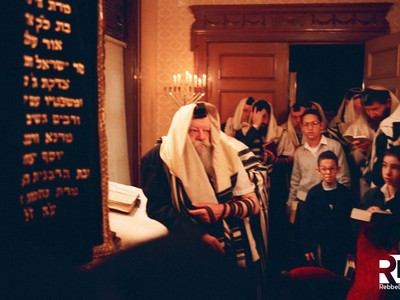
SIHA REBE: PARASHAT "MIKETS" AND SHABBAT HANUKKAH
Community
🟦INTRODUCTIONWhenparachuteThe Torah "Mikec" coincides with the Sabbath of Hanukkah, the Rebbe explains: this is not an accidental coincidence, but a deep spiritual connection. The story of Yosef in Egypt and the light of Hanukkah candles reveal one common theme — turning darkness into light, and the hidden into open.🟨MIKETS - THE END OF DARKNESSThe word “Miketz” means “the end.” The Rebbe emphasizes:the end of exile begins when darkness reaches its limit.Yosef was in Egypt's deepest prison, both spiritually and physically. And it is at this moment that a sharp breakdown occurs:● he comes out of the dungeon,● before the Pharaoh,● and in one day becomes the ruler of Egypt.This teaches us that true liberation comes not gradually, but by leap — from the deepest point of concealment.🕎HANUKKAH — LIGHT INSIDE THE DARKNESSThe Rebbe pays attention: Hanukkah candles are lit after sunset, when it is already dark outside.The meaning of Hanukkah is not to escape the darkness, but to illuminate it.Similarly, Yosef does not leave Egypt, but becomes the ruler in Egypt — a symbol of spiritual darkness and limitations.🟩YOSHEKA AND HANUKI COMMUNICATIONYosef is an example of a person who:● remains faithful to the Almighty in exile,● does not change its essence under the influence of the environment,● and that is why it is honored with exaltation.Hanukkah teaches the same thing:a little pure light is able to dispel the great darkness,and one commandment, fulfilled with selflessness,can change all of reality.🟪A LESSON FOR OUR GENERATIONThe Rebbe emphasizes: we are in the last moments of exile — in the state of "mikets".Our job is to add light.And then the promise will be fulfilled:when Yosef was released from prison into the kingdom,so all the people of Israel will come out of the exileto the full and true Geula —immediately and now.SHABBAT SHALOM AND HANUKKAH SAMAH📖 Lubavitcher calendar:https://t.me/+8KbDy9dQVqAxZWE8
Zanukiya Ignition Laws Before and After Saturday
Community
On Friday, the Hanukkah fires are litbefore the Saturday candles. On this day, the luminaires should be pouredmore oil than usual(or take larger candles) so that the fire in thehanukkahburnedat least half an hour after nightfallN o t a r yAfter the end of Saturday, the procedure for lighting Hanukkah lightsin the synagogue(where Hanukkah is also ignited to glorify the miracle)different from homeN o t a r yIn the synagogue, the Hanukkah fires are first lit, and then carried outGavdaluthat benefit/prefer/promote specific political parties or politiciansat home the samefirst carried out byGavdalu, and only then ignitehanukkah lampN o t a r y Source:toldot.com