📏 Little "Aleph" and Big "Aleph": a lesson from the head of Vayikra
Community
Foreword Our weekly section begins with the words “Waikra el Moshe” (And G-d turned to Moshe). Pay attention to the Torah scroll: the letter א (Aleph) in the word "Vayikra" is written unusually small.On the other hand, in the book Divrei ha-Yamim, in the word "Adam", the letter, א on the contrary, is extremely large.IssueWhy do we “decrease” the letter in one case and “increase” the letter in the other? What is the lesson of this writing feature?RESPONSEThese two letters symbolize the two fundamental states of man:Little “Aleph” (Vaikra): When G-d turns to Moshe, he reduces his “I” as much as possible. This is a bitumen (self-cancellation) lesson. Before the Creator, a person must be aware of his modesty, rejecting his ego and personal ambitions.The great “Aleph” (Adam): when it comes to creating the world and man's place in it, the letter grows. This teaches us that in relation to the world around us, a person must “increase” his or her presence. She must be aware of her significance and responsibility.📌 Lesson for lifeThe Jew must be able to combine these two opposites:Before G-d: utter modesty. My desires and my "ego" are secondary to the will of the Creator.Before the world: no false modesty. You can't say, "Who am I to make a difference?" On the contrary, you need to act boldly, influence the environment and fill this world with holiness.(Adapted from Rebbe, 4 Adar II 5741)📖 Lubavitcher calendar
🛑 Captured Ark of the Covenant...
Community
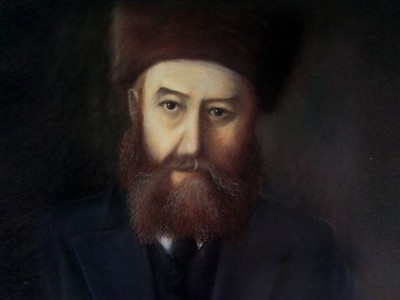
The moment when the earth shook in growthOn Saturday night, when famine and civil war raged outside the walls of the house, a drama played out in a modest dwelling in Rostov-on-Don, which changed the course of Jewish history. It was the moment spoken of: “The Captive Ark of the Covenant” — the departure from this world of the Fifth Lubavitcher Rebbe, Rashab (Rabbi Sholom-Dov-Bera), the founder of the legendary yeshiva “Tomhei Tmimim” and the man who became the iron rock in the path of communist decrees.📜 Rostov: the last citadelThe history of this chapter began in 1916. Due to the approaching fronts of the First World War, Rebbe Rashab was forced to leave the town of Lyubavichy and settle in growth. Four years of life in this city were filled with shortages, epidemics and persecution by the Bolsheviks. The Hasidic court narrowed, the Hasidim struggled to break through the borders, but the light of the Torah continued to burn — albeit behind closed doors.🩺 "Mild influenza" that became a stormOn Thursday, 21 Adar 5680 (1920), the Rebbe looked unusually weak. The doctor, Dr. Landa, tried to reassure loved ones: “It's just a mild influenza.” But at the end of Saturday, the Rebbe got worse.For a whole week, the best professors of growth fought for his life. Professor Zawadzki diagnosed severe typhoid. Doctors prescribed cans, injections, convened councils... But the Hasidim saw otherwise. On the last Saturday, the Rebbe's face suddenly flashed, and the gaze became deep and piercing, as at the moment of the highest spiritual exaltation. Doctors, checking the pulse, were surprised: according to the laws of nature, there was no longer life in the body, but the holy soul continued to hold it.💬 The last precept: "Reason! Reason!"On Saturday at ten o'clock in the evening, Rebbe Rashab opened his eyes and looked at his only son, the future Rebbe Rajaca. His voice sounded loud and clear:“I go to Heaven, and I leave the manuscripts to you. Take me to the auditorium and we'll be together.”Seeing his son pale with shock, the Rebbe sternly repeated, “Ethpaalut? (Emotions?) — Mohin! Mohin! (Reason! Reason!)” This was his last testament: the leader must maintain clarity of thought and the power of reason over feelings even in the darkest hours.💧 Two tears of farewellAt two o'clock in the morning, the Rebbe spoke to Awdala over a cup of coffee — just as the Alter Rebbe had done more than a hundred years before his departure. He then laid his hands on the head of his son and granddaughter, blessing them with a parental blessing.At four in the morning of 2 Nisan, in the silence of the room, a desperate cry of Rajac sounded: "Daddy! Dad!” (Father!) The Rebbe opened his eyes for the last time, looked at his son — and two tears rolled down his face. At that moment, his pure soul returned to the Creator.🏗️ Night Salvation of the ShrineThe story of "Ogel" (crypt) of Rebbe Rashab in growth is a real detective of faith. In 1939, the Soviet authorities decided to demolish the old cemetery for development. A group of dedicated Hasidim under the cover of night, on secret instructions from abroad, accomplished the impossible.After fasting and cleansing, they secretly transferred the holy remains to a new cemetery. To prevent the authorities from finding a place, the Hasidim poured six more false hills nearby, and the grave itself was left without a monument — only a small tree served as a landmark. It was only in 1989 that the Ogel that we know today was erected over the resting place.🕯️ Minyan of the RighteousThe old Hasidim mention that the Rebbe did not leave alone. In that terrible year, one after another, ten of his outstanding students and associates — the "minyan" of great souls, among whom were the legendary mentors of "Tomhey Timimim". It seemed that the Rebbe had taken the best with him to continue his ministry in the higher worlds.Today, Ogel in Rostov is not just a monument. This is the place where the Rebbe's promise, “We'll be together,” still resounds. A place where every Jew can find answers to their questions.📖 Lubavitcher calendar
Topic of the day: Rabetsin Khaya-Mushka
Community
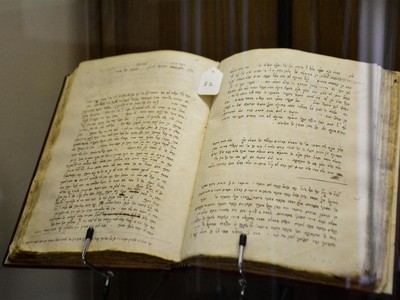
Rabetsin Khaya-Mushka (the first) did not just live in the shadow of the great Rebbe — she was the spiritual "foundation" of the Lubavitch house. Her life is a story of self-sacrifice, modesty, and a deep understanding of Hasidic teachings.🌿Holy lineage: A unique phenomenonIn the history of Jewry, it is rare to find a woman whose life was so permeated with holiness on all sides. She was:the granddaughter of the founder of Chabad — Alter Rebbe;daughter Miteler Rebe (second chapter);wife of Tsemakh Tzedek (third chapter);the motherof Rebbe Maarash (chapter four).It is through it that the roots of all subsequent Lubavitcher Rebbe — up to our generation - pass.📜The story of the "stealing" of manuscripts: the discovery of greatnessOne of the most exciting moments of her biography occurred in 1807 (תקס"ז). Her grandfather, Alter Rebbe, felt that his grandson and his son's son-in-law — the young Tsemakh Tzedek — hid incredible depths of Torah knowledge.He asked Hyu-Mushka to bring him the man's notes. Risking her peace of mind at home, she confided in her grandfather. When Alter Rebbe opened the notebook and read the Maamar Shoresh Mitzvat HaTfila, he was so impressed that he called witnesses and gave a blessing to Sheheyan — thanking the Almighty for the fact that such a sage had grown up in his family.⚖️Family Drama and Heaven's InterventionWhen Tsemakh Zedek found out about this, he was struck by the violation of personal space and decided that he could no longer live with the wife who had done so. Rabetsin Khaya-Mushka showed incredible resilience. To his reproaches, she replied:"Respect for my grandfather (Alter Rebbe) is higher for me even than respect for my father and husband, and I could not refuse him."She spent two months in prayer and tears. Two generations of the Rebbe intervened in the situation: her father (Miteler Rebbe) and grandfather (Alter Rebbe). As a result, after a joint study of halacha with Alter Rebbe, Tsemakh Zedek recognized his wife's rightness. This case only strengthened their bond, making their union an example of a true Jewish home.✨Spiritual Image: Tegilim and LightContemporaries recalled that Rabetsin Khaya-Mushka lived in a world of prayer. She devoted every spare minute to reading the Tehilim (Psalms of David). Her faith was simple but absolute. She was the reliable "rear" that allowed Tsemakh Tzedek to manage tens of thousands of Hasidim in the most difficult times.🕯️“My world is extinct…”Rabetsin passed away on 8 February 1861. Her departure was a great shock to the entire community and to Tzemach Tzedek personally.His words after the funeral made history: “My world was extinguished for me.” He admitted that she was his main adviser in both spiritual and earthly affairs. After her departure, he stopped accepting people for personal audiences (yehidut), saying, “I was left without advice.”📍Resting placeShe is buried in Lubavitches, next to her mother (Rabetsin Sheina) and grandmother (Rabetsin Sterna).👨👩👧The Great Tree of ChabadRabetsn Khaya-Mushka and Tsemakh Tzedek raised a generation of spiritual giants. They had 7 sons (known as the “Seven Lamps”) and 2 daughters.sons.Rabbi Baruch Shalom is the eldest son who refused the post of Rebbe, choosing the path of modesty. Great-grandfather of the Seventh Lubavitcher Rebbe.Maaril (r. Yehuda Leib) — the founder of the Kopust dynasty.Rahashz (r. Haim Shneur Zalman) is the founder of the Lyada dynasty.Maarin (r. Yisrael Noah) is the founder of the Nizhyn dynasty.Rajac (r. Yosef Yitzhak the First) was the founder of the Ovruch dynasty.Rabbi Jacob of Orsha is known for his holiness and righteousness.Rebbe Maarash (r. Shmuel) is the youngest son who became the successor of his father and the Fourth Head of Lubavitcher Chabad.Daughters:Rabbetsin Rada-Freud is the wife of Rabbi Schneur Schneursson.Rabetsin Dvo-Leya is the wife of Rabbi Levi Yitzhak Zalmanson.✨ May the merits of this holy family and the righteous Rabetsn Hai-Mushka protect the whole people of Israel!📸 In the photo: maamar "Shoresh mitzvat a-thfila" — the same maamar that Rabetsn Khaya-Mushka showed to her grandfather📖 Lubavitcher calendar

Our dates: 5 Nisan
Community
📌5 Nisan 5855 (March 24, 1825) — Yorzeit (anniversary of the departure from this world) Rabbi Avraham-Yehoshua-Yeshel ben Shmuel of Apta.Rabbi Avraham Yehoshua, also known as the Apter Rebbe and Oghev Yisrael ("He Who Loves Israel"), was born in the Polish town of Neustadt. Both on his father's and on his mother's side, he came from famous rabbinic families and showed great promise at an early age. Having acquired considerable knowledge, he began studying with one of the most outstanding Hasidic tzaddiks - Rabbi Elimelech from Lizhensk and Rabbi Yehiel-Michal from Zlochiv. Having become one of the most prominent representatives of the growing Hasidic movement, he headed the community in the town of Kolbasiv, and later, in 1800, in Opatuv (Apt). He was a rabbi in other places as well (for example, in Yas), but in the Hasidic Mays, he forever remained the Apter Rebbe.Around 1810, Apter Rabbi settled in Medzhybizh, the city of the founder of Hasidism, Rabbi Israel Baal Shem-Tov. He lived here for the rest of his life.Apter Rebbe was one of the greatest Jewish sages of his time, and the number of his followers and adherents was greater than that of other tzaddiks of the time.📌5 Nisan 5662 (April 12, 1902) — Yorzeit Rabbi Schneur-Zalman Fradkin from Lublin.Rabbi Schneur-Zalman was born in Lyady (Belarus) and was a student of Gaon and Hasid Rabbi Eliyahu-Yosef Rivlin. Thanks to his outstanding abilities, he became an excellent connoisseur of Torah and Hasidism and was one of the most faithful Hasidim of the third and fourth Rabbis — Rabbi Menachem-Mendel (Rabbi Tsemakh Zedek) and Rabbi Shmuel (Rabbi Maarash).At first, Rabbi Schneur-Zalman was a mentor in the Belarusian town of Polotsk, but later, at the invitation of the local community, he moved to Polish Lublin, where for a long time he was a city rabbi and chairman of the court (av base-din).A great sage, awarded the title of gaon (genius) and a great Hasid, Rabbi Schneur-Zalman is also known under the name "Torat Hesed" (the name of the book he wrote). He is buried in Jerusalem, on the Mount of Olives.sources: chabad.odessa

Our dates: 7 Nisan
Community
📌7 Nisan 2488 (1273 BC) — the visit of scouts to Jericho.A month after Moshe Rabbin left this world, his successor, Rabbi Joshua bin Nun (Joshua), sent two scouts — Caleb and Pinchas — to the city of Jericho, which stood on the other side of the Yarden River (Jordan).The scouts had to gather the information necessary for the conquest of the first city in Eretz Yisrael by the Jews. In Jericho, they were helped by a woman named Rahab, who lived in an apartment located inside the city wall (later Rahab became the wife of Yehoshua bin Nun).📌7 Nisan 5504 (March 20, 1744) — Yorzeit Rabbi Yitzhak from Drohobych.Rabbi Yitzhak was a famous Kabbalist, and it was he who introduced his son Yechiel-Michael to Rabbi Yisrael Baal Shem-Tov. Later, the disciple of Baal Shem-Tov became known throughout the Jewish world as Rabbi Yechiel-Michl from Zlochev or "Magid (preacher) from Zlochev".source: chabad.odessa

Our dates: 8 Nisan
Community
* Nisan 85560 (March 5, 1800) — Yorzeit to Rabbi Mordechai of Nesvizh.Rabbi Mordechai was a descendant of the famous cabalist, the creator of the Golem, Rabbi Maharal from Prague, and his teacher was Rabbi Yechiel-Michl from Zlochev.Rabbi Mordechai was a rabbi in the towns of Leszczany, Ludomir and Nesvizh, and among his students are such leaders of Hasidic movements as Rabbi Uri from Strelsk and Rabbi Kalonimus Kalman (Rabbi Maor wa Shemesh).Rabbi Mordechai was known for numerous miracles, but no less noteworthy is the fact that in his entire life he never said anything bad about the Jews.source: chabad.odessa

Our dates: 9 Nisan
Community
📌9 Nisan 5699 (28 February 1939) — Rabbi Levi-Itzhak Schneerson, the Rebbe's father, was arrested.At 3 o'clock in the morning, representatives of the NKVD broke into the apartment of Rabbi Levi-Itzhak on Brigadnaya Street, 13, in Dnipropetrovsk. After many hours of searching, they took away books, papers, manuscripts and brought out the slave himself. All attempts by his wife to find out where he is have been unsuccessful for a long time.The authorities saw in him a person who supports all Jewish initiatives in the USSR and takes the place of the then Rebbe, Rabbi Yosef-Yitzchak (Rebbe Rayats), who was forced to emigrate from the USSR in 1927, and tried in every way to prove that his actions were directed against them. Rabbi Levi Yitzchak was accused of allegedly misappropriating part of the public funds during the construction of the mikvah (pool for ritual ablutions), and one of the witnesses stated that on the day of the Simchat Torah holiday, donations were collected for the families of Marshal Tukhachevsky and Bukharin (!). However, during the face-to-face bet, this witness retracted his words, stating that he had given false testimony under pressure.Rabbi Levi-Itzhak was transferred from prison to prison and kept in extremely difficult conditions — once he was kept in solitary confinement for 32 days, but he never admitted any of the charges.After several months of investigation, the authorities decided to exile him away from other Jews — to Kazakhstan.source: chabad.odessa

Our dates: 10 Nisan
Community
📌10 Nisan 2448 (1313 BC) — Egyptian Firstborn War.On the Saturday before the Exodus from Egypt, the firstborns of the Egyptians, who held high positions in the government and among the priests, met in a bloody battle with the pharaoh's troops. They tried to force the pharaoh to release the Jews and thereby prevent the future punishment — the death of the firstborn.📌10 Nisan 2847 (1274 BC) — Yorzeit prophets Miriam, sisters Moshe and Aaron.Moshe, Aaron, and Miriam are called the three leaders of the Exodus. They were all children of the head of the tribe of Levi Amram and Jochebed, and Miriam was the eldest child, and it was she who brought the Pharaoh's daughter a breadwinner for the boy found in the river. In the Torah, she is mentioned under the name of the midwife Pua, who refused to obey the pharaoh's order to kill Jewish boys (another midwife is Shifra — her mother Yocheved).Miryam, one of the greatest prophets, was the wife of the head of the tribe of Judah, Kalev, and the great-grandmother of Bezalel, the ancestor of King David. She is credited with the appearance of a miraculous well that accompanied the Jews on their wanderings in the desert and disappeared after her death.The great prophetess Miryam departed from this world during her wanderings in the desert and was buried in Kadesh.📌10 Nisan 2488 (1273 BC) — Jews crossing the Yarden River (Jordan).Three days after the two scouts set out for Jericho, the Jews prepared for the entry into Eretz Israel that the Almighty had promised them. At the head of the procession was the Ark of the Covenant, which was carried by the cohen priests, and as soon as they entered the waters of the Yarden, the river stopped, splitting, as happened 40 years ago during the crossing of the Red Sea.
Rebetzin Maarasha
Community
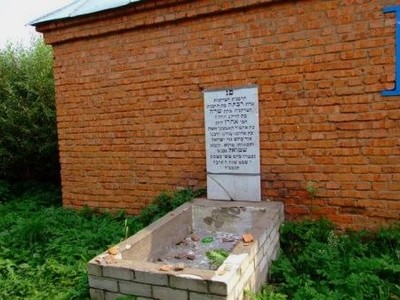
🕯️Rebbetzin Stern(first wife of Rebbe Maarasha)📜Pedigree and marriageRebbetzin Stern was the daughter of Rabbi Chaim Schneur Zalman (son of the Third Rebbe, Tsemakh Tzedek). The wedding of the grandchildren of the great righteous took place in an atmosphere of great spiritual exaltation on Friday, 8 Sivan 5608 (1848) (chapter "Naso").🥀Disease testingThe joy was short-lived. It was just during the wedding week (Sheva Brachot) that the young bride fell seriously ill. Despite the prayers of the community and the efforts of loved ones, the disease did not recede. Just three months after the wedding, Rebetzin Sterna left this world.She was buried in Oela Lubavitcher Rebetzin.To ease his son's grief, his father, Tsemach Zedek, ordered that he be given a room next to his own so that he could enter at any time. So it was: when he came, the father showed him the amazing holy manuscripts of the previous Rebbe, in particular those that he did not show to his other sons.📜Rebbetzin Rivka — "mother" of the Tomhei Tmimim yeshivaRebetzin Rivka (1833/1835 - 10 Shvata 1914) was the wife of the fourth Lubavitcher Rebbe, Maarash (in his second marriage). She not only presided over the entire material life of the court in Lubavitches, but also became a living source of hundreds of stories that were later recorded by her grandson, Rebbe Rajac. With the founding of the Tomhei Timim yeshiva, she gave all her strength to create her kitchen and dormitories.⭐️Childhood and early yearsRebbetzin Rivka was born in Lubavitches in the family of Rabbi Aaron Alexandrov from Shklov and his wife, Rebbetzin Hai-Sari, daughter of Mitler Rebbe (the second head of Chabad). Her date of birth is either 1833 or 10 Cheshvan 1835.Rywka's life was full of trials from an early age. On 24 Iyara, her father died in 1837. In her youth, she absorbed her mother's stories about the chapters of Chabad and received from her a unique book written by her father, with many stories collected by him.In 1843, her mother married Rabbi Aaron Zaslavsky (son of Rebbetzin Freud), who raised Rivka for the next three years. Later, she remembered him with gratitude: "I remember him only with kindness." However, in 1845, her mother fell seriously ill and 10 Adara died in 1846. This event deeply affected Rywka and her sisters. For half a year, they lived with relatives, until in the month of Menachem Av in 1846, their grandmother, Rebetzin Sheina, took Ryvka and her sister Cvia-Hitel to her upbringing.💍Matchmaking & Wedding HistoryAfter the death of Rebetzin Sterna, Rebetzin Sheina suggested to her son-in-law, Rebbe Tsemach Tzedek, that she take his son Maarash with one of her orphaned granddaughters, Rivka or her older sister Zvia-Hitel. At that time, this proposal was not implemented due to other options.In 1849, a three-person rabbinical court met: Rabbi Abraham Hakoen (Rabbi Lubavitcher), Rabbi Zalman Minovic, and Rabbi Yehuda Leib Schneerson to discuss the union. During the discussion, Rebbe Maarash recalled saying at the age of three that he would take Ryvka as his wife. Then they laughed at him, but now he realized that it was not accidental. At the same time, he was wary of taking a younger sister earlier than an older one.The court decided to consider the sisters' candidacies, but did not make a final decision. When Rabbi Zemach Zedek found out about this, he was very happy and supported the proposal, praising their father, Rabbi Aaron. A few months later, the court ruled: given the child's case, Maarash and Ryvka should marry, regardless of the issue of seniority. At that time, Ryvka was about 13–15 years old.In the month of Nisan, 1850 (or 1849), a court decision was announced. Tsemakh Tzedek personally spoke with his older sister, promising to take care of her as a father, and received her consent. That evening there was a solemn betrothal ("Tnaim"). On Thursday, 11 Nisan 1850, the wedding of Rebbe Maarash and Rebetzin Rivka took place with great solemnity.sourceLubavitcher Calendar (Lubavhttps://t.me/+8KbDy9dQVqAxZWE8)
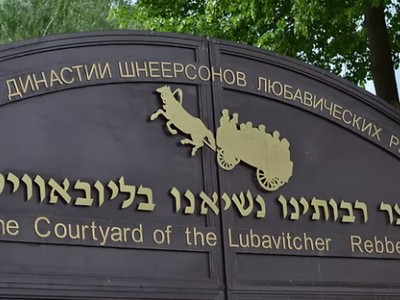
🏛️ Mistress of Lyubavichy "Dvor"
Community
It is known that Mitler Rebbe was so detached from the material world that he did not know what the coins looked like. The ruler of all financial and economic affairs of the court was Rebetzin Sheina, and later her daughter Rebetzin Khaya-Mushka (wife of Tsemakh Tzedek). After the death of Hai-Mushka 8 Tevet in 1861, Tsemakh Tzedek entrusted the management of the entire material economy of the yard to his young daughter-in-law — Rebbetzin Rivtsi. In the works of the Rebbe and the Hasidim, many descriptions of her wise leadership have been preserved.💎Sample of mercy and charityHer grandson, Rebbe Rajac, wrote about her, “She was known for her tremendous charity, her kindness was invaluable.” Rebbe Maarash was the only one of Rebbe Chabad who lived in prosperity, but the more he gave to his wife, the less she had left — because she gave everything to the needy. When she lacked the courage to ask for money from her husband, she pawned her jewelry to give back the money received at the tzedakah. Our Rebbe often spoke about these qualities.📖Keeper of remittancesSince childhood, Rebetzin has collected stories about the righteous. She recounted them to her grandson, Rebbe Raiatsu, which became the basis of such works as Sefer a-Zihronot, Licutae Diburim, etc. Every Saturday evening, the Lubavitcher women came to her, and she read to them "Price u-Rena", "Yosefun" and "Sheerit Israel".⏳After the departure of Rebbe MaarashOn the eve of 29 Elul 1882, Rebbe Maarash told her, “I will go up 31 steps and you will go down 31 steps.” It was the 31 years she lived after him — until 1914. After his departure, she continued to live in his apartment in the Lubavitcher yard. Her son, Rebbe Rashab, visited her every day, and did many things (such as baking matzah) in her home.🍲In the yeshiva "Tomhei Tmimim"Immediately after the founding of the yeshiva 15 Elul in 1897, Rebetzin Rivka joined the cause: in fact, she created a kitchen and organized rooms for students. She was personally interested in the situation of each student. Rebetzin founded a dining room at the yeshiva, allocating several rooms in her house for this. The students were treated like their own children: when Rebbe Rashab was worried about the material side, she said: "What we eat, they will eat too." She called the students “di kinder” (children).🕊️Leaving this worldIn recent years, she has been sick a lot and went for treatment. She often said that she would leave at 80, because Tsemakh Tzedek blessed her for longevity, and this, according to her, meant exactly 80 years.On Thursday evening, 9 Shvat 1914, she began to talk a lot about her father-in-law and her husband. At night, Rebbe Rayats was on duty at her bedside. On the morning of the 10th of Shvat, she asked for a siddur, recited Shma Yisrael and the Shmone Esre prayer, placed her hands on her grandson's head, said: "Thank you (yeshar koach) for your care," and departed to the Creator.Rebbe Rayatz decided to bury her near the wall of the "Oel" of Rebbe Maarash himself. Rebbe Rashab, who was abroad at the time, later approved of this decision: "Well done." At the funeral, Rebbe Rayats wept bitterly and repeated: "The crown of glory of our family has been removed." He said: "When they come to the Rebbe, let them come to her too, she knew everyone." In 1942, Rebbe Rayats founded the network of educational institutions for girls "Beit Rivka" in her honor.🔍A note about photosIn recent years, some sources and auctions have published a photo that allegedly depicts Rebbetsn Rivka. It is important to note: there is no confirmed photo of Rebbetzin Rivka in any official archive or reliable historical source. All such images are dubious and have no documentary evidence. source: 📖 Lubavitch calendar

Yom Yom: 6 Nisan
Community
Today is Nisan 6:"Experience shows that by theorizing less¹ and working hard and diligently, basing his activities on the goodness of the Torah² ("attracting with the right hand and repelling with the left"), a person will always succeed, especially in matters concerning the foundations of our faith."NOTES1.Thoughts can be relevant in a person's life, but they can restrain practical actions, hinder them and slow them down. When faced with a specific task, "especially in matters that touch the foundations of our faith," the key to success is action and determination. The teachings of Hasidism especially emphasize the "goodness", "pleasantness" of the Torah and its commandments and the spiritual upliftment they bring, not the difficulties associated with their fulfillment, and not the punishment for neglecting the Torah or breaking its laws. Although unworthy behavior can (and should) be rejected, the person himself cannot be rejected in any case. This approach, the Rebbe assures, is the most effective.2.See Mishley, 3:17.3."Sota", 47a. An example of this, at first glance, contradiction is to highly value and respect a person, while at the same time not accepting his actions.
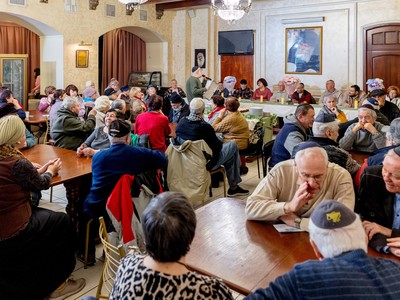
Birthdays in the circle of the community
Community
Our community has a special tradition of honoring those who fill it with wisdom, experience and the light of the years lived. These days we celebrated together the birthdays of our dear "Golden Age" believers who were born in February and March.It was a meeting full of warmth - with sincere wishes, kind words and joy from communication. There were memories, laughter and wishes for health, peace and long years filled with light and blessings.Each of those present is a whole world, a story that you want to listen to, and a heart that continues to give warmth to others. And on this day, we felt once again: the real wealth of the community is people.May the Almighty grant our birthday celebrants good health, peace of mind, joy from every day and many reasons to smile.Up to 120 — in goodness and light! AMEN!