Chabad history: "Neshey u-Bnot Chabad"
Community
Neshey u-Bnot Chabad — Women's Chabad MovementNeshey u-Bnot Chabad (Chabad Women) is a worldwide organization founded by the Lubavitcher Rebbe in 5712 (1952) to unite Jewish women around the values of Torah and Hasidism. Its goal is not only personal spiritual development, but also active participation in family life, raising children and strengthening the entire community.Over time, the movement has developed into a wide network of associations in different countries of the world. In each state and city, the activity is built taking into account local peculiarities, but the common direction remains unchanged — the spread of Jewish traditions, knowledge and a warm Hasidic atmosphere.📜Background Even before the creation of the organization, there was an initiative "Ahot ha-Tmimim", founded by the previous Rebbe — Rebbe RAYATS. It was the first attempt at systematic work among women and laid the foundation for the future movement.Subsequently, the Rebbe stressed the need for a separate structure that would bring together women close to the spirit of Chabad and enable them to act together, supporting each other and influencing their surroundings.🏗Establishment and first stepsIn the letters of the early 1950s, the Rebbe set out his vision in detail: women should meet regularly to study, study the weekly chapter of the Torah, the laws of the holidays and the teachings of Hasidism, and strengthen the atmosphere of the Jewish home. At the same time, they were to conduct educational activities — to help other families, to spread knowledge about kosher, the laws of family purity and traditional education.The first all-Israeli congress was held in Kfar Chabad on the holiday of Sukkot in 5713. At that time, a committee was elected, and the organization officially began its activities. At the direction of the Rebbe, the leadership was handed over to the participants themselves, emphasizing their independence and responsibility.💌Rebbe ApproachThe Rebbe attached special importance to this work and treated it with great warmth. He repeatedly stressed that the participation of every woman is important for the entire community. There was a case when there were not enough seats at one of the events, and the Rebbe ordered not to refuse anyone, but to find a way to accept everyone.This approach-openness, caring, and pushing boundaries-has become the inner spirit of the movement.🌍Activity todayToday, under the auspices of Neshey u-Bnot Chabad, annual congresses and meetings, educational programs, lectures and seminars are held. Assistance is provided to families after the birth of a child, days of rest and spiritual strengthening are held, materials for the Sabbath and sets of Sabbath candles are distributed, there are family life preparation projects and community initiatives that unite women throughout the country.This activity combines spirituality with practical care for daily needs, making traditions a living part of life.💡Movement valueNeshey u-Bnot Chabad has become an important pillar of the Chabad world. Through a woman, the atmosphere of the house is formed, values are transmitted and the next generation is brought up. That is why the Rebbe saw in this direction the key to strengthening Jewish life in general.Today, the movement continues this mission — quietly, consistently, and with great inner light, affecting thousands of families around the world. source:📖 Lubavitcher calendar

Celebrating the month of Adar
Community
The Jewish calendar is the same age as the Torah. Together with the gift of the Torah, life began according to its laws — and there was a need for a schedule, a countdown of days, weeks and months. The seven-day week is based on the fact that the world was created according to the Torah for six days, and the seventh day — Shabbat — is intended for rest.The great Teacher of the people, Moses, wrote down the Torah “under dictation from above,” and it clearly states:“This month [is] for you the beginning of the months, the first of the months of the year” — this is said in the context of the Exodus from Egypt. Another passage states that this month should be a spring month. To combine these and other conditions, a countdown of months was set and the calendar was ordered.Initially, the months had only numerical numbering: the first, the second month after the Exodus from Egypt, the third — and so on until the last. The moon, later named Adar, was the twelfth of Exodus.Twelfth month intrigueMoshe coped brilliantly with the creation of the calendar. He became the founder of the oldest chronology, which was based on complex calculations that the sages passed down orally from generation to generation. Over time, the calendar has improved and the months have been named. First, according to the seasons of agricultural work, and after returning from the Babylonian exile, some names were borrowed from there. Among them is Adar.Today, our calendar is lunisolar. In order for astronomical precision to be consistent with Torah requirements, a repetitive 19-year cycle has been established in which 7 years are leap years. A typical year has an average of 354 days, and in a leap year, 30 days are added — an additional month is formed. It becomes the thirteenth, but is considered the month of Adar and still remains the twelfth counting from the first spring month — Nisan.Thus, in a leap year we have two months in one: Adar I (aleph) and Adar II (bet). Literally, the word "leap" in Hebrew — "meuberit" — means "pregnant".In this "pregnant" year, the hidden month is number 13. But not because of the mysticism of the number, but because of the idea of the Creator's concealment in the world. This confirms that the main holiday of Adar — Purim — borders on the next spring month of Nisan, in which Passover is celebrated. That is why in a leap year Purim is celebrated in Adar II. This is an important spiritual connection between the “Beginning” (Passover) and the “Ending” (Purim) of the design of creation.There are still many details and complex calculations, but today there are ready-made tables and calendars that help to navigate the dates of the holidays, the weekly sections of the Torah and the observance of traditions.External and internalOn the external, material level, the sages say that in the favorable month of Adar, a person can expect success in business, trade, even in lawsuits, if necessary. The joy of love is added to the "intrigue" of the thirteenth month: the gematria of the word אהבה ("agave" — love) is equal to 13.And in general, sages teach:“With the advent of Adar, joy multiplies.”The extra month of a leap year seems to double this joy.All external actions have a deep inner meaning. 7 Adar in Israel honors the memoryof soldiers killed in wars, whose burial places are unknown. The internal connection is that Moshe died on this day — and the place of his burial is also unknown.The deep meaning is hidden in the outwardly cheerful, unrestricted celebration of Purim — the main event of Adar.The main holiday of the month is PurimThe year 5776 on the Jewish calendar was a leap year, with two months of Adar. Purim was celebrated on 14 Adar II. An indication that the serial number of the month remains the twelfth can be found in Esther's Scroll.The events related to Haman's decree on the extermination of the Jews took place this very month. And the liberation of the people also happened in a leap year — in Adar II.If on Hanukkah the Jews celebrate the victory over the Greeks' desire to break the spirit and faith in the Torah and the heritage of their ancestors, then on Purim they celebrate the victory over the "Amans" who seek to eradicate the physical existence of the people. Therefore, this holiday outwardly liberates the body: it is allowed to drink wine, many restrictions are abolished. But when releasing the body, the Jew must realize that it is necessary to fulfill the will of the Almighty.The scroll Esther tells about the struggle of two forces with opposite intentions: the forces of separation and hatred and the forces of unity and love; the evil beginning (Haman) and the good (Mordecai) in man. Without Haman, there is no Mordechai. The Greeks and Hamans refer to the people of Israel as a “test of strength” of faith in a spiritual mission. Physical or spiritual extermination deprives the Jews of the opportunity to fulfill the Higher Design.Haman and Mordechai todayAll Jew-haters are forces of evil to which the chosen people must oppose the force of unity. In the Scroll, there is no direct mention of the Creator who chose His people to implement the instructions of the Torah in the world. But in the treatise "Megila" it is said:“Then the Jews voluntarily accepted the ways of the Torah.”The Torah is a method of correcting the world not by force of arms, but by combiningthe forces of good, which in hiding are controlled by a Higher Power.Similar events of the time of King Ahasuerus have echoes in the modern world — in Israel, in Europe and globally. The story of Esther the Scroll also teaches that life in exile is full of dangers — both physical and spiritual. As the Torah says:“And you shall find no rest among the nations.”The Jews are given the opportunity to gather in Eretz Israel for a special mission — the unity of the people and the fulfillment of the main rule of the Torah: love for one's neighbor.It depends on us that the month of Adar corresponds to the inner spirit of the holiday of Purim.
Birth of the Moon 🌑
Community
The birth of the Moon 🌑 will take place on Tuesday, January 17/ 30 Shevat,at 3:50 and 12 parts.Rosh Walk will be celebrated two days — on Tuesday and Wednesday.It is a good custom on this Sabbath to read the entire book of Tegilim before the morning Shaharit prayer.Minyan for reading Tegilim in the Central Synagogue of Kyiv will be held on January 14/ 27 Shevat at 8:30.Shabbat shalom!May the month of Adar be healthy, calm and full of joy.

Ayom Yom: 26 shevat
Community
Today is 26 sevats 5786.On the eve of Shabbat Mevarhim and the weekly head of Shoftim. 📌 5752 (1992) On the eve of Shabbat, in the weekly chapter of MishpatimThe next day, in his conversation at the Saturday Paintbrand, the Rebbe linked this agreement to the beginning of the revelation of the Messiah, Who influences the peoples of the world as a prototype and the beginning of the fulfillment of the appointment of Geula — “and they beat their swords into plowshares” Love is the spirit of life in the service of Hasidism: a thread connecting the Hasidim with each other, and a thread connecting the Rebbe with the Hasidim and the Hasidim with the Rebbe.This acts both by “direct light” (or yashar) and by “return light” (or hoser).There are no obstacles to this — it is above the limitations of space and time. source: 📖 Lubavitsky Calendar (https://t.me/+8KbDy9dQVqAxZWE8)
Siha Rebe for the chapter "Mishpatim"
Community
🟦Siha Rebe for the chapter "Mishpatim"In the weekly chapter of Mishpatim, the Torah, after the great revelation at Sinai, suddenly speaks of simple things: harm, money, debts, courts.The Rebbe explains: this is the purpose of giving the Torah — not to remain in spiritual exaltation, but to bring holiness into everyday life.🟦Holiness is not only in prayerA person may think that G-d's service is teaching, prayer, Shabbat.But the Torah teaches that even money disputes and business must follow its laws.When a Jew conducts affairs honestly, does not deceive, helps another and sues according to the Torah, he does the will of the Almighty no less than in the synagogue.🟦The main lessonDo not run away from the material,and turn it into a “dwelling for G-d.”It is in ordinary life — in the home, work, money — that the real purpose of the Torah is revealed.This is how Mishpatym teaches:G-d wants to be with us not only in Sinai, but every day.🕯 Shabbat Shalom 🕯📖 Lubavitcher calendar

Ayom Yom: 29 Shevat
Community
29 ShevatAlter Rebbe once said:Rashi's commentary on the Pentateuch is "Torah wine." He opens the heart and awakens deep love and awe [before G-d].Rashi's commentary on the Talmud opens the mind and reveals essential intelligence.Notes:.The term “wine of the Torah” refers to the inner secrets of the Torah. As the sages said (Sanhedrin 38a), “When wine enters, secrets come out.”On each Saturday, for 24 years — from the time of his mother's death in early 5725 (1964) until the death of his wife in 5748 (1988) — the Rebbe, King Moshiach, expounded a specific comment to Rashi.This had two objectives:To show that Rashi's comment can be understood even by a five-year-old child who is studying the Pentateuch for the first time. So, we can look at the Torah with the inquisitive eyes of a child, finding answers to all our questions in it.To show that this layered commentary contains “Torah wine” — the inner mysteries that Alter Rebbe alludes to in the above statement.These two approaches actually complement each other.The simple truth contains the deepest mysteries of life — and at the same time can be understood even by a small child.

A moment of silence.
Community
Every day at 9:00Cease movement.Shut your mouth.Remember.Honor thememoryof the dead:soldiers, children, peaceful people.Those who are no longer around.But who is with us forever is in the heart.It's not just a minute of silence.It is our dutyIt's humanity.Alive — thanks to those who were lost...........
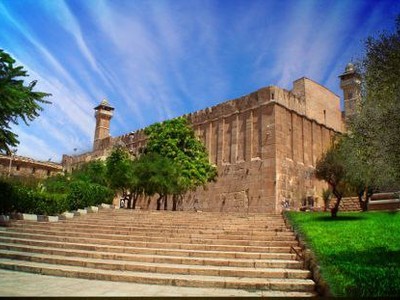
Page of history: Hebron — the city of the forefathers and the center of Chabad history
Community
Hebron is one of the four holy cities in Judaism. Here is the Machpelah Cave — the burial place of the forefathers of the Jewish people. The city lies about 30 km south of Jerusalem, at an altitude of about 927 meters above sea level, in the Har Hebron area, which is part of the Judean Mountains.About 1,800 Jews live in a small part of the city — in the closed quarters of the Jewish Yishuv of Hebron, which are under IDF protection, next to the Machpelah Cave. Nearby is the Jewish settlement of Kiryat Arba, named after the ancient name of the city.📜 Chabad in Hebron — Founded in 1929The Chabad community existed in Hebron from the time of the Mitler Rebbe — Rabbi Dov-Ber Shneuri — until the 1929 pogroms (Tarpat).In 1821, it was decided to move the Chabad Yishuv from Safed to Hebron. Prior to this, the largest Chabad Hasidic community in Eretz Yisrael had operated in Safed — since the great aliyah of Rabbi Menachem-Mendel's disciples from Vitebsk in 1777. Later, part moved to Tiberias, but in 1821 the Chabad center finally established itself in Hebron.In the early years of the Yishuv, envoys were sent to raise funds. One of them, Rabbi Shimon Schmerling, offered the Jews of the Diaspora to buy “four cubits of land” in Hebron for a donation. Mitler Rebbe supported this initiative and wrote that anyone who acquires a stake in the holy city will be deprived of "khibut a-kever."He himself purchased the building of a small synagogue known as “Abraham to Abin” to have an inheritance in the holy city.🕍 Shrines and institutionsMitler Rebbe SynagogueIt is considered the oldest Chabad synagogue in the Holy Land, and possibly in the world. It was purchased at the personal expense of the Middle Rebbe.Beit RomanoBeit Romano was built by patron Abraham Romano. In 1908, the building was purchased by Rebbe Rashab. The Torat Emet yeshiva operated here.During the pogroms of 1929, the building was captured by the Arabs. Subsequently, it was used as a school and an administrative center. In 1981, the process of redemption began, and later the Shavei Hebron yeshiva was founded here.Schneerson HouseThe Schneerson House was built by the Chabad Hasidim and served as a meeting house, educational center, and housing. Here lived Rebetzin Menucha-Rachel Slonim — grandson of Alter Rebbe and daughter of Mitler Rebbe, known as the "mother of the Jewish Yishuv of Hebron."After 1929, the house was seized, but in 1978 it was bought again. Today it is home to families and a kindergarten.🔥 Tragedy of 1929In August 1929, violent Arab riots took place. Dozens of Jews were killed and those who remained were evacuated to Jerusalem. Thus ended the continuous Jewish presence in Hebron.Shortly before these events, the city was visited by Rebbe Rajac. His visit to Machpelah Cave was a historic event, and the news of the pogrom deeply shocked him.Hebron 🕯 CemeteryHebron's ancient cemetery houses the Chabad section, where Rebetzin Menucha Rachel is buried. After the Oslo Accords, part of the territory came under Palestinian control, and the struggle to maintain access to the shrine continued.Despite numerous cases of desecration, the efforts of activists and thanks to broad support, it was possible to preserve part of the cemetery under Jewish control.✡️ Return after the Six-Day WarAfter the Six-Day War in 1967, the Jewish presence in Hebron began to revive. Among the first settlers was the Chabadian artist Baruch Nahshon.The Lubavitcher Rebbe discouraged the mass resettlement of Chabadians to Hebron for security reasons, but individual families received his support.🏗 Modern Chabad in HebronToday, there are nine Chabad houses in Hebron and Kiryat Arba. They work with IDF servicemen, organize the reception of guests, support the mikvah near the Machpelah Cave, operate colleges and training programs.In recent years, the project for the construction of a new quarter "Rovat Hizkiyau — Nahalat Chabad" on the land acquired by Rashab has been approved. The project provides for residential buildings and public facilities and is designed to strengthen the Jewish presence in the historic center of the city.Source:📖 Lubavitcher calendar

Story page: 1 adar
Community
📌1 Adar 2448 (1313 BC) — TheNinth Punishment of Egypt — Egyptian Darkness.Darkness was the ninth punishment that the Most High inflicted on the Egyptians, who refused to release the sons of Israel from slavery. On that day, a thick darkness covered the earth. "They saw not one another, neither rose any from his place three days" (For 10:23). There are 6 weeks left before the Exodus from Egypt.📌1 Adar 4924 (January 27, 1164) — Yorzeit (anniversary of the departure from this world) Rabbi Avraham bin Meir Ibn Ezra.Jewish poet, grammarian, philosopher, Torah commentator, astronomer and physician Rabbi Avraham Ibn Ezra was born in 1089 in Tudela, Spain, studied in Cordoba and was friends with the great poet and Torah commentator Rabbi Yehuda Halevi. In 1140, Rabbi Avraham left Spain and the next years of his life were spent traveling through France, Provence and Italy (he even visited London). Rabbi Avraham Ibn Ezra wrote most of his 108 works during these years. It is assumed that he wrote commentaries on all the books of the Tanakh (Bible), although only certain parts of them have come down to us. His commentaries became widely popular and were studied almost on a par with those of Rashi (Rabbi Shlomo Yitzhak, the foremost commentator on the Torah).The authority of Rabbi Avraham in the field of grammar was so great that for a long time he was even considered one of the founders of the grammar of the Hebrew language.📌1 adar circa 5423 (February 8, 1663) — Yorzeit (anniversary of the departure from this world) to Rabbi Shabtai ben Meir ha-Kogen Katz (Shah).Rabbi Shabtai ben Meir is also known as "Shah", an acronym for the title of his book "Siftei cohen" ("Mouth of the priest") — a commentary on the "Yore dea", one of the sections of the legislative code "Shulhan Aruch". Simultaneously with the "Siftei cohen" printed in Krakow, another commentary on "Jore dea" is published in Lublin — "Turej zagawa" by Rabbi Shmuel ha-Levi (Rabbi Taz). These two works received high marks from contemporaries and took their rightful place in Jewish history.source: chabad.odessa

Our dates: 3 Adars
Community
📌3 Adar II 5372 (February 6, 1612) — Yorzeit (anniversary of the departure from this world) Rabbi Mordechai ben Avraham Yafe (Baal ha-Levushim)Rabbi Mordechai was born in Prague, but studied in the then center of Jewish Europe — in Poland. His teachers were the great Rabbi Shlomo Lurje (Magarshal) of Lublin and Rabbi Moshe Iserles (Ramo) of Krakow.Rabbi Mordechai was the rabbi of Grodno and Lublin, and when the great Prague rabbi, the creator of the Golem, Rabbi Yehuda-Liva ben Bezalel (Magaral) moved to Poznan, he headed the community of his hometown. However, then Magaral returned to Prague, and Rabbi Mordechai headed the community... Poznan.The most popular book for Rabbi Mordechai was Levush Malchut ("The Royal Robe"), which was written as a supplement to the books Shulchan Aruch and Mapa ("Shulchan Aruch" ("The Table Set") — a legislative collection compiled by Rabbi Yosef Karo. "Map" ("Tablecloth") — an addendum to "Shulchan Arukh" compiled by Rabbi Moshe Iserles, which takes into account the customs of European Jews). By its name, Rabbi Mordechai became known as "Baal ha-Levushim".source: chabad.odessa

Our dates: 4 Adars
Community
4 Adar 5067 (6 February 1307)— the body of Rabbi Meir from Rothenburg was released from prison.Rabbi Meir ben Baruch, known as Maharam, was the highest authority for European Jewry.After the ascension of Rudolf I Habsburg to the German throne in 1286, an additional tax was imposed on the Jews of the country, which actually changed their legal status: German Jewry and all its property were declared personal property of the emperor. In response, a mass exodus of Jews from Germany began. Rabbi Meir became the spiritual leader of this movement.Subsequently, he was arrested and imprisoned in the prison of the Alsatian town of Enzisheim. The emperor expected that, in an effort to redeem the head of the generation, the Jews would agree to pay the tax. However, Rabbi Meir himself forbade this. The Talmud says: if a prisoner is demanded for a sum well in excess of reasonable limits, he cannot be ransomed in order not to encourage the kidnappers to commit new crimes. For Maharam, they demanded a million (!) marks.Rabbi Meir died inprison in 1293. His remains were not given away for burial until 1307, when the Jews were able to redeem them for a large sum. Rabbi Alexander-Ziskind, a businessman from Wimpfen, gave his entire fortune for this. Rabbi Meir is buried in Worms.4 Adar 5556 (13 February 1796)— yorzait (anniversary of the departure from this world) Rabbi Leiba Sores.Rabbi Leib Sores (“son of Sarah”) was a disciple of the founder of Hasidism, Rabbi Israel Baal Shem-Tov, and his disciple, Rabbi Dov-Ber, the Mezheritsky Magid. He was born in the city of Rivne 17 Tammuz 1730. When he was 13 years old, Rabbi Baal Shem-Tov announced that the young man had received an unusual gift for the bar mitzvah — ibur (an additional share of the soul) of the famous cabalist Rabbi Chaim ben Atar, who had passed away two days earlier.Rabbi Leib traveled from town to town, raising funds for the ransom of Jews who had been captured or taken hostage. It is said that he was a nystar — a hidden righteous man who secretly helped Jews in distress. Was it really so — it is not known for sure (otherwise what is he hidden, this nystar?), However, whenever the Jews of Poland or Galicia needed help, Baal Shem-Tov sent his student — Rabbi Leib — on the road.