
Topic of the day: PURIM, HUTOKO GRYANE PURIM
Community
In the middle of the 4th century BC the most powerful state in the world was the Persian Empire, which arose on the ruins of the Babylonian Empire. It stretched from India to Ethiopia and also included Eretz Israel, whose Jewish population was small at the time - those who returned from the Babylonian captivity and rebuilt Jerusalem. The capital of the Persian Empire - Susa (Shushan) was at the same time the main center of the Jewish diaspora, and it was here that the heroes of our current story lived - one of the leaders of the Jewish community, Mordechai ben Yair and his niece Esther.One day, at a banquet arranged by the then Persian ruler Ahasuerus, his wife, Queen Vashti, dared to object to her husband, and the king, inflamed with wine, ordered her to be executed. After a while, he decided to marry again and chose Esther among all the girls of the empire, who, on the advice of her uncle, hid her origin from her husband.Meanwhile, the minister closest to Ahasuerus, Haman, managed to convince the ruler of the need to exterminate the entire Jewish people and the Jews living in the Ahasuerus Empire (at that time all the Jews of the world lived there) were in mortal danger. The date of the "final solution of the Jewish question" was chosen on the 13th day of the month of Adar next year. The date was chosen by lot ("pur"), which is why the holiday was called Purim.After learning about the impending danger, Mordecai went to Esther and asked to tell the king about everything. Esther replied that no one, not even his wife, could enter his room without the bishop's personal permission (the disobedient faced the death penalty), and she had not been invited there for a month. But she still gave in to her uncle's request (especially since the decree ordered the total extermination of all Jews, and a high position in Persia, as we can see, did not save anyone). Before going to the king, the uninvited Esther and Mordechai announce a three-day fast among the Jewish community of the empire (surprisingly, the woman has not enjoyed the favor of her husband for a month, now she is going to come to him to ask for something, and instead of applying make-up-oiling-visiting the solarium-fitness center, she will fast for three days. Can you imagine what a woman looks like after three days of not eating and not drinking?) However, fasting and repentance has done its job and the king receives Esther in his chambers and agrees to come to her in the evening for an intimate dinner for the four of them (he, she, uncle Mordegai and chief minister Haman).At the banquet, Esther tells her husband about Haman's plan and about her Jewish origin. An enraged Ahasuerus rushes out of her room, and Haman rushes to Esther to beg for forgiveness. Haman drinks more than he should and rushes to the queen in the wrong way, so Ahasuerus, who has returned at that moment, decides that Haman intended to encroach not only on the life of the queen, but also on her honor (according to the concepts of the Ancient East, a person who owns a horse or a king's wife automatically became a candidate for the throne, so here there is a clear intention to take the royal seat!).The villain Haman was executed, but the decree on the extermination of the Jews was already signed, and the royal decrees in the Persian Empire were not retroactive. To neutralize its effect, another decree was issued ordering the Jews to defend themselves, which they did.In memory of this, the Jewish sages established that 14 adar, when the Jews celebrated victory over their enemies, should be made a holiday forever. This holiday began to be called Purim, and the whole story with all the intricacies of the plot and famously twisted intrigue was recorded in the book of Esther and on the day of Purim the book of Esther (in fact, it is a scroll, which in Hebrew is called "Megilat Esther", "Scroll of Esther") is read twice for a large crowd of people.chabad.odessa
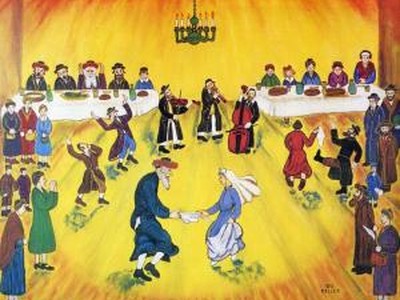
Question to the Rabbi: 🤔 Why is there a dutyto drink in Purim?
Community
Because the key to saving the Jews was Esther's meal, to which she invited Haman and Ahasuerus. And this salvation happened due to the strong intoxicationof the two main participants in the meal.Now I will tell you how it was, and you will understand everything yourself.When Ahasuerus and Haman came to Esther, the king said to her:“Well, Estee, let's havea drink!”Esther replied:“Of course, come on!”And they began to drink.Moreover, the queen seems to have drunk quite a bit – just for decency, but her two guests took it in such a way that it almost seemed to them.When Esther decided the time was right, she told the king what Haman intended to do to her people.Ahashverosh honestly tried to get outraged, but suddenly felt that he was getting completely ill, and he urgently needed to go out into the garden before something shameful happened.While the king was away, Haman, though drunk and barely moving, got up and tried to reach the bed on which Esther was sitting to plead for mercy.He made it, but he could not stay on his feet and fell right on the queen...And then Ahashverosh just returned, who has already regained the ability to soberly assess the situation!And then, as they say, it's history.What is the conclusion?The kind that only men should get drunk in Purim. After all, if Esther drank at her banquet on an equal footing with everyone, then, most likely, she would not be able to fulfill her role in saving the Jewish people, and we would not have anything to celebrate.Lechaim, Lechaim!And, women, of course, will also drink – how without it? But little by littleThe Book of Qualities says: The Almighty LOVES HIM who does not drink to intoxication!Tell your friends!Authors:Rav Lipa Erman and Sarah Rachel
📜 We invite you to read Esther the Scroll! 📜
Community
Dear friends,Purim is approaching, and we are pleased to invite you to the solemn reading of Megilat Esther at the Central Synagogue of Kyiv.When?March 2/ 13 Adar – 18:30 (evening reading)3 March / 14 Adar – 09:00 (morning reading)Together we will remember the amazing story of the salvation of the Jewish people, hear every word with Esther the Scroll and plunge into the atmosphere of a real Purim!We are waiting for you!
Purim Laws and Customs
Community
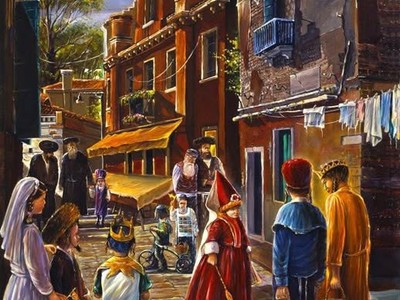
1.In the middle of the 4th century to n. e. the most powerful state in the world was the Persian Empire. It stretched from India to Ethiopia and also included the Land of Israel, the Jewish population of which was then small - these were those who returned from the Babylonian exile and rebuilt Jerusalem. The capital of the empire — the city of Susa (Shushan) — was at the same time the main center of the Jewish diaspora. The ruler of the empire, King Ahasuerus, enchanted by the beauty of the Jewish woman Esther, took her as his wife, and gave her cousin Mordecai one of the highest positions in the state.However, Haman, Ahasuerus' closest courtier, managed to convince the king of the need to exterminate the entire Jewish people in one day — 13 adar the following year. A mortal threat loomed over the Jews of the empire. But the Most High, with His great mercy, destroyed Haman's plan and turned it against him. By order of Ahasuerus, Haman was executed, and the Jews were allowed to destroy their enemies 13 adar. Since then, Mordechai has become the second man in the empire after the king.In memory of this miracle, the sages of the Torah of that generation established that 14 adar, when the Jews celebrated victory over their enemies, should forever be a holiday. This feast was called Purim (Esther 9:26; see also 179:1).2.Comparing Hanukkah to Purim, the Lubavitcher Rebbe, Rabbi Yosef-Yitzhak, notes that the main reason for the brutal persecution during the Hashmonah era was the “spiritual destruction of the Temple” — the betrayal of Hellenized Jews who forcibly imposed Greek culture, philosophy, and religion.In the days of Mordechai and Esther, the threat of physical extermination arose due to the neglect of the basic commandments of the Torah, on which the very existence of the Jewish people depends (the laws of kashrut, the purity of family life, etc.).In both cases, salvation came thanks to a handful of Jews ready for self-sacrifice: the Hashmonah family led the uprising, and Esther, Mordecai, and his disciples led the people of Israel to teshuvah by their example.The difference between the miracle of Hanukkah and Purim is explained by the difference of eras. In the time of the Hashmonah, the Land of Israel was the center of the people, there was a Temple and a Sanhedrin, so the miracle was obvious, supernatural. During the time of Mordechai and Esther, the people were in exile, so the miracle of Purim was hidden, and events unfolded, at first glance, naturally.Comparing these miracles, one of the greatest authorities of the Torah, Rabbi Yisrael Meir Kagan, known as Hafetz Chaim (1838-1933), made an important conclusion: when they try to destroy us spiritually, as in the days of the Hashmonah, the answer must be an armed uprising; but if physical destruction threatens, as in the days of Mordecai and Esther, salvation comes only with repentance, fasting and prayer.3.Ever since Moshe Rabbeinu, Jews have known the great power of fasting. During the trials, they fasted to awaken the mercy of the Almighty. It is known from the Oral Torah that during the war with Amalek (Shemot 17:8–16), Moshe fasted, and the Tanakh mentions the order of King Sha 'ul to fast all the army on the day of the decisive battle (Shmuel I 14:24).And in the time of Mordechai and Esther, when 13 Adar the Jews defeated their enemies, they fasted.Therefore, the sages established a common fast on this day — Fasting Esther, so that every Jew would know: if, when in trouble, he sincerely repents and fasts, as his ancestors did, — the Almighty hears his prayer.However, the Fast of Esther is not considered as obligatory as the four fasts mentioned in the books of the prophets. Therefore, pregnant women, women who gave birth within 30 days after childbirth, nursing mothers, as well as patients who find it difficult to tolerate even a slight ailment, are released from it. The newlyweds also do not fast if the fast falls on one of the seven days after the wedding ("seven days of the feast"). They all "redeem" the missed day with a more generous tzedakah.4.In Lent, Esther in the morning, during the Shacharit prayer, reads laughter and Avina Malkaina and makes the same inserts in the Schmone-esre as in other posts (see 117:9–11).5.In the days of the Temple in the month of Adar, each man sacrificed half a shekel for the purchase of public sacrifices. In memory of this, a special tzedakah is given before Purim — mahatsit a-shekel ("half shekel"): half of the monetary unit that has circulation in the country.Three halves of a monetary unit are given for each person — since in the Torah passage (Shemot 30:11–16) the word "truma" ("donation") is mentioned three times.The head of the family gives mahatsit a-shekel for each family member. The most common custom is to give for children until they create their own family. The best time to do this is Esther's Fast.6.If circumcision occurs in the Fast of Esther, a festive meal is arranged at night, after reading the book of Esther. Sandak and the baby's father can break the fast in the afternoon.7.In the "Maariv" there are 14 adaras, with the beginning of Purim, after the "Schmone-esre" they read the book Esther from the scroll — "Megillah". It is customary to wear festive clothes. At home, they set the festive table and light candles.8.In all Purim prayers, "Veal anisim" is added — both in "Schmone-esre" and in "Birkat a-mazon".9.Every man and woman is obliged to listen to Megila's reading twice — night and day. Children are also brought in by being taught the commandment.10 – 18Next, the detailed laws of reading Megila are set out: the blessing before and after, the order of folding the scroll, the places where it is customary to pause, the custom of "beating Haman", the need to listen carefully to every word, the rules in the absence of a minyan, the features of the Sabbath, etc.The reading of Megila in Purim is of particular importance as it replaces the reading of Galel. Therefore, the fulfillment of this commandment cannot be canceled.From the "Shulhan Arukh" vault, part 1.
Topic of the day: 🥂 The controversy around the "regulation on the restriction of beverages": is it valid in Purim?
Community
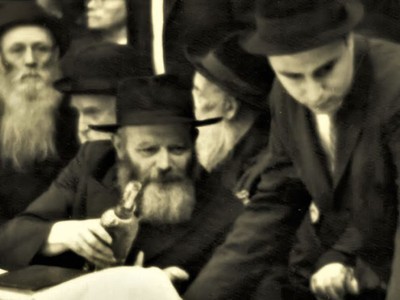
📜 The origins of the resolutionIn 1963, on the Sabbath of the weekly chapter of "Shmini", the Seventh Lubavitcher Rebbe — Menachem Mendel Schneerson — introduced the famous "resolution on the restriction of drinks". We were talking about alcohol on Hasidic dyes: no more than three or four small glasses of "lechaim", and their total volume should not exceed "revitis" (about 86 ml).The Rebbe emphasized that even this is allowed only with full confidence that the person will not get drunk. If there is at least the slightest risk, this is also prohibited.Since then, the decree has become an integral part of Chabad discipline, especially among students of the Tomhei Timimim yeshiva.🔥 Why does the question arise in Purim?The holiday of Purim is associated with the commandment "hell for poison" — "to such an extent that you do not distinguish...". This expression is given in the Talmud and codified in the Shulchan Aruch.Hence the doubt: if there is a dutyof special joy in Purim, does the "regulation on the restriction of drinks" apply to this day?🗣️ Rebbe utteranceOver the years, the Rebbe has expressed himself differently:🔹 In 1964, on the first Purim after the introduction of the ordinance, he said that “on this day the restrictions do not apply”.🔹 However, as early as 1965, the Rebbe clarified: the restriction applies in Purim, as well as on other holidays — with the exception of the four Passover glasses, which are a separate commandment.Later, he repeatedly reiterated that the ordinance remained in force in both Purim and Simhat Torah.⚖️ Exceptional yearsHowever, there were four Purims (1966, 1979, 1981, 1989) when the Rebbe directly encouraged the performance of “hell for poison” literally. In those years, they really drank more than usual.But it is important: these were specific instructions for specific years, and not the abolition of the resolution as a whole.🍷 "Wine of the Torah" instead of wine in a glass📖 Chabad approachIn Chabad Hasidism, special attention is paid to the mind — understanding and awareness. Therefore, excessive drinking is seen as something that contradicts the very essence of ministry.The Rebbe emphasized that if a person believes that without alcohol he will not be able to pray or rejoice — this is self-deception.Rebbe✉️ 's LettersIn letters from the 1950s, the Rebbe wrote that the former tradition of heavy drinking had changed for two reasons:️1 The Hasidic teachings have become more accessible and understandable.️2. The mission of “spreading sources to the outside” requires clarity of consciousness.He even called excessive drinking “disgusting” if it leads to a loss of self-control.🎓 Special requirement for studentsYeshiva students are seen as a “kingdom of priests.” Therefore, the requirement for them is especially strict: no intoxication.The Rebbe said: the real "Chabad Spitz" is not the one who violates the restrictions, but the one who spreads Hasidism and works on himself.💡 What is the real "hell for poison"?In one of the letters, the Rebbe wrote that sometimes “one drop” is enough if a person really wants to rise above his ego. And if not, a whole barrel will not help.The real intoxication of Purim is intoxication with content, faith, joy.🎭 Purim: Joy Without Loss of Dignity🎉 Joy above reasonPurim is a unique celebration, even when compared to other yom products, it's a special form of joy. In Hasidic conversations, it is emphasized that Purim's joy is above the usual framework.But “above the box” doesn't mean “no box at all.”🛑 Danger of extremesThe Rebbe repeatedly warned that a person who loses control does not become more spiritual. On the contrary, it enhances the material side of its nature.Alcohol can create an illusion of exaltation, but true joy comes from inner work.🌊 "When the whole world becomes a drink"The Rebbe often quoted the saying that in the Mashiach era “everything will become a drink” — that is, the world will be filled with the knowledge of the Almighty.Until then, our task is to maintain clarity, dignity, and inner discipline.SummaryThe “Beverage Restriction Ordinance” is not a technical rule, but a spiritual guideline.Purim teaches us to rejoice without fear, but also without losing ourselves.The real "lechaim" is a life filled with meaning.If you wish, I can prepare a separate article only about four exceptional Purims with a detailed historical description of the events in 770.source: 📖 Lubavitcher calendar

Welcome to the Fiddler on the Roof Gallery
Community
We invite you to exhibitions that fill the space with light and color 🌿From March 4 to March 24, two special expositions will be held in the "Fiddler on the Roof" gallery:🎨 "Flower retrospective" by Valentina Glavun🎨 "Palette of inspiration" by the artist Albert Lejzer FeldmanOpening — March 4 at 18:00.It's an opportunity to stop in the midst of the daily hustle and bustle and let art speak quietly to the soul.We are waiting for you in Kyiv, Shota Rustaveli, 13.
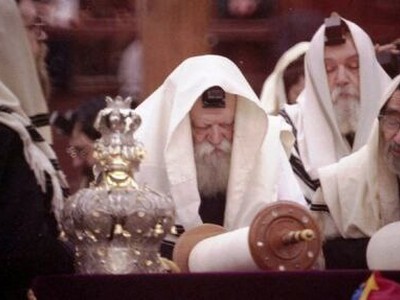
🕯 Shabbat Zakhor — the memory of Amalek
Community
The Sabbath preceding the Feast of Purim is called Shabbat Zahor (“Sabbath of Remembrance”). In the works of the Gaons, it is also referred to as the "Sabbath of the destruction of Amalek." On this day, one of the four special chapters established by the sages for the month of Adar is read, in addition to the weekly chapter of the Torah.📖Reading contentOn this Sabbath, a passage is read about the acts of Amalek and the commandment to remember his evil and erase thememory of him. This is the spiritual preparation for the destruction of Haman, a descendant of Amalek, as recounted in Megilat Esther.⚖️By HalakhaA source of special reading is mentioned in the Mishnah (treatise "Megila").The chapter of Zahor is read on the Saturday closest to Purim (i.e. before Adar 14). Even if Shushan Purim falls on a Saturday, reading takes place everywhere on the Saturday before the “ordinary” Purim.On this day, two Torah scrolls are taken out:— from the first read the weekly chapter;— on the second — "Parashat Zakhor".Instead of the usual aftar, they read a special aftar about the prophet Shmuel, who received the command to destroy Amalek.If you missed the reading, you can catch up with the chapter "Parashat ha-Khodesh" on Shabbat, but later they do not read it in public.On this Sabbath, they do not say the prayer "Av ha-Rahamim" in front of Musaf, but they say "Tsidkatha" in Minsi.📜Halachic statusUnlike other special chapters of the month of Adar, many law teachers have ruled that the Parashat Zahor hearing is a commandment from the Torah (deoraita). Therefore, even women and girls try to come to the synagogue and hear this reading.Many strive to listen to readings from a particularly kosher, thoroughly tested Torah scroll and from a reader who strictly adheres to the accuracy of vowels, accents and cantillation.🔥In Hasidism of HaBaDOur Rebbe was repeatedly held by the farbrangenes and pronounced by the Maamarim on Shabbat Zakhor, revealing the inner spiritual meaning of the "destruction of Amalek" — as the eradication of coldness and doubt in the service of the Almighty.It is said that Zalman Zezmer approached Hasidism after seeing with what deep inner hatred towards Amalek. Benjamin Klecker listened to the reading of Zahor.In Shabbat Zakhor in 5632 (1872), a meal was held on the occasion of the engagement of Rabanit Dvori-Leya Ginsburg. That day, Rebbe Maarash uttered a maamar that began with the words “המגיד מראשית אחרית”.Once on Shabbat, Zahor Rebbe Rayat explained the different levels of Amalek's destruction. When during the week the Hasidim of Saadiya Liberov entered his echidut before Purim, the Rebbe said that if he had come earlier, before Shabbat, he would have heard the Maamar about the even deeper level of this work.🏘Historical factIn 5729 (1969), the first group of Hasidim of the HaBaD arrived to settle in Nahalat Gar HaBaD (KiryatMalakhi) on the eve of Shabbat Zahor. Since then, this day has been considered the founding date of the district.Shabbat Zakhor reminds us that the struggle against Amalek is not only a historical memory, but also the inner work of every person — to erase coldness, doubt and spiritual indifference. source: 📖 Lubavitcher Calendar
Seaha to Tetsave Head | Every day is like Yom Kippur
Community
📖IntroductionAt the end of the chapter, Tetsave refers to the commandment to burn ketoret, an odorous incense that was offered on a golden altar in Mishkan.The Torah mentions that on Yom Kippur, the high priest sprinkles the altar with the bloodof the sacrifice, making atonement for the sins of the people of Israel.🤔IssueThe chapter “Aharai Mot” details the entire service of the high priest on Yom Kippur.Why is a detail related to the service of this day mentioned here — in the context of ketoret?Isn't her place in the section dedicated directly to Yom Kippur?💡ResponseThe essence of Yom Kippur is to reveal the deepest essence of the Jewish soul.Ketoret also hints at the revelation of this inner, innermost point of the soul. In this sense, it is similar in content to Yom Kippur.Combining these themes, the Torah teaches us that daily ketoret incense is a kind of “small Yom Kippur,” a spiritual work that essentially resembles one that occurs only once a year.📌ConclusionThe altar of ketoret especially emphasizes the connection between the people of Israel and the Almighty.Just as he carried out the command, “They will make Me a Sanctuary, and I will dwell among them,” so every Jew must strive for the divine presence to be revealed in his own heart.Shabbat Shalom📖 Lubavitcher calendar
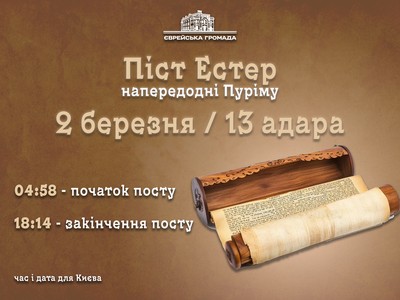
Day of battle — day of fasting
Community
The 13th adar (or the 11th if the 13th falls on Shabbat) is the day of fasting, the day of Taanit Esther. It is established in remembrance of the fasting of Mordecai, Esther and all the people of Israel on the 13th of Adar — the day on which “the enemies of the Jews hoped to overcome them, but it happened that the Jews themselves overcame their enemies; and the Jews gathered in their cities…” (Esther, 9).Jewish LentOn this day, the sons of Israel fasted and asked the Almighty to win the battle with their enemies. At one time, Moshe also fasted before the battle with Amalek. This fast meant that Israel hopes to win not only by brute force, but above all by praying to Heaven — and Heaven in His mercy gives him the power to win. Therefore, during the time of Mordechai, Israel fasted before going to battle with the enemy who sought to destroy it.In memory of this fast, Taanit Esther was established for future generations — so that we remember: the Almighty knows when we are in trouble, hears everyone who in fasting and prayer sincerely returns to Him, as our forefathers did in difficult times.An allusion to the fast of the 13th of Adar is found in the Book of Esther (Megilat Esther), where it is said: “And they established fasts and prayers for themselves and for their descendants” (Esther, 9).This fast is named after Esther, because it was she who first began fasting and said to Mordechai:“Go, gather all the Jews who are in Shushan and fast for me; do not eat or drink for three days, night or day, and I will fast with my maids” (Esther, 4).Although Taanit Esther is established in memory of another fast (because the three-day fast of Esther and Mordechai took place on the 13th, 14th and 15th of Nisan, immediately after it became known that Haman on the 13th of Nisan sent letters ordering the killing of Jews, and we fast the 13th of Adar in memory of the fast before the battle), but we call it in honor of Esther — in memory of the fact that she first resorted to fasting when the people of Israel were in danger.There is an opinion that Taanit Esther is established primarily in reference to the three-day fast on the 13th, 14th and 15th of Nisan. But since we could not establish an annual fast in the joyous month of Nisan — the month of the Exodus from Egypt, when fasting is generally forbidden — our sages decided to fast the 13th of Adar, the day when the Jews gathered to fight their enemies. And although Taanit Esther is the memoryof the three-day fast, the sages "softened" it by establishing only a one-day fast.There is also a custom in which some people fast on the first two Mondays and the first Thursday after Purim — in memory of the three-day fast announced by Esther.Some fast the 13th of Adar not only during the day, like the vast majority, but also at night — so that Taanit Esther reminds us not only about fasting before the battle, but also about the three-day fast of Esther around the clock.
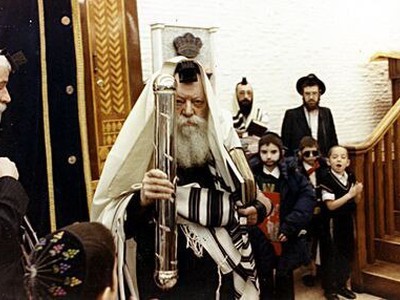
Topic of the day: 10 facts and customs of Purim in the HaBaD
Community
️1? Purim Campaign (Mivtsa Purim) 📢The main instruction of the Rebbe is not to celebrate alone. The Hasidim of Habad go to hospitals, military bases and even prisons so that every Jew can hear Megila and fulfill the commandments of the holiday.️2 ᐈ Spiritual training 📖Among the Hasidim, it is customary to study the deep Hasidic teachings (maamaras) of the Lubavitcher Rebbe. They reveal the inner, spiritual meaning of the victory over Haman and the connectionof the Jews with the Creator.️3? Traditional "Kreplach" 🥟On Purim, it is customary to eat crepe — dumplings with meat inside. This is a symbol of a “hidden” miracle: just as themeat was hidden in the dough, so the hand of the Almighty was hidden behind a chain of “random” events in the Scroll of Esther.️4? Intoxication through the Torah 🍷The Rebbe advised not to drink much (until the age of 40), but to reach a state of “hell de la poison” (when the distinction between “blessed Mordechai” and “cursed Haman” is blurred) through a deep immersion in the study of the Torah, and not through alcohol.5️? Mishloach manot through messenger 🎁HaBaDi tries to fulfill the commandment literally — transferring gifts (manot) to a friend through a third party, the "messenger". This emphasizes the special connection and unity between people.6️. Mahatsit HaShekel 💰In Taanit Esther (fasting before the holiday), it is customary to give three “half-denomination” coins (for example, three half-shekel or half-dollar coins) in memory of contributions to the Jerusalem Temple. It is customary to give for the whole family, as well as for children before the bar and bat mitzvah.7 ️Purim Gelt 💸Like on Hanukkah, children are given holiday money on Purim. This accustoms them to the joy of fulfilling the commandments and to giving tzedakah (charity) themselves.8️? Masks and costumes 👺Changing clothes reminds us that even when the Almighty is “hidden” (His Name is never mentioned in Megillah), He invisibly rules the world. Children often choose images of the heroes of the Scroll of Esther or the Hasidic righteous.9️. Joy Beyond Limits 🚀Purim feasts (farbrangenes) at HaBaDa are famous for their energy. It is believed that the joy of this day "breaks through all obstacles" and is so great that Purim is the only holiday that will not be canceled even in the day of the Messiah.🔟 Higher than Yom Kippur ✨Hasidism explains that Yom HaKippurim is only a day “like Purim” (Ke-Purim). Purim is higher, because we achieve holiness through the joy and sanctification of the material world, and not through the rejection of it.Purim Samaah!🥳🎉Source:📖Lubavitcher Calendar
Ayom Yom: 13 Adara
Community
Today is 13 Adar 5786. Fasting EstherTahanun is not recited in the Minhu (Day Prayer).My master, father, teacher and mentor said:“It is clear to me that when a Hasidic Jew sits in Beit Midrash (the house of learning) and studies or repeats the teachings of Hasidism in public, it is a joy for the ancestors (the righteous, the Rebbe of previous generations). And their joy is enough for him, his children and grandchildren to be granted an abundance of good — both material and spiritual.”“And Amalek came and fought with Israel against Rephidim” — the very name of the place implies that they “weakened their hands” (the reef of Yedihem) in the study of the words of the Torah. When a person reveals a weakness in the Torah — because the study of the Torah is designed to fulfill and adhere to it — then Amalek comes and cools the fervor of the Jew."And he fought with Israel" — the word "Israel" is an abbreviation of the expression: "There are sixty thousand letters in the Torah" (Yesh Shishim Ribo Otiyot la Torah). After all, each of the people of Israel has its own letter in the Torah, and therefore among the Jews it is accepted to participate in writing the letter in the Torah scroll. Amalek seeks to cool the holiness of this Torah.Advice against this: “Choose our men” — the people of Moshe (Moses), because “the spread of Moshe occurs in every generation” (itpashtut de Moshe be-hol dora), and in every generation there are heads of thousands of Israel.“Come out, make war with Amalek,” is said in the singular, for the Torah is eternal in every generation, at any time and in any place, to the same extent.Source:Lubavitcher CalendarLubavitcher calendar
Iom-yom: 15 Adara
Community
Today is 15 Adara 5786 - Shushan Purim1ლOn the bread before the blessing, "ha-moki" make a mark, but beware not to cut it in advance.Also, during the kiddush, "savri maranon" is said for bread.About the "future that will come" it is said:“A stone from the wall will scream, and a beam of wood will answer it.”Now the “inanimate” is silent. It is stepped on — and it is silent.But the time will come for future revelations, and the inanimate will begin to speak, tell and demand: if during the walk they did not reflect and did not speak in the words of the Torah, then why did they step on it?!The land on which they walk waits thousands of years — still from the Six Days of Creation — while all this time various living beings walk on it, etc. — for the foot of a Jew, two Jews, to step on it, and they speak the words of the Torah.And if not, she says: after all, you are like an animal!2ლMy master, my father, my grandfather, my teacher and rabbi (Rebbe Maarash) said that Mitler Rebbe wrote for every type of those who comprehend and serve, among the Hasidim of the community — Maamarim and special books, except for "Shaar HaYehud" and "Shaarei Ora", which are common and were written for all Hasidim.“Sha 'ar HaYehud” is the key to the teachings of Hasidism,and "Shaarei Ora" is an aleph-bet of the teachings of Hasidism.Source:📖 Lubavitcher calendar