
Izkor Prayer Reading
Community
Izcor(from Hebrew יִזְכּוֹר — “He will remember [the Almighty]”) is the main memorial prayer for the dead in Judaism. During it, believers pray for the souls of deceased parents and loved ones, as well as ask for charity in their memory. Main details:When it reads:Exactly 4 times a year after reading the Torah — in Yom Kippur, Shmini Atzeret, on the eighth day of Passover and on the holiday of Shavuot.TraditionThe text begins with the words “May God remember…” (May God remember…). In its full name, it sounds likeAzkarat Neshamot(commemoration of souls).Feature of the custom:According to tradition, during Izkor, only those whose parents have already passed away remain in the synagogue. People who have both parents alive leave the hall for the time of this prayer.
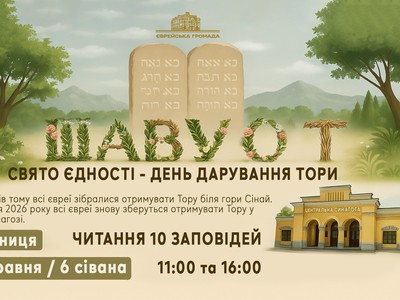
The Ten Commandments — 10 Speeches of the Most High on Mount Sinai
Community
What is the Ten Commandments, or Decalogue — 10 Speeches Written on the Tablets of the Covenant? What is their content? Tales of the Sages of the Ten Commandments.The 10 Commandments on the Tablets of the Covenant are the quintessence of the entire TorahHere is a short list of all the Ten Commandments:“I am the Lord, your G-d.”“Let you have no other gods.”“Do not use the nameof the Lord your God in vain.”“Rememberthe Sabbath day.”“Honor your father and your mother.”“Don't kill.”"Do not commit adultery."“Don't steal.”“Thou shalt not bear false witness against thy neighbor.”“Don't intrude.”The first five were written on one tablet, the other five on the second. Rabbi Hanina ben Gamliel taught this way.The commandments written on different tablets correspond to each other. For example, “Thou shalt not kill” refers to “I am the Lord,” indicating that the murderer degrades the image of the Creator. "Do not commit adultery" is the equivalent of "Let you have no other gods", because adultery is a spiritual betrayal, similar to idolatry. This is stated in the Book of Jeremiah: “And by her carelessness she defiled the earth, and wandered about with stone and wood” (Jeremiah 3:9)."Do not steal" answers "Do not use the nameof the Lord in vain", because the thief must sooner or later swear (in court)."Do not testify falsely" is a parallel to "Remember the Sabbath day", because the Almighty would say: "When you perjure yourself, it is as if you deny My creation of the world in six days and the rest of the seventh."“Do not encroach” is correlated with “Honor your father and mother”, because someone who encroaches on another woman can lead to the birth of a son who will respect the real father and curse his true one.The Ten Commandments include the entire TorahAll 613 commandments of the Torah are laid down in 613 letters, which are written in the Ten Commandments. Between each of them are all the details of the laws of the Torah. As it is said, “They are scattered with tarshish” (Shir HaShirim 5:14). The word "tarshish" is a symbol of the sea, so the Torah is compared to the sea: between large waves — small ones, as well as between commandments — laws.[The 10 commandments really contain 613 letters, if you do not take into account the last two words: לרעך אשר (usher lerehi — "what is your neighbor's"). These two seven-letter words symbolize the Seven Commandments to the descendants of Noah.]The Ten Commandments — The 10 Speeches with which the Almighty created the worldEach commandment corresponds to one of the ten Speeches (imperatives) by which the Almighty created the world:“I am the Lord your God” = “Let there be light” (Genesis 1:3).“You shall have no other gods” = “Let there be a firmament…” (1:6)."Do not use the nameof the Lord in vain" = "Let the water be collected..." (1:9).“Rememberthe Sabbath day” = “Let the earth produce greenery…” (1:11).“Honor your father and mother” = “Let there be lights…” (1:14).“Do not kill” = “Let the water boil…” (1:20).“Do not commit adultery” = “Let the earth give living creatures…” (1:24).“Thou shalt not steal” = “I have given you all the grass…” (1:29).“Do not bear false witness” = “Let us make man in Our image…” (1:26)."Do not intrude" = "It is not good for a man to be alone..." (2:18).
📚 Special operation in Brooklyn: How the Rebbe published Keter Shem Tov in 3 weeks
Community
For the holiday of Shavuot — the day of the Yortsayt of the founder of Hasidism, Baal Shem Tov — the story of 1972 about how one urgent order of the Rebbe raised the Lubavitcher Hasidim to his feet, forced printing presses to work around the clock and even circumvent the laws of American trade unions.📞 Urgent call at dawnThe morning of 24 Kislev, on the eve of Hanukkah. The Chief Secretary of the Rebbe, Rabbi Khodakov, immediately summoned the members of the publishing committee "Vaad Lehafatsat Sikhot" immediately after the prayer. A spontaneous challenge meant an extraordinary task:“The Rebbe wants you to redo, paraphrase, and print Keter Shem Tov, a fundamental collection of the teachings of Baal Shem Tov. And it should be done as soon as possible.”The Hasidim were given a personal copy of the Rebbe with his handwritten notes in the margins, as well as a folder with additional materials for inclusion in the new edition.Deadline and Winter VacationThe Rebbe set a tight deadline: the book must be ready by 24 tevet — that is, only four weeks. But he immediately warned about the hidden danger:“Keep in mind that this month marks the beginning of a nationwide winter holiday in America. Most printers will close for the holidays. You have less than three weeks of real time.”In order not to waste a single minute, the Rebbe ordered to write on each letter the code phrase: "Regarding "Keter Shem Tov"". The Rebbe personally extracted such notes from the stack first and immediately responded, adding a note: "Urgent!"Lead 🔥 crisis and trade union deadlockThe committee mobilized students of the "770" yeshiva, who verified primary sources day and night.There were no computers at that time — the text was typed manually from molten lead on linotypes. One small mistake — and it was necessary to re-cast the entire page. In the midst of the work in Brooklyn, even the lead ran out, and it had to be borrowed from competitors.The printing was ordered from the famous printing house of the Schulzinger brothers in Manhattan. But the process almost collapsed.Trade unions: the printing house was subordinate to the trade union, which forbade working in two shifts. The Hasidim resorted to tricks: the forms were secretly cast at night in another workshop, and ready-made blocks were brought to Schulzinger.Crash on the highway: when heavy metal molds were transported by car, lead letters jumped out of the cells from the shaking. The finished set turned into a complete chaos.Ban on work: the Hasidim tried to assemble the font themselves, but the master shouted: "According to the law of the trade union, no one without a membership card has the right to touch the equipment!"The situation was saved by Hasid Yehoshua Dubrovsky, who worked there and was a member of the trade union. He locked himself in the workshop and manually restored the entire text. After that, the machines were launched at full capacity — 24 hours a day.🎁 "The Rebbe's Look Worth Everything"The book was ready just in time. After receiving the first copy, the Rebbe wrote to the publishers:“Many thanks! A word spoken in time — what a good word it is! Their happy fate..."The owner of the printing house, Shmuel Schulzinger, personally arrived at 770 on the same day. When asked why he didn't send the courier, he replied:“You can send an accountant for money. But I came myself to see the Rebbe's face and get his grateful look. I won't pass this on by mail."As the Rebbe went to pray, he walked up to Schulzinger, smiled warmly, and said,“Shalom u-bracha, thank you so much for the books!”Immediately thereafter, all bills were paid in full.🕊️ Spiritual meaningLater, the Hasidic dye-breaker explained the meaning of this haste: the Rebbe entrusted the publication of the works of the founder of Hasidism to the committee that published his own conversations.The Rebbe is the head of the generation who completes Baal Shem Tov's mission of “spreading sources outward.” This lightning-fast publication became an inseparable thread that connected the origins of Hasidism with our Rebbe, who leads the world to the final Liberation — Geula.Source:📖 Lubavitcher calendar

Psychologist's page: Exhaustion does not come suddenly
Community
Sometimes exhaustion does not come suddenly — it comes quietly, almost tiptoe.Not with a loud “I can't anymore”, but with a small one:Not today. "no strength",Later. This funnel shows very accurately how a person gradually loses not only energy, but also contact with himself. First, we give up what is “optional”: recreation, meetings, sports, hobbies. Then life narrows down to a function — just to perform duties. And then even basic things start to seem overwhelming.The psyche works interestingly: in a state of overload, the brain saves resources. And the first to "disconnect" are the things that actually restore this resource. It turns out a paradox — a person removes from his life something that could save him.Particularly dangerous phrase:“I don't have time for myself.”Because very often it is not a lack of time, but chronic exhaustion.It is important to remember! burnout is not weakness or laziness. This is a signal from the nervous system that a person has lived in the "it is necessary" mode for too long, forgetting about "it is possible", "I want" and "it hurts me".And the way out of this funnel rarely begins with big changes.More often — from very small steps:• get enough sleep,• Eat slowly• get out into the air,Request Help• afford not to be “strong” 24/7.Even a candle does not shine if it is burnt to the bottom. The person, too.

A moment of silence.
Community
Every day at 9:00Cease movement.Shut your mouth.Remember.Honor thememoryof the dead:soldiers, children, peaceful people.Those who are no longer around.But who is with us forever is in the heart.It's not just a minute of silence.It is our dutyIt's humanity.Alive — thanks to those who were lost...........
Ayom Yom: 8 Sivan
Community
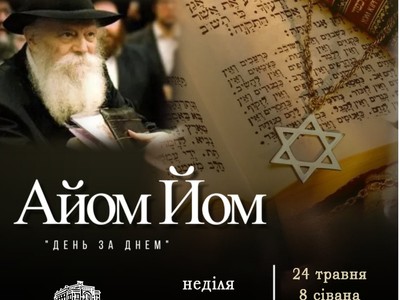
Today — 8 Sivan“Tie to the holiday” — the day after the end of the holiday of Shavuot.The material world is a combination of various aspects: the “tabernacle” (“gynunia”) of the Holy One, blessed be He — the place He prepared for the meeting with the man chosen among the creatures — and the “walnut garden” (“gan egoz”) — the “garden of sin” (“egoz” — walnut — in numerical meaning is equal to the word “het” — sin). And the Most High, the blessed, gives a person freedom of choice so that he can choose his own path in life.Notes:.These two concepts are interrelated. Why is this particular world a place where one can approach G-d? Precisely because there is the possibility of sin and the need to exercise free choice.Angels have no freedom of choice. They exist in an area where holiness is so open that they have no choice but to do His will. Yes, they do so with unwavering determination and tremendous love and fear, but these feelings are not the result of their own labor — they are the natural consequence of their spiritual perception.

TSHUVA. TORAH METHOD FOR CORRECTING IMPERFECTIONS
Community
There is a place of regret and remorse in our lives. These are healthy, constructive feelings, but only under two conditions: 1) if they are a reaction to a really bad act and 2) if these experiences lead to the fact that bad acts are no longer repeated. This is what defines teshuvu, the Torah's mechanism for correcting behavior.Rabbi Wasserman compared teshuvah to a cleaning mechanism: “If there was no cleaning, you would have to wear clothes until they were completely dirty, and then you would just have to throw them away.” Self-judgment is like throwing away clothes, and teshuva removes stains.Many believe that we are required to repent only for active violations, such as theft. But this is a mistake. Rambam writes that we should do teshuvah also for anger, envy and other bad character traits. Getting rid of them when they are already rooted is much harder.Whether a person will make a teshuvu depends on their ability to make choices. The concept of G-d-given freedom of choice, free will (hofesh bhira), is the foundation of Jewish tradition. However, many agree with this principle only in words, theoretically, considering themselves incapable of implementing it in practice. They believe that heredity or environmental influences make choice almost impossible.No one denies their enormous influence on our previous behavior. But, according to the cognitive psychology view, they continue to influence our behavior today only because we continue to instill in ourselves the same beliefs and thought patterns that once shaped our behavior. These beliefs and patterns are largely irrational. They were formed in us in childhood as a result of the interpretation of the events of our life that we gave at that time. However, today we are able to accept new, more conscious interpretations. So we can free ourselves from the influence of the past.Of course, it's not easy. Our thoughts, “internal dialogues,” are usually quick and automatic. It takes effort and practice to become aware of them and recognize them. Although we can constantly work to change our way of thinking, sometimes the usual stereotypes will still slip away despite all our efforts. Because of these difficulties, we are unlikely to be able to completely get rid of the influences of the past. And although in principle we control our behavior and can change it at any time, in practice this freedom is often limited.In an article on teshuvu Rabbi Yechiel Schlesinger describes the correct sequence of correcting negative character traits. He explains that the complexity of teshuvah, the correction of these qualities, comes from the fact that we are going the wrong way. In teshuvah, associated with a single bad deed, regret precedes correction. And when correcting established bad habits, correction is preceded by regret. This order is described by the prophet: “When I return, then I will regret it.”The meaning of his words is explained by the Rambam and the rabbinic Jonah. By doing teshuvah in the wrong order, a person can become so overwhelmed with the awareness of his sins and misdeeds and fall into such pain and sadness that change will seem absolutely impossible to him. In other words, if a person has a long-standing bad habit, he will not believe that he can get rid of it until he really changes himself.The founder of the movement of moral self-improvement — Musar — Rabbi Israel of Salant said that the path of character change is long, difficult and full of obstacles. As he famously said, “It is easier to read the entire Talmud than to change just one of your traits.”He teaches us to realize that on the way to correction, disruptions are inevitable. Self-improvement of a person always takes a lot of time. If we try to speed up the process of change, we can easily experience frustration, lose our morale, and stop our efforts.Miriam Levy, from the series "Effective Jewish Education"

✨ The 10 Commandments Campaign: Why Did the Lubavitcher Rebbe Ask to Bring Even Babies to the Synagogue?
Community
The holiday of Shavuot, the time of the Gift of our Torah, will come very soon. And today we want to tell you the story of the campaign (mivtsi), which the Lubavitcher Rebbe 📜 launched in 5740 (1980).🌍 On the eve of the upheaval: how it all beganIn the early 1980's, the Rebbe began to recite the prophetic verse frequently: “And he will restore the hearts of the parents through the children.” The Rebbe said that the world around was shaking, and in order to protect the Jewish people and increase their merits, special, strong spiritual actions were needed.And so, on the eve of the month of Sivan, the Rebbe turned to the Hasidim with an unexpected and ardent request:“Make sure that on the feast of Shavuot all the synagogues are filled with boys and girls who will come to hear the reading of the Ten Commandments!”This conversation was so important and international that the Rebbe, contrary to the usual format, addressed the Jews also in Russian, so that the call reached every heart behind the Iron Curtain.💡 Why children? Mystery of bailThe Rebbe recalled the famous midrash: when G-d wanted to give the Torah, He asked the Jews, “Who will be your guarantors?» The Jews proposed forefathers, then prophets — but G-d disagreed. And only when they said: "Our children will be our guarantors!” The Almighty agreed to give the Torah.The Rebbe quoted the memories of the Previous Rebbe (Paradise) of his childhood. On the eve of Shavuot, a teacher (melamed) would gather young children from the heder and tell them, “Children, come, I will lead you to the Gift of Torah!” and call them to the synagogue early in the morning.👶 Even those who are only one day old!Traditionally, synagogues have tried to avoid noise, and young children have often been left at home to avoid distracting adults from prayer. But the Rebbe reversed this approach for the sake of the Ten Commandments!The Rebbe established that this instruction applies to children from one month of age and older.Moreover, in subsequent years, the Rebbe emphasized: if it does not harm the health of the baby, even newborns who are only one day old should be brought (or brought in carts)!According to the Rebbe, the presence of children during the reading of the Ten Commandments not only does not interfere, but on the contrary — awakens a sincere awe of G-d and the Torah in adults. When adults see how important the Torah is to their children, their own hearts open anew.📢 What can we do today?The Rebbe campaign is more relevant than ever. Shavuot is not just a memory of the past, it is an annual reproduction of the Sinai Revelation.Invite the children to the synagogue!His children, grandchildren, nephews.Children of friends and neighbors.Let this Shavuot fill our synagogues with children's voices again. After all, it was thanks to them that we once received the Torah — and thanks to them, the Jewish world continues to live today.📜 “And he will return the hearts of parents through children…” Happy coming holiday of the Gift of the Torah! 🍇🌾📖 Lubavitcher Calendar

The Jewish community of Ukraine sincerely congratulates on the Vyshyvanka Day! 💙💛✨
Community
Embroidery is more than clothes. In her patterns are the memoryof generations, the strength of the family, the warmth of the house and the living history of the people.For the Jewish community of Ukraine, this holiday is also a sign of deep respect for Ukrainian culture, traditions and land, where the destinies of our peoples have intertwined for centuries.Today, the embroidery has become a symbol of unity, indestructibility and love for Ukraine. It is worn in different parts of the world — with pride, gratitude and faith.We are with Ukraine — in joy, in trials, in prayers and in hope.Happy Embroidery Day! May there be peace, light and blessings in every home. 💙💛

️10 life-changing insights️
Community
️1. Codependency is not about love.Often it is about fear, pain and the habit of "saving". Love is more about freedom, trust and peace.️2. Not everyone who hurts you is an abuser. Sometimes a person simply does not know how to do it differently. But it is not your duty to teach it.️3. If you do not choose yourself, you choose suffering. And this is also a choice, even if unconscious.️4. It is normal to want money, recognition and love. You are a living person.5️. You do not have to be “comfortable”.If the person is around only when you're constantly adjusting, it's not about intimacy. It's about control.6️. You are not obligated to forgive.No one has the right to demand that you give up your feelings for the sake of “normalcy.”7 ️"I don't know what I want" often means:“I've listened to others for too long.”You can also learn to hear yourself. Not immediately, but gradually.8️. You don't have to get stronger.Sometimes it's more important to be honest with yourself. Then there is strength, and clarity, and one's own path.9️. A job where you are not respected is not “just a job”. This is a daily exhaustion and gradual destruction of oneself.🔟 A person who puts himself first is not selfish. Often it's just an adult who has learned to take care of themselves.source: HealthPsychologyU?locale
Ayom-yom: 9 Sivan
Community
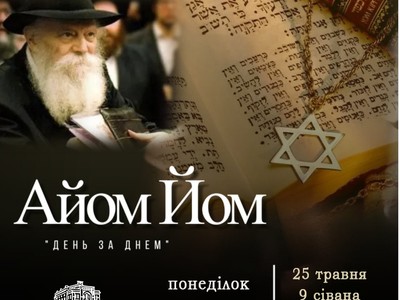
“The world needs air purification. The air is cleansed only by the words of Torah. The words of the Torah protect the world in general and protect every person in particular.The distribution of the six treatises of the Mishnah for memorization is necessary in order to repeat them “as you go along the road.” One or two chapters from the Mishnah, repeated by a Jew from memory — wherever he is and wherever he is — illuminate the connection between Israel and G-d.The word "Mishnah" consists of the same letters as the word "neshama" ("soul"). It is impossible to express in words how great the good is for a person and how reliably he, with God's help, is protected — both in general and in detail — if he constantly repeats the Mishnah.There are no words to describe the pleasure it brings to the Creator, may He be blessed.”sourcechabad.org
In Chabad: 📜 Rabbi Shneur Zalman Gerlik (1880–1974)
Community
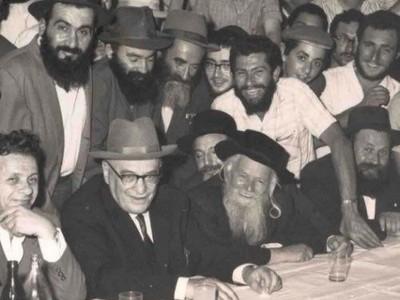
Origin and educationRabbi Shneur Zalman Gerlik was born on 25 Sivan 5640 (1880) in the city of Rogachev. In 1897, at the age of 17, he took part in the celebrations on the occasion of the wedding of Rebbe Rajac in Lubavitches. It was there, after the proclamation by Rebbe Rashab of the founding of the yeshiva Tomhei Timimim, that Schneur Zalman became the first student officially admitted to this educational institution.Rabbinical activitiesIn 1901, Rabbi Gerlik began his activity as a spiritual leader of the community in the town of Brezno. For decades, he served as a rabbi, despite persecution by the Soviets.In 1949, Rabbi Gerlik arrived in Israel and settled in Kfar Chabad, where he served as a rabbi for 25 years.Principle of responsibilityThere is a story that happened on one of the holidays after Rebbe Rajac left this world. The Hasidim gathered in his apartment, and our Rebbe asked Rabbi Gerlik to say the words of the Torah. Showing exceptional modesty, the rabbi replied that, in his opinion, Rabbi Kfar Chabad should have higher spiritual qualities and be a more exalted person than himself.The Rebbe replied that this question was entirely up to Rabbi Herlick himself, giving the lesson that greatness and success in the ministry depended on personal effort and work on oneself.Ministry & LegacyRabbi Gerlik initiated the construction of central synagogues and the first mikvah in Kfar Chabad. His energy was so great that even in his old age he made a trip to the United States to raise funds for the needs of the community, which was highly appreciated by the Rebbe.memoryRabbi Schneur Zalman Görlik died tragically in a car accident on the night of 8 Sivan 5734 (1974). His contribution to the development of the community is recognized as anintegral part of the history of Chabad in Israel, and one of the streets of Kfar Chabad is named after him.Lubavitcher calendar