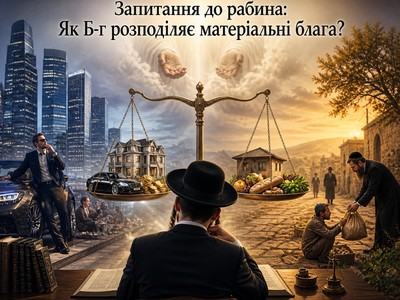
Question to the rabbi: How does G-d distribute material goods?
Community
Respond:Observing the surrounding world, a person often encounters a paradox: wealth is often concentrated in the hands of people who are far from spirituality and observance of religious laws. This raises natural questions about God's justice.First of all, it is important to recognize: the plan of the Most High is higher than our perception. As the prophet Yeshayag said: "My thoughts are not your thoughts." We only see a fragment of reality, while the Creator judges everyone based on their individual potential and unique circumstances. It is impossible to unequivocally determine who is "righteous" and who is "sinner" without knowing the whole depth of human life and those internal struggles that a person leads.Tradition teaches us to distinguish between the presence of money and the state of wealth itself. In the treatise "Pirkei Avot" it is said: "Who is rich? He who rejoices in his lot." Money is just a tool. You can own millions, but live in constant fear, conflict and dissatisfaction, which actually makes a person poor. And vice versa - the one who appreciates what he has, has inner peace and happiness that cannot be bought.Sometimes large sums of money are sent to a person as a test or, in the words of King Shlomo (Koeleth), as "wealth kept to the detriment of its owner." History knows many examples when fortune became the cause of a fall, imprisonment or deep depression.There is also a deeper aspect. According to the Torah, the Most High is absolutely just and does not remain in debt to anyone. If a person who generally leads a wrong way of life has done at least a few good deeds, he should be rewarded for them.For the righteous, the reward is often deferred to the Hereafter—to be eternal and perfect.For the sinner, the Most High can "pay" the reward here in the material world - through money and success, so that he will be fully settled in his lifetime. In this case, wealth turns out to be not a blessing, but a way to settle all accounts on earth.It is important to remember: material wealth is primarily a responsibility. It is a resource given by G-d to make the world a better place, to help those in need, and to uphold justice. We should not be sidetracked by the success of others. The real purpose of life is not to accumulate numbers in the account, but to build the right relationship with G-d and people.Material well-being comes and goes according to the will of Providence, but spiritual gains remain with a person forever. True faith is in the understanding that everything given to us by the Almighty - from a piece of bread to great wealth - is given exactly in the measure that is necessary to fulfill our unique mission on earth.source: https://toldot.com/
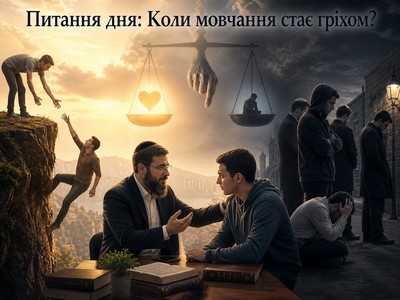
❓Question of the day: When silence becomes a sin
Community
In the Torah, the commandment about mutual responsibility is formulated in the chapter "Kdoshim" as follows: "Do not hate your brother in your heart; rebuke, rebuke your neighbor, and you will not bear sin for him." These words are not just a dry legal norm, but the basis of true ethics. We are used to consider active aggression or anger as hatred, but the spiritual tradition teaches that indifference is also a form of hatred.If you see, that a person physically falls into the abyss and you do not try to hold him, your silence is considered criminal in any society. A spiritual fall or committing a sin from the point of view of eternal values is no less dangerous for the soul. Hiding behind the mask of modern "liberalism" or simply not wanting to burden ourselves with other people's problems, we often show not tolerance, but deep indifference to the fate of our neighbors.The phrase "thou shalt not bear sin for him" has two important interpretations. The first indicateson direct collective responsibility: if you had a real opportunity to stop a person, but you chose to remain silent, part of the blame for his action falls on you. In such a case, the Creator will ask from the one who became a passive accomplice without preventing evil when it was in his power.The second interpretation concerns the form of correction itself. The sages explain: "reprimand so that you yourself do not sin." This means that the process of mentoring should not turn into humiliation. If you make a person blush with shame or make a remark in public, you yourself have committed a serious offense. The remark should be soft, delicate and dictated solely by concern, and not by a desire to humiliate the interlocutor.The commandment is relevant for everyone, but it is important to remember the wisdom: a remark makes sense only when there is a chance that it will be heard. If it is clear in advance that words will only cause anger or even more rejection, the law sometimes prescribes silence. The real goal is not the formal fulfillment of a duty, but the real salvation of a person from errorImagine your loved one carelessly reaching for a bare wire. You will shout and stop him because you value his life. Likewise in the spiritual sense: a timely word is the highest form of manifestation of love. Without understanding the intricacies of this law, we risk either remaining silent out of cold indifference, or wounding a person with our harshness. Responsibility for the other is what transforms simple coexistence into true human brotherhood.source: https://toldot.com/
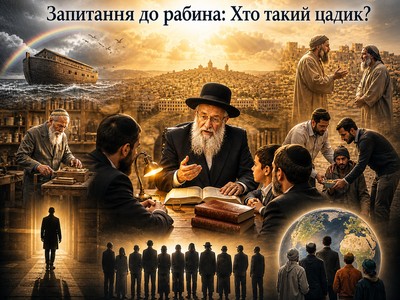
Question to the rabbi: Who is a tzaddik?
Community
Respond:The word "tzadik" (from the root "tzedek" - "justice") is often translated as "righteous". However, in the Jewish tradition, this concept is much broader than simply the absence of sins. This is not someone who passively avoids evil, but someone who actively affirms goodness and justice in the world.According to the teachings of the sages, a tzaddik is a person whose way of life is completely in accordance with the will of the Most High. It harmoniously combines two directions - flawless fulfillment of the commandments and deep faith. As the prophet said: "The tzaddik will live by his faith."The first whom the Torah directly calls a tzaddik was Noach (Noah). His righteousness became the reason for the salvation of mankind from the Flood. Later, we see Abraham intercede for the residents of Sodom, hoping that for the sake of ten righteous men, G-d would spare the entire city. This emphasizes the important role of the tzaddik: he is the pillar on which the world rests.The Talmud states that there are 36 hidden righteous people in each generation (in Hebrew, the number 36 is denoted by the letters lamed and vav). The world exists only because of their merits. Often they lead the simplest way of life, hiding their sanctity under the guise of ordinary artisans or workers. Their greatness is manifested in their modesty and willingness to take upon themselves the suffering of a generation in order to atone for its mistakes.Although absolute righteousness is a rare gift, the Torah exhorts everyone to strive for this ideal. Interestingly, the path to the level of tzaddik is open even to those who have made serious mistakes. "Not even the righteous who have never sinned can stand on the level where the repentant stand." True correction (tshuva) can turn a sinner into a righteous person, because efforts to overcome oneself and one's past have enormous spiritual power. At the same time, the sages warn: there is nothing more dangerous than "showy righteousness." A true tzaddik avoids pride and self-aggrandizement.The concept of righteousness is not limited to the Jewish people. In Judaism, there is a concept of "Hasidei Umot a-Olam" (Righteous Among the Nations). These are people from other nations who follow the seven commandments of Noah's descendants and lead a moral way of life. Such people are also assigned a share in the Hereafter, because G-d values the sincere desire for good in each of His creations.source: https://toldot.com/
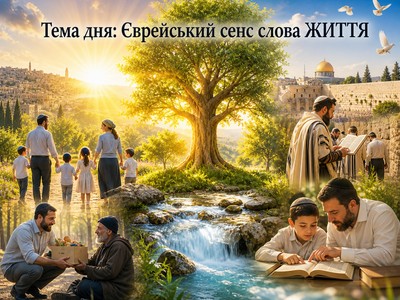
Topic of the day: The Hebrew meaning of the word LIFE
Community
In the secular sense, "life" is a biological process, a set of chemical reactions and a heartbeat. However, the Torah and the Jewish sages invest in this concept a completely different, much deeper and eternal meaning.To understand the essence of the Jewish definition of life, it is worth paying attention to the term "living waters" (mayim chaim), which occurs frequently in the Torah. The sages explain that only water from a spring that beats constantly can be called "living" water. If the spring dries up at least once every seven years, its water ceases to be considered "living" in the spiritual sense.Thus, true life is that which has no interruption. It is a continuous flow connected to the First Source. Life is not just existence in time, it is involvement in eternity.In the Talmud (treatise Brahot) there is a seemingly paradoxical statement: "The wicked are called dead even during life, and the righteous are called alive even after death." This saying reveals the true meaning of the word "life" through the connection with the Creator: a person who spends his days only in the satisfaction of fleeting physical desires cuts off the connection with his soul and eternity. Her body is functioning, but the spiritual "battery" is disconnected from the source. It is similar to a cut flower: it still looks alive, but in fact it is already dead, because it is deprived of nourishment from the root.A righteous person builds his life on values that stand above time. His actions, his influence, and his soul are inextricably linked to G-d, the Source of eternity. Therefore, when his body stops breathing, his very essence continues to "live" in the higher worlds and in the memory of those whom he guided to the path of goodness.Life is not the number of years lived, but the quality of the connection with the Creator. The true meaning of the word "life" in the Torah is continuity. We are truly alive only when our actions have eternal value. As Abigail told King David, the soul of man must be "tied in the knot of life," and this is the highest form of existence to which we aspire.For those who follow the path of Bnei Noach (descendants of Noah), this meaning is especially important: a conscious life according to the laws of the Creator transforms ordinary earthly existence into "eternal life" already here, in this world.source: https://toldot.com/
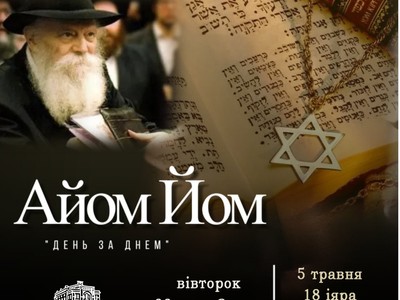
Ayom Yom: 18 Iyar
Community
Today is 18 Iyar 578633rd day of Omer, Lag ba Omer holidayAt the Mitteler Rebbe (Second Lubavitcher Rebbe), Lag ba Omer was one of the most prominent holidays. On this day, they went out into the field; although the Rebbe did not wash his hands for a meal with bread, he drank a little “lechaim” (strong drink), which was forbidden to him because of his health.Many miracles were observed at this time. Most of them concerned the birth and well-being of children. Throughout the year, people waited with hope and anticipated the onset of Lag ba-Omer.📖 Lubavitcher calendar
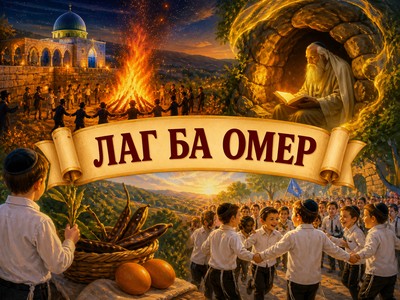
🔥 RashbiFlame: A Journey into the Mystery of Light Lag Ba-Omer
Community
The day of the eighteenth of Iyar is not just a date on the calendar, but a moment when the heavens open and the light of the inner Torah fills our world. On this thirty-third day of the counting of the Omer, we celebrate "Yom Ilul" - the day of great joy of the divine sage, Rabbi Shimon bar Yochai (Rashbi). Before his departure, the author of the book of Zohar commanded his disciples not to grieve, but to celebrate. He saw this day as the pinnacle of his soul's triumph, when all the secrets accumulated over years of trials were finally handed over to humanity. According to tradition, the house of the sage that day was engulfed in an unearthly flame that did not burn, but illuminated everything around. This spiritual fire even today, after millennia, warms Jewish souls, reminding us that true knowledge is the light that dispels all darkness.🕊️From Healing to UnityThe spiritual meaning of the holidayIn addition to honoring the Rashbi, the Lag ba Omer carries a message of comfort and correction to society. This is the day when the terrible epidemic that struck twenty-four thousand disciples of Rabbi Akiva stopped. The tragedy happened because the great scholars of the Torah did not show proper respect to each other. Celebrating today, we correct that long-standing mistake by placing Agavat Yisrael—unconditional love for one's neighbor—in the center. We are glad that the light of the Torah did not go out, because it was on this day that Rabbi Akiva passed on his knowledge to five new students, among whom was Rashbi. Thus Lag ba-Omer became a symbol of endurance and the victory of unity over separation.On the initiative of Lubavitsky Rebbethis spirit of unity today is embodied in large-scale children's parades that unite thousands of hearts under the sign of Jewish dignity.📜Legacy of Generations: Chabad Rebbe in LubavitchesIn the history of Chabad, this day has always had a special meaning. Since the time of the Alter Rebbe, there has been a custom of going out into the field on this day. The Mitteler Rebbe turned the Lag ba Omer into a time of miracles: the Chassidim knew it was the "hour of favor," when the Rebbe gave special blessings for healing and the birth of children. During Tsemach-Tzedek, the holiday was celebrated on a special scale: meals in the fields, niguns and Hasidic stories. Rebbe Rashab bought the right to light the fire in Hebron, and our Rebbe turned this day into a powerful tool for awakening Jewish sparks throughout the world, calling everyone to become a "lamp" that carries the light of Mashiach.Chabad Lag ba Omer ✡️ customsSo that you can fully live this holy day, the main traditions and instructions of the Rebbe are collected:📌Prayer and TzedakahOn this day, Tahanun (repentance of prayers) is not read, because it is full of joy. The Rebbe called for donations to be multiplied by the number 18 (High Life), which corresponds to the date of 18 Iyar. It is also customary to read the 33rd psalm from the book of Tegilim.📌Festive Meal & FoodIt is customary to arrange festive meals (dyes). There is a custom to eat the fruits of the carob tree (in memory of the miracle in the Rashbi cave), as well as boiled eggs painted brown. Tsemakh-Tzedek also pointed to the tradition of eating dairy dishes.📌Hearths and JoyIgnition of fires is an ancient custom, symbolizing the light of the Book of Zohar. The Hasidim gather around the fire, sing niguns, and tell stories about the righteous.📌Holy Places and PilgrimageThose who can visit Meron, Rushby's resting place. For those who are far away, the Rebbe advised to visit the "qiyun" — the holy places of rest of our teachers (for example, Oel Rebbe), in order to connect with the energy of this day through them.📌Optic (first haircut)For boys who are three years old between Passover and Lag ba-Omer, it is customary to hold a solemn first haircut on this very day — at the grave of Rashbi or in the Hasidic community.WeddingIn recent decades, the Rebbe noted that it is possible to hold weddings not only during the day, but also starting from the very night of Lag ba-Omer, multiplying joy among the people of Israel.May the light of Rabbi Shimon bar Yochai illuminate your homes and bring everyone personal and general Liberation!Lag Ba-Omer Samaah!📖 Lubavitcher calendar
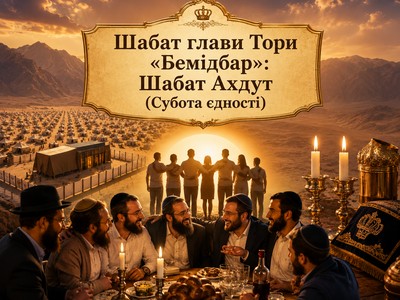
Shabbat of the head of the Torah "Bemidbar": Shabbat Ahdut (Saturday of unity)
Community
Friends, a special Shabbat is approaching — the Shabbat of the Bemidbar chapter. On this day, during the “Rahab de Raavin” (the time of the supreme favor of the Almighty before the end of the Sabbath), we have a special custom established by the Rebbe.📜 History of customIn 1986 (5746), the Rebbe made a sincere request: to make this Sabbath a symbol of the unity of the Jewish people.Since Shabbat "Bemidbar" is a Saturday when we bless the month of Sivan and prepare for the gift of the Torah, it is extremely important to recreate the atmosphere that prevailed near Mount Sinai:"As one man with one heart."What do we do?The Rebbe proposed to organize this day of Hasidic painters under the slogan:“How good and pleasant it is for the brothers to sit together!”The program of the meeting is simple and deep:• Common dye brand — because it is said that "the refraction of bread brings hearts together."• The words of the Torah are a discussion of the themes of love for one's neighbor (Agavat Yisrael) and the unity of the people.• Mutual support — everyone should support and inspire their friend (and women — a friend) to do good deeds and strengthen the connection between us.PURPOSETo gather all together — “old and young, sons and daughters” — to fill the world with the energy of unity. When we are united at the bottom, the Most High reveals His blessings from above.📍 Wherever you are on this Sabbath, organize a small meeting, say “Lechaim” and add warmth and unity to the world!Shabbat Shalom!sourceLubavitcher calendar
📜 Reb Peretz Hen — thebond of six generations of Chabad
Community
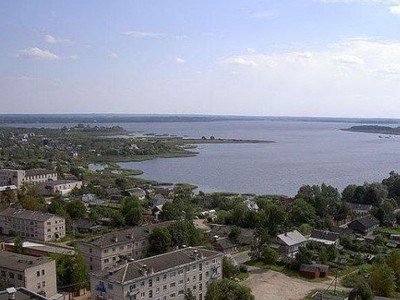
Today we will plunge into the story of an amazing person whose life has become a unique bridge between generations. Rabbi Peretz Hen (1797-1883) is a great Chassid and a sage who received a rare merit: he saw six chapters of Chabad — from the Alter Rebbe itself to the Rebbe Rayatz.🌟 Unique generation chainRabbi Peretz Hen lived 86 years and became a living witness to the golden era of Hasidism.As a child, he was honored to see the founder of Chabad — Alter Rebbe — during his trips to the communities.And in his old age, a few months before his death, he saw little Yosef-Yitzchak — the future Rebbe of Paradise - when he was still a baby in a cradle.Thus, one person combined the entire history of Hasidism — from its inception to the twentieth century.🕍 The Way of Rabbinical Ministry and the Miracle in BeshenkovychiRabi Peretz was known by different names — depending on the cities where he served: Smelyansky Peretz, Nevelsky Peretz and Beshenkovytsky Peretz.His appointment to the Beshenkovychi took place on the direct instructions of the Mittler Rebbe.Before leaving, the Rebbe ordered him to study in depth the specific law in the Shulchan Aruch code.Subsequently, it became clear why. A great genius and a connoisseur of the Torah lived in the city — Rabbi Aaron Jaffe, who was skeptical of young rabbis.When a difficult legal dispute arose, Rabbi Peretz answered it so brilliantly, relying precisely on the section that he was told to study, that Rabbi Aaron was impressed and recognized his greatness.🔥 Loyalty and devotion to the heads of ChabadRabbi Peretz was not just a Hasidic but a true pillar of devotion.🔹 At the time of Tsemakh TzedekAfter the departure of Mittler Rebbe, Rabbi Peretz was one of the most active Hasidim who begged and insisted that Tsemakh Tzedek shoulder the burden of community leadership.🔹 In the days of Rebbe MaarashAfter the departure of Tsemakh Tzedek, it was Rabbi Peretz who was among those who officially proclaimed the acceptance of the leadership of Reb Maarash by the Hasidim.After that, the Hasidic elders divided the regions among themselves to maintain the spirit of communities throughout the Russian Empire, and Rabbi Peretz took care of Nevel, Polotsk and the whole district.💼 Rabbi Chernihiv and the testimony of Mittler RebbeIn 1866, on the advice of Tsemakh Tzedek, he headed the community of Chernihiv.There lived the famous scholar Rabbi Moshe Marianov, who was extremely independent and did not bow his head to anyone.To everyone's surprise, Rabbi Moshe showed great respect for Rabbi Peretz and always stood up when he came in.Later it turned out that Rabbi Moshe had heard from the Mittler Rebbe himself before his departure:“Perets Smelyansky is a wonderful young man.”The Rebbe's words were the highest authority for him, requiring no proof.🕯️ Inheritance and descendantsRabbi Peretz retired on Shabbat, 26 Iyar 5643.He left behind a glorious dynasty. Among his sons were prominent Hasidim: Rabbi Meir, Rabbi Moshe-Leib Line, Rabbi Abraham-Aaron, Rabbi Meir-Simha and the famous Rabbi of Chernihiv — Rabbi David-Zvi (Radatz) Hen.His life remains for us an example of how you can carry through decades the fire of devotion to the teacher and remain steadfast in the faith.May the memoryof the great Hasid be blessed ✨📸 In the photo: Nevel town📖 Lubavitcher calendar
Ayom Yom: 2 Sivan
Community
Today — 2 Sivanas, YOM A-MEYUHAS 578646th day of Omer📌 Yom HaMeyuhas (2 Sivan) is called a “special day” for three reasons: on this day, the Jews received the status of “holy people”, the day of the week on which it falls always coincides with Yom Kippur, and it is also located between important dates — Rosh Hodesh and the days of preparation for the gift of the Torah. This day itself does not have separate commandments, so it seems to be "proud" of its large neighborhood.Ayom Yom• Ana be-koah speaks in a whisper during the Kabalat Shabbat (Sabbath Meetings).• The line "U-fros alainu..." ("And stretch over us...") during the Kabalat Shabbat is spoken standing up.• In 5589 (1829), the Sabbath of the chapter "Bemidbar" fell on 5 Sivan — on the eve of the holiday of Shavuot. Before lighting the Sabbath candles, Tsemakh Tzedek — the third Lubavitcher Rebbe — uttered a maamar (Hasidic teaching) on the topic: "Raise the head... of their parents."The meaning of the word "seu" ("present/count") here corresponds to the interpretation of Ibn Ezra, as in the poem: "Kisa tesa et rosh" ("When you count / raise your head"). An explanation of this principle is that through the work of unfolding the light of the soul incarnated in the body, there is a spiritual upliftment in the very “source” and essence of the soul as it is above. On the basis of this, the Rebbe explained several verses, as well as excerpts from the book of Zohar and the Midrash.• On Shabbat itself at noon, our Teacher — Alter Rebbe — gave a friend (speech) "And I will betroth you to Me forever..." and explanations to it are exactly those printed in the book of Elk Thor.• On the first day of the holiday of Shavuot, our Master uttered the words "And count for yourself..." and explanations to it, which are also printed in the Likutai Torah.• On the second day of Shavuot, during the festive meal, our Master uttered the friend “And wisdom — where does it come from?”, which is the second explanation for the topic “Count Fifty Days”, printed in the Lycutes of the Torah.📖 Lubavitcher calendar
📜 200 years that shook the Jewish world: how the Rebbe turned the anniversary of Baal Shem Tov into a real revolution
Community
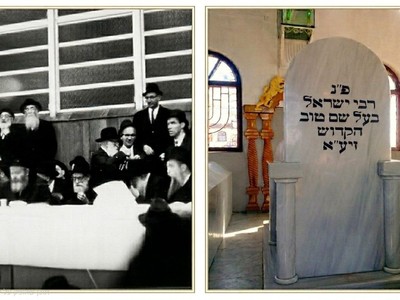
The holiday of Shavuot is approaching — the day when the founder of Hasidism, Saint Baal Shem Tov (Besht), completed his earthly path.Not everyone remembers, but on the eve of 5720 (1960) — the 200th anniversary of his departure — the Jewish world did not plan anything special. The Hasidim did not think that this year would be "special". But the Seventh Lubavitcher Rebbe had a different idea.The Rebbe literally staged a real "shake-up", raising absolutely everyone to their feet: from big businessmen to school teachers.⚡️ The main slogan of the year: "Dissemination of sources"The Rebbe turned the anniversary not just into a day of remembrance, but into a practical call to action. In his letters of that time, he explicitly stated:“This is my motto for this year — my demand for everyone to act with redoubled energy to spread the sources of Hasidism everywhere!”The Rebbe connectedthe theme of Besht's 200th anniversary with literally everything:He reminded ● businessmen that Baal Shem Tov taught them to serve the Almighty in joy and care for the material well-being of others.● School principals made remarks if they forgot "with warmth and Hasidic fire" to talk to children about the legacy of Besht.● To those who asked for a blessing for healing, the Rebbe explained that this year is a time of special merit (segulah), and the best medicine is to add to the study of the teachings of Baal Shem Tov.🕯 "Baal Shem Tov loved the light"In the paint brands of that year, the Rebbe revealed the deep connection between Chabad Hasidism and Besht's teachings. He quoted the head of the previous generation, Rebbe Rajaca:“Baal Shem Tov was very fond of light” — both spiritual and literal. It is a well-known story that Besht and his disciples lit many candles after the end of Shabbat.That year, the Rebbe began in detail, from Saturday to Saturday, to parse the book of Cavaat HaRivash (“The Covenant of Baal Shem Tov”), translating deep mystical ideas into the language of practical advice for the daily life of every Jew.🕊 Besht's legacy:Taking care of the body is no less important than taking care of the soul.The Rebbe stressed that even before opening up to the world, Baal Shem Tov went to villages and helped ordinary Jews financially — with food, money, a kind word.The conclusion for us today: real Hasidism is not only sublime reflections, but concrete deeds. This is 200 — and today much more — years of unconditional Aawat Yisrael — love for one's neighbor.🔥 Shavuot is the time to “accept the Torah” anew. And on the day of remembranceof Baal Shem Tov, the best gift for his soul is to add a little light to this world: to open the book of Hasidism, to help his neighbor and do it with real, living joy.📖 Lubavitcher calendar
📌 Rebetzin Dvo-Leya Tverskaya
Community
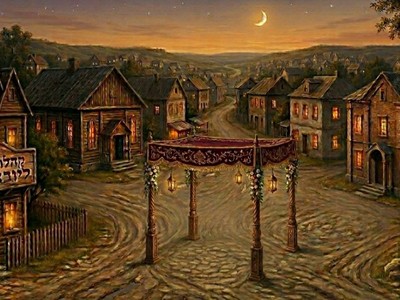
Rebbetzin Dvo-Leya was the daughter of Miteler Rebbe — the second Lubavitcher Rebbe — and the wife of the righteous Rabbi Yaakov-Israel from Cherkasy.💍 The Unusual Matchmaking and the Mystery of the MessiahThe story of their union began long before the wedding. Once, Alter Rebbe, the founder of Chabad, visited the holy righteous Rabbi Nohum from Chernobyl. He reminded the owner of the words of their common teacher — Magid from Mezhyrych:“Mashiach will be a descendant of either the oldest or the youngest of my students.”The oldest student was Rabbi Nohum from Chernobyl, and the youngest was Alter Rebbe. Then Alter Rebbe said with a smile:“Why would we hesitate? Let's just spawn!”He approached the cradles of Rabbi Nohum's grandchildren and began to gently touch their heads. When he reached the baby Jacob-Israel, Alter Rebbe confidently said:"I choose this boy for my grandson Dvori-Leya."(It is said that Alter Rebbe was looking for a special shape of the skull: according to legend, among the descendants of King David, it differed in that the crown was perfectly held on it.)After the wedding, the young man stayed in Lyady. Day and night, he studied the Torah with his brother-in-law, the future Rebbe Tsemakh Tzedek, and their permanent habruta was the Alter Rebbe himself.🕊️ Withdrawal from this world: the trial between the spousesThis story is one of the most touching in Hasidic legends.One day, Rabbi Yaakov-Israel invited his grandson, the great righteous Rabbi Mordechai-Dov from Hornostaipol, to his house. Grandpa took him to his wife's room and said:“My grandmother and I have an argument, and we decided that you would judge us. Grandma says she has to leave this world first. After all, if she remains a widow, the Hasidim will stop coming home, she will remain lonely, and she will not be able to withstand loneliness. I say that I must go first, because if I remain without her, I will be only half of the person and will not be able to live. Judge us — we take your word for it.”The grandson listened to them and answered:"My grandmother is humanly right — it will be harder for her as a widow. But since Grandpa's opinion is different, I can't go against his will. My verdict is that when your time comes, you will both leave this world in the same year.”And so it happened. On 1 Sivan 5636 (1876), the righteous Dvo-Leya went into the light. And only three months later — 13 Elul of the same year — her husband, Rabbi Yaakov-Israel from Cherkasy, followed her. Their souls, inseparable on earth, ascended together into the Higher Worlds.🕯️ May the merits of these righteous ones protect us!📖 Lubavitcher calendar