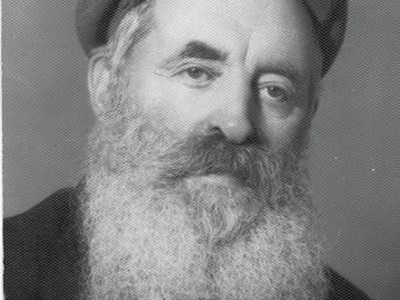
🔥 Haim Zalman Kozliner (HAZAK): Hasidic who was not broken by the persecution
Community
In the Middle Ages, the study of the Torah and the preservation of Jewish life could turn into arrest and exile. One of those who, despite the danger, helped the Hasidic communities was Rabbi Chaim Schneur Zalman Kozliner, the former secretary of Rebbe Rajac. He was known as HAZAK.Rebbe's 📓 Secretary and Black NotebookWhen Rebbe Rajac was arrested in 1927, Chaim Zalman was in the first days after the wedding. After learning of the arrest, he went to Leningrad to help the efforts to free the Rebbe.On behalf of the Rebbe, he was given a "black notebook". It contained the names of rabbis, Torah teachers, Melamedes and people who helped maintain Jewish life in the cities of the USSR. Getting such a list into the hands of the secret police threatened many people.🛏️ Hiding under the mattressThe persecution forced Haim Zalman to hide frequently. When his firstborn was born to the velila, he couldn't be home for the ransom of his firstborn. Subsequently, Tsipa's wife received an encrypted telegram from him: "Mazel tov with a purchase!” That's how she found out that her husband remembers this day.During the war in Samarkand, soldiers came to their home looking for men who avoided mobilization. Chaim Zalman did not have time to escape. Then the daughters hid their father under the mattress and made the bed. After the search, the soldiers left without finding him.🚂 Assistance to Hasidim in LvivAfter the war, many Hasidim tried to leave the USSR through the Polish border. Chaim Zalman and Tsipa stayed in Lviv to help others with the documents and the organization of the departure.In 1946, Tsipa was arrested: she had dozens of passports. She was sentenced to ten years inprison. The next day, the secret police came for Chaim Zalman, but he managed to hide. Then their son Motl was arrested and interrogated, trying to find out where the father was. He was released the same day.📄 "Write down my real details"Later, a representative of the secret police took away Haim Zalman's passport. Without a document, he could not move freely, so he turned to the Hasidim, who made the documents. When asked what data to enter, he answered: "My real ones."When he was detained with a fake passport, he explained to the investigator: you took my document, and it is impossible to live without a passport, so I had to make a new one. According to the memories of his life, Haim Zalman again survived imprisonment and exile, but did not name the names of the people he helped.✨ Memory OF HAZAKIn the early 1970s, Chaim Zalman Kozliner was able to leave for Israel and settled in the Nahalat Gar Chabad community. He passed away on 13 Tishrei. On the same day, but in different years, his father and wife Tsipa died. Their courage and dedication remain in the memoryof the community. source: 📖 Lubavitcher Calendar

Today — 17 Tishrei 5787
Community
Hol HaMoed SukhothIom-yomThrough spiritual work and testing in the soul, the level is revealedYechida— the most secret spark of the soul, as it is said:"embraced and bound to You". This means the union of the soul with G-dhood.And it is because of this that a person assumes"Your Yoke"— fulfills the Torah and commandments with selflessness.“Yechida to Unite Your Name” is a revelation of the deepest level of the soul, through which even the “yechida” of the animal soul turns into G-dhood.This is manifested in the inner strength, steadfastness and steadfastness in the fulfillment of the Torah and the commandments — with a living inner energy, with a feeling of great joy, enjoyment and deep satisfaction from serving the Almighty.And then all the things of this world — whether they are allowed or forbidden, “yes” or “no” — become truly equal for a person. After all, material things lose their taste, sweetness and attractiveness for her.📖Lubavitcher calendar

Our Dates:18 Tishrei 5572
Community
18 Tishrei 5572year (October 6, 1811) — Yorzeit (anniversary of the departure from this world) to Rabbi Nachman from Bratslav.Rabbi Nakhman was born in the Hasidic capital — the town of Medzhybizh (Khmelnytsky region) and on the maternal side was the great-grandson of the founder of Hasidism, Rabbi Yisrael Baal Shem-Tov, and on the paternal side — Rabbi Nakhman from Horodenka. At the age of 13, he was married to the daughter of a wealthy tenant from Husiatyn, in whose house he spent his youth.Після смерті тестя рабі Нахман переселився до Медведівки, де жив до 26 років, і звідти вирушив до Ерец-Ісраель (щоб здійснити подорож, йому довелося продати все майно та віддати дочку в найми). Поїздка справила величезний вплив на рабі Нахмана: він дійшов висновку, що всі його знання до цієї поїздки не мають жодного значення, і заборонив посилатися на будь-які його попередні висловлювання. А через кілька місяців, через вторгнення до Ерец-Ісраель військ Наполеона, він повернувся в Україну й оселився в Златополі.Рабі Нахман перебував у напружених стосунках з іншими хасидськими лідерами, оскільки вважав, що вони нехтують заповітами Баал Шем-Това й призвели хасидизм до занепаду. Особливо гостра полеміка точилася в нього зі Шполер зейде (рабі Ар'є-Лейбом зі Шполи), так що рабі Нахману навіть довелося переїхати до містечка Брацлав (Вінницька область), яке й дало назву новому хасидському напряму. До Брацлава стікалися численні хасиди, однак суперечки тривали, і, залишивши місто, рабі Нахман почав мандрувати містечками України (до речі, його вчення широко поширилося саме завдяки цьому).During these years, he was also known for refusing to bless young couples, saying, “I know that in a hundred years there will be a generation that is better off not being born at all. I cannot forbid marriage and procreation because it is a divine commandment, but at least I can not bless them.” Given that the activists of the Eusection, who zealously eradicated their own and others' Jewry, were born exactly a hundred years later, it must be admitted that Rabbi Nachman knew what he was saying...Кочове життя далося взнаки — рабі Нахман захворів на туберкульоз. Відчувши наближення смерті, він зупинився в Умані, заявивши, що хоче бути похованим на тутешньому кладовищі, серед жертв різанини 1768 року. Перед смертю він у присутності свідків пообіцяв кожному, хто в Рош га-Шана прийде до його могили й прочитає певні псалми (зібрані в книгу «Тікун клалит»), перерити землю з кінця в кінець, але витягнути цю людину за пейси з Геінома (аду). Не дивно, що могила рабі Нахмана в Умані й досі є місцем паломництва брацлавських хасидів.The children and grandson of Rabbi Nachman died early, and he had no successor, so the central position in Bratslav Hasidism was occupied by Rabbi Nathan Sternhartz — a student, confidant and secretary of Rabbi Nachman. But still, the only leader of the Bratslav Hasidim has always been Rabbi Nachman from Bratslav (hence their nickname — toite hasidim, "dead Hasidim").The Bratslav movement made significant progress in spreading its ideas, and in the early 80s of the 20th century they even tried to establish the "city of Bratslav" in the Israeli settlement of Yavneel.source: chabad.odessa

Our dates: 19 Tishrei 5558
Community
19 Tishrei 5558(October 9, 1797) — Yorzeit (anniversary of the departure from this world) Rabbi Eliyahu ben Shlomo-Zalman Kremer from Vilno (Vilna Gaon).Рабі Еліягу, відомий також як га-Гра (акронім слів га-Гаон рабі Еліягу), народився в містечку Селець, неподалік від Вільно (Вільнюс). Він походив зі знатної рабинської родини (його предком був рабі Моше бен Цві-Нафталі-Гірш Софер Рібкас — автор праці «Беер га-Гола» («Криниця вигнання»), і з раннього дитинства дитина привернула до себе увагу винятковими здібностями. Від нього дуже скоро відмовилися всі вчителі, заявивши, що їм нічому його вчити, і йому довелося займатися вдома, спочатку з батьком, рабі Шломо-Залманом, а потім самостійно. У 5 років юний Еліягу вже повністю вивчив Тору з коментарями, а в 7 років виголосив у Великій синагозі Вільно драшу (промову на тему тижневого розділу Тори), після якої головний рабин міста прийшов до них додому, щоб дізнатися, хто написав хлопчикові текст — він не міг повірити, що семирічна дитина здатна на таке.In addition to the Written and Oral Torah, the future gaon (translated from Hebrew as "genius") in the process of self-education paid much attention to the Cabal (theoretical and even practical), and also studied secular disciplines, in particular astronomy, geometry and algebra.Одружившись у 18 років, він цілком віддався навчанню, і через два роки, подібно до багатьох подвижників того часу, вирушив у так званий галут («вигнання»), тобто протягом п'яти років мандрував єврейськими громадами Польщі та Німеччини. Він уже тоді славився в єврейському світі своєю ерудицією, і рабин Йонатан Ейбеншюц під час своєї знаменитої суперечки з рабі Яаковом Емденом апелював до авторитету Еліягу бен Шломо-Залмана, «слава якого велика в Польщі, Берліні, Ліссі та в усіх місцях, де він мандрував». Повернувшись додому, молодий чоловік оселився у Вільно, де й прожив до кінця життя.Відмовившись обійняти посаду рабина, він присвятив життя вивченню Талмуду, ведучи аскетичний та усамітнений спосіб життя. За розповідями синів, він спав не більше двох годин на добу й лише по пів години за один раз. Кожну хвилину, витрачену не на вивчення Тори, він заносив до спеціального записника й перед Йом-Кіпуром каявся за кожну з них. При цьому кількість таких хвилин за рік ніколи не перевищувала 180 (тобто 3 годин на рік)! Він не обіймав жодної громадської посади, і громада Вільно призначила йому невелике щотижневе утримання.The Vilna gaon became the greatest authority in Eastern Europe, and when the first Hasidim appeared in Belarus and Lithuania, the Shklov community asked his opinion on the attitude to the new "sect". Gaon called for an irreconcilable struggle against the Hasidim, and in 1772, on his behalf, in all Vilna synagogues, the sherem (excommunication) was subjected to the sound of trumpets and lighted candles of the Hasidim.Thus, Free became the center of opposition to Hasidism. Twice the leaders of the Belarusian Hasidim — Rabbi Menachem-Mendl from Vitebsk and Schneur-Zalman from Lyad (Alter Rebbe) — made attempts to meet with the Gaon to convince him that Hasidism does not contradict traditional Judaism. But he refused to receive them, and when they came to him, he — a respected and venerable rabbi — climbed out through the backyard window and left the city, refusing to return there as long as the Hasidim were in it!In 1783, Rabbi Eliyahu bin Shlomo-Zalman decided to go to Eretz Yisrael with the intention of subsequently summoning the whole family there. After a short stay in Eretz Yisrael for unknown reasons, he returned to Vilna.The Vilna Gaon contributed to the creation of the Litvak type (a Lithuanian-Belarusian Jew) and the Mitnaged (an opponent of Hasidism). His great-grandson was the famous Russian book publisher Efron (an encyclopedia of Brockhaus and Efron).source: chabad.odessa

Our dates: 22 Tishrei 5589
Community
22 Tishrei 5589(September 30, 1828) — Yorzeit (anniversary of the departure from this world) Rabbi Aaron ha-Levi Horowitz from Starosilia (Starosilsky Rebbe).Rabbi Aaron ben Moshe ha-Levi Horowitz was Alter Rebbe's favorite disciple. He came from a respected and esteemed family and was the eighth generation of the descendants of the author of the book "Schnee luchot ha-brit" ("Two Tablets of the Covenant").З юних років рабі Аарон відзначався надзвичайними здібностями. Ставши хасидом рабі Шнеура-Залмана (Алтер ребе) ще зовсім молодим, він дуже сильно здружився з його сином Дов-Бером (майбутнім Мітелер ребе). Рабі Аарон став найкращим і улюбленим учнем рабі Шнеура-Залмана, і коли вчитель переселився до Ляд, учень вирушив за ним. Незадовго до відходу Алтер ребе з цього світу у рабі Аарона виникли розбіжності в поглядах із рабі Дов-Бером, і, залишивши Алтер ребе, він оселився в білоруському містечку Старосілля. Після того як Алтер ребе відійшов із цього світу, багато хасидів визнали його сина, Мітелер ребе, наступником, але частина хасидів пішла до Старосільського ребе. Лише за часів правління третього Любавицького ребе Цемах-Цедека вдалося об'єднати любавицьку та старосільську гілки Хабаду.source: chabad.odessa

Dear believers and guests of the synagogue,
Community
✦ Despite the constant shelling of the city, our hromada continues to work.✡ All prayers in the Central Synagogue of Kyiv take place on a schedule.✦ During an air raid alarm, employees are in a shelter and answer calls whenever possible.♡ Thank you for your understanding. Take care of yourself and your loved ones.May the Almighty protect each of us.

🌿 Oshanot and Oshana Rabah: traditions and their content
Community
🌿Why do they bypass the bima with lulav and etrog during Sukhothu? What does the word "Oshana" mean and why do they take willow twigs on Oshana Rab?Behind these ancient and unusual customs there is a deep meaning and at the same time a simple, close to everyone request to the Almighty —about life, protection and blessing.🙏✨📖 In our gallery, we talk aboutOshanotandOshana Raba— a special seventh day of Sukhoth. Why do they bypass the bim every day, why do they make seven rounds on Oshan Rab, and what is the significance of the custom with willow twigs? 🌿🍋👉 Scroll through the gallery — let's learn more about our traditions together!🕊 May there be joy and blessings in every home, and our prayersabout peace and good newswill be heard. 🙏📚 Prepared using page materialsZPJewishCommunityabout themselves.”
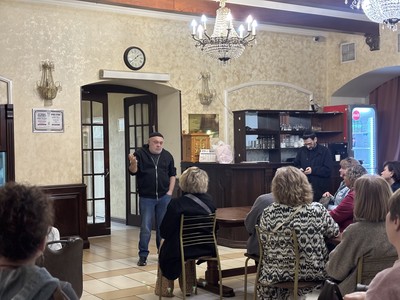
An appointment that wasn't stopped by anxiety
Community
Today, a wonderful group of women came to the Central Synagogue of Kyiv for an excursion. 🕍✨We planned to get acquainted with the history, Jewish traditions and life of our community. But the realities of military Kyiv made their own adjustments: due to strong explosions and air alarm, the part of the meeting had to be continued in shelter.And communication did not stop there — there were interesting questions, sincere interest and warm conversation. 💬❤️Despite everything, Kyiv lives. The city works, people meet, communicate, are interested in each other's history and culture.Thank you to our today's guests for the visit and for the fact that we spent this difficult day together. 🌿And despite all the circumstances, we continue to work and always welcome guests! 🕍💙

85th anniversary of the Babyn Yar tragedy
Community
🕯️ Today we remember the 85th anniversary of the Babyn Yar tragedy.On September 29–30, 1941, tens of thousands of Jews were killed in Kyiv. Babyn Yar became one of the most terrible symbols of the Holocaust on the Ukrainian land, a place of pain, memory and silent witness.🕯️ We bow our heads before the innocently murdered.Theirmemory is our duty to the past and our responsibility to the future.May their memory be blessed.
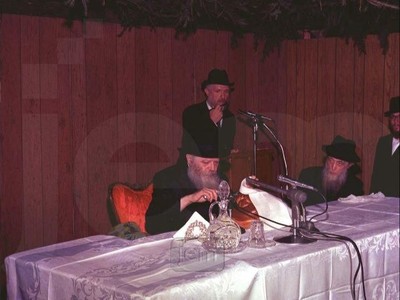
History and Miracles of the Hasidic Porcupines in the Bitch of the Rebbe
Community
Every Chassid knows that there is nothing sweeter than sitting at the same table with the Rebbe. And when Sukhoth came and the Pharbrangens were transferred to the legendary bitch around 770, it was the air that seemed to spark a special, almost tangible energy.In the early years of his leadership, the Rebbe regularly held painbrings just in the bush during the holiday. Hundreds of Hasidim, yeshivas and guests from all over the world gathered there. Subsequently, due to the huge crowd of people and the incredible crowd, the tradition changed, and such mass meetings ceased. But those rare and majestic years will forever remain in the memoryof the community. Here are some highlights from those unforgettable days.📖"Angel" on the bitch's roofIn those years, the bitch attracted a wide variety of people, including those who, for various reasons, did not dare to openly go inside. One young man from a family that belonged to the so-called community of “angels” — a malachite who had once separated from Chabad - was eager to hear the words of the Rebbe, but he was ashamed to join the crowd.His decision came as a surprise: he climbed onto the roof and lay down on his knees to listen through the branches.But the fragile design of the bitch was not designed for such secret listeners. At the height of the holiday, the overlap could not stand it, and the guy fell with a noise just into the center of the dancing Hasidim. Fortunately, the dense crowd softenedthe fall and he was unharmed.The Rebbe did not even turn his head towards the rumble, only with a slight smile he uttered a phrase that became winged:“An angel fell from heaven…”For this guy, that moment was a turning point: today he and his entire family are loyal Hasidim of Chabad.🌧Between the raindrops and the rays of the sunAutumn in Brooklyn knows how to test devotion to strength. It happened that the festive evenings met those present with showers, cold winds and heavy clouds that poured the bitch to the last board.But as soon as the Rebbe crossed the threshold — with a radiant, unobstructed joy on his face — nature itself seemed to change its course. There are cases when, after one word, heavy clouds parted, opening a warm ray of sun just in the middle of autumn weather.🧠Limits of the incomprehensibleThe bitch became a place where the usual boundaries between the human mind and Higher Knowledge were blurred. Cases when the Rebbe answered unspoken questions that lived in the thoughts of the Hasidim, or when the air itself was filled with trepidation from deep philosophical explanations about G-d's service and joy, forever entered the treasury of Hasidic legends.Every word spoken there behind a glass of lechaim carried a life-changing power.💥Cushion that tested for strengthThese painbrands had another side — the harsh physical reality of the Brooklyn squeeze. The bitch near 770 was never designed for those “seas” of people who wanted to get inside.The crush, the cracking of the ranks, the incredible congestion of hundreds of Hasidim who sought to hear the Rebbe's word and see his gaze, sometimes created very difficult conditions. The Rebbe painfully perceived the senseless stampede, called for order, and in the end it was these difficulties that led to the revision of the format of traditional paint brands. Only rare, exceptional encounters remain in history.🍷The golden time that lives onFarbrangens in the booty 770 forever remained a special page in the history of the Hasidic movement. Rain dripping behind the collar, wet cidurs, powerful waves of Hasidic niguns and the warmth of live communication — all this formed a generation of people for whom joy was higher than any external circumstances.Today, this bitch lives in the memory of generations. And the spark lit there on those autumn evenings continues to lead us forward — in anticipation of the day when everyone will gather in one big bitch, at a holiday that will never end.Source:Lubavitcher calendar

Today — 20 Tishrei 5787
Community
Hol ha-moed SukhothIom-yomDuring the nanuim - the fulfillment of the commandment with the lulav — we need to bring the lulav to the chest, to the place where we beat ourselves in the chest, saying "Ashamna" — "we have sinned".My father and teacher told one of the painters that this can be said as follows: it is like the seriousness and concentration preceding prayer awakens bitter remorse in the soul. And this is what can later reveal the real thrill and deep excitement of feelings during prayer.source:📖Lubavitcher Calendar

📜✨ Simhat Torah is a joy that unites!
Community
We finish reading the Torah and immediately start again. After all, in each new circle there is a place for discoveries, good deeds and spiritual growth.In the festive dance, there are different generations, different stories, one community. And everyone is a part of that joy!Scroll through the carousel to learn more about the holiday and its traditionsMay the joy of Simhat Torah warm our hearts throughout the year!Hag Simhat Torah Samah!source: ZPJewishCommunity