
Lessons from the Noah Torah Weekly Chapter: Noah's📜 Testament as Interpreted by the Cabal
Community
🌈 Mystical explanation of the rainbow phenomenon📖After the Flood, the Almighty made a covenant with Noah and his sons:“I put my rainbow in the cloud, and it will be a sign of the covenant between me and the earth. And when I bring the cloud above the ground, a rainbow will appear in the cloud. And I will remember My covenant which is between Me and you and between every living thing in all flesh, and the water shall no more become a flood to destroy all flesh.”🌈 The rainbow was chosen as a symbol of the Covenant between G-d and people, a sign of G-d's Mercy that would remind a person of his duty to the Creator.❓ But why the rainbow?🔬 A well-known scientific explanation of the rainbow as an optical phenomenon of spectral refraction of sunlight in raindrops. This explanation was used by propagandists of atheism to deny the "primitive" and "anti-scientific" ideas of "biblical authors". Criticizing the Book, which is the spiritual guide of many generations, they, as a rule, did not even consider it necessary to get acquainted with the traditional sources of Judaism.📚 Some Torah commentators, including Rabbi Nisim Girondi and Abrabanel, believe that the rainbow was never seen before the Flood due to the excessive density of clouds. It was the excessive density of evaporation and precipitation on the ground that made the flood physically possible.🌍 Rabbi Ovadia Sphorno believes that as a result of the Flood, the earth's axis shifted, which caused a change in the seasons. As a result of these radical changes, the duration of human life has sharply decreased, giant animals and plants have disappeared.☀️ Modern science has established that ultraviolet rays have a harmful effect on the human and animal body. They accelerate skin aging and can cause skin cancer. Before the Flood, particularly thick clouds prevented exposure to sunlight. Perhaps this explains the fact that human life expectancy has reached many centuries.🦕 The skeletons of giant lizards, dinosaurs, indicate that the animal world before the Flood was significantly different from the modern one. After the Flood, as the clouds became thinner, they had a rainbow. According to commentators, the rainbow has become a symbol that clouds no longer bring chaos and destruction to the world.✅ So the rainbow was chosen as the symbol of the Covenant between G-d and man.🔐 It should be noted that this explanation was known only to the initiated for many centuries, since the teachings of the Cabal were not widespread. In addition, it was this explanation that required considerable preparation — both in the knowledge of nature and in mystical knowledge.👧 However, Sacred Scripture is written not only for thinkers, but also for the simplest people. By law, it begins to be studied with children from the age of five, so a necessary and sufficiently simple explanation is understandable even to a child.✨ The mystical meaning of the rainbow is reflected in the Book of the Prophet Ehezkel (1:28):“Like a rainbow in a cloud on a rainy day, this was a vision of the shining around — a vision of the likeness of Glory B-ZhOYA.”🌈 The Prophet compares the vision of Divine Glory to the image of a rainbow. What is the point of this comparison?📖 Returning to the story of the Torah Flood, it is said:“I put my rainbow in the cloud…”❓ Why "My"?📚 In the Midrash, the word "Kashti" — "My rainbow" — is interpreted from the root "ekesh", which means "likeness". Hence “Kashti” — “My rainbow” — means something like Me.🤔 But what is this similarity?📜 In the Psalms it is written (81:1):“The Sun and the Shield are the Lord G-d.”The ☀️ word "Lord" in biblical translations, as a rule, is given the Name of G-d "Avaye", and the word "G-d" — the Name "Elokim", which indicates the G-d attribute of the Judgment, the Law, the laws of nature.🛡️ The Talmud says, “The sun has a shield that protects nature from destruction by the sun's rays.”🔆 "Away", figuratively speaking, is like the sun: it is the source of light, the Source of Genesis. But if the Infinite Light of the Source of Being were perceptible to creatures, then the independence of creation would not be felt: all that exists would be only a continuation of the One Being.🧭 Imagine a world in which there is no individual existence of things. In such a world, there can be neither personal freedom nor a choice between good and evil.⚖️ The unlimited light emanating from Awaya seems to “destroy” everything. Instead, the name "Elokim", which represents the natural order and laws of nature, hides the light that comes from "Avaie" under the shell of naturalness.📌 Thename “Elokim”, which is correctly translated as “Almighty” or “Almighty” and means G-d as the Lord of all the forces of nature, is also grammatically a plural form on behalf of “Eloka”. This indicates that due to the refraction of the Light of the One Reality, "Avaye" in the Elokim prism makes it possible to form a plurality and relative independence of being.🌈 In the light of what has been said, one can understand why the vision of the Glory of God in the prophecy of Yechezkel is likened to the appearance of a rainbow.☁️ The white light of the sun has the ability to decompose into many colors of the rainbow spectrum, refracting in the cloud. The cloud is the "Shield" through which sunlight passes.🌈 The seven colors of the rainbow represent the seven Sefirot — the seven Divine Attributes, or the seven basic forces operating in the world.☁️ "Cloud" or "cloud" represents the action of the Name "Elokim", which is sometimes translated as "judge" and reflects the Divine Judgment on sinners.⚖️ The ultimate goal of the Divine Court is not to punish sinners, but to correct them.🕊️ That is why there is also a pardon, which gives a person the opportunity to correct his path. The pardon comes from Awaie.📖 “And it shall come to pass, when I have thickened the clouds above the earth, that a rainbow shall appear in the cloud.”📚 According to Rashi's interpretation, this phrase should be understood figuratively:☁️ "When I thicken the clouds above the earth" — when My Attribute of Judgment will prompt Me to bring darkness and destruction to the earth, then...🌈 "a rainbow will appear in the cloud" — the Light "Avaie", the Light of Mercy, penetrates the cloud, that is, the Attribute of the Court.📜 “And I will remember the Covenant… the everlasting Covenant between the Omnipotent and every living thing.”🤔 What is strange is that G-d speaks of Himself in the first person — "I", then in the third — "Elokim". However, this, as it was said, becomes clear: a reminder of the Covenant between G-d and the earth is needed only when the Judgment — Elokim — acts, because mercy does not punish.✅ This explains the fact that in the entire 9th chapter, which refers to the Covenant and the sign of the rainbow, only the Name "Elokim" is mentioned, and the Name "Avaye" is never used, because Mercy does not need a reminder of the Covenant.📝 Note: Pentateuch, book of Breishit, 9:13–15.✍️ Rabin Dov-Ber Khaskelevichsource: chabad.org
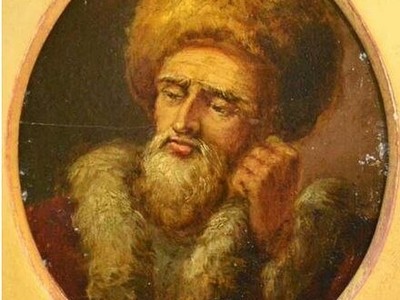
👑 Secrets of the Sadigorsky Court: the amazing story of the Ruzhinsky Rebbe
Community
In the history of Hasidism, few figures aroused such trembling admiration as Rabbi Yisrael of Ruzhin. His life resembled a fascinating historical novel, full of royal grandeur, hardships, severe austerities and the deepest spiritual heights.Let's dive into this amazing story and find out who this great righteous man was and what connected him with the Chabad dynasty.🌟 Who is Ruzhynskyi Rebbe?Rabbi Israel was born in the town of Proskuriv at the end of Rosh Hashanah. At the age of six he lost his father, and at thirteen he married. When he was sixteen, his older brother died, and the young Israel became the head of the Hasidim, continuing the glorious dynasty of his ancestors.Unlike many tzaddiks of that time, who lived very modestly, Ruzhiner behaved like a real monarch. He moved in luxurious carriages with thoroughbred horses and wore expensive clothes. This path was called "Derech Malchut" — "The Way of Royal Greatness". Its purpose was to show the world the dignity of an oppressed people.But behind the exterior luxury, there was an incredible modesty. The Rebbe ate almost nothing, slept only a few hours a night and wore exquisite gold shoes… but without soles. In the winter, as he walked through the snow, he was left with bloody footprints from the touch of his feet to the icy ground.⛓️ Royal Arrest, Prison and Brave EscapeIn 1838, because of a false denunciation by educators, the authorities arrested the Rebbe on a serious charge. For almost two years, he languished in the dungeons of a Russian prison.After his release under house arrest, the Rebbe made a dangerous escape, crossing the border of the Russian Empire. He found refuge in the Austro-Hungarian town of Sadigora, where he rebuilt his famous courtyard.📜 Ruzhiner and ChabadAlthough Ruzhyn Hasidism and Chabad developed in different ways, there was an incredible spiritual connection between the Rebbe of these currents.️1 Ruzhinsky Rebbe said that Alter Rebbe and Rambam came into this world from the same high spiritual source. That is why, according to Ruzhiner, Alter Rebbe in his "Shulchan Aruch" attached such great importance to the thoughts of Rambam.️2. One of the teachers of Ruzhiner's children was a Hasidic Mitteler Rebbe. In his room, in a closed closet, rare Hasidic manuscripts were kept. One day, the teacher forgot to lock the closet, and when he returned, he saw Ruzhiner carefully studying these manuscripts. The impressed teacher heard Ruzhiner's enthusiastic confession: “This is a real, pure ruach ha-kodesh!”🕯 Tzemach Tzedek and the Mystical Message of SeparationA particularly close relationship connected Ruzhiner with Tsemakh Tzedek. Tzemach Tzedek called him “Saint Ruzhiner” and often sent envoys to him for advice at critical moments for the entire Jewish people.Tzemach Tzedek told his sons amazing things:“When the Saint from Ruzhyn reads Tegilim, the whole world is open to him. On Shabbat, he sees the deepest roots of all world events and has the power to overturn the most severe celestial sentences.”There is an amazing story. On the day when Ruzhinsky Rebbe left this world, in Lubavitches — hundreds of kilometers away — Tsemakh Tzedek suddenly asked the servant to bring a knife in the middle of the day, tore his outer clothing as a sign of mourning — "kriya" — and said that the Saint from Ruzhin had just passed away.💡 The legacy that has reached our daysTheconnection between the two great courtyards continued in later generations. In 1991, during the distribution of dollars, our Rebbe spoke with a young Hasidic. Learning that he was born on 3 hashvans — on the day of Ruzhiner'smemory, the Rebbe smiled warmly, gave him an additional dollar and said:“May you have a successful year! It's Ruzhiner's birthday. May the Almighty help you to follow his paths... But just look, remain a Hasidic Chabad, not Ruzhin!" 😉The life story of Ruzhinsky Rebbe teaches us an important principle: true greatness lies not in pride or striving for the material, but in the ability to subjugate the whole world to the service of the Creator.No matter what external circumstances a man is surrounded by, his heart can always remain pure, devoted and filled with ardent love for every Jew.source: 📖 Lubavitcher Calendar

📖 Lessons from Noah's Weekly Torah Chapter: The Two Righteous Ones
Community
🌊 At the very beginning of the chapter of the Torah "Noah", which tells about the Flood, the words are heard:“Noah was a righteous man, whole in his generations; Noah walked with G-d.”Surprisingly, the Torah begins the story of the almost complete destruction of mankind with words about the holiness of Noah. Even more strange is the formula: “I was holistic in my generations.” 🤔 It seems that everything is not so simple with this righteous man. There are sages who believe that Noah “was righteous only in his generations, and if he had lived in the time of Abraham, he would not have been considered righteous.”Others interpret the opposite: he was righteous “even in his sinful generations, and even more so would he be righteous if he lived among more worthy people.” ⚖️ From the point of view of the second group of interpreters, the picture has a clear contrast: Noah is a complete righteous man, his generation are complete sinners.But from the point of view of the first group, which cautiously questions the level of Noah's righteousness, the story is much more complicated. 📜 Rabbi Berachiah said:“Moshe is more beloved of the Torah than Noah. Noah, who was originally called a“righteous man, ”subsequently descended to the level of a commoner — a“man of the earth. ”And Moses, who was originally called an“Egyptian, ”at the end of his life rose to the level of the“man of G-d. ” 🕊 But why are we comparing Noah to Moshe? Why not choose a softer benchmark?Or Sameach explains that there are only two types of righteous:some retire, devoting themselves exclusively to the Torah;others leave their own interests and aspirations for the needs of the community. 👥 People often tend to think of the former as more righteous than the latter. But Noah's story teaches the opposite.Solitary with G-d and detached from the problems of his generation, Noah remained righteous “in his generations,” that is, he did not reach the level of true, complete righteousness.Moreover, from the two quotes given in the midrash, we see a certain spiritual decline of Noah — to the level of the “man of the earth”.🔥 Instead, Moshe, whose personal spiritual improvement seemed to have faded into the background, and his whole life was devoted to the needs of the people — and not always only high spiritual, and sometimes simple everyday needs — rises "from strength to strength." 🌧 The Age of Noah is the Age of Catastrophe:“And the earth was corrupted before G-d, and the earth was filled with wickedness.”No, Noah is not silent, as one would expect from a hermit. Sages say that he rebuked his generation and told them:“Repent, and if you do not repent, the Almighty will bring a flood upon you.” ❓ So how do commentators reproach Noah? And why hasn't his sermon been heard by a generation?The 🪵 Midrash of Tankhuma tells an amazing story:“When the Almighty commanded Noah, 'Make yourself an ark out of cedar wood,' Noah went and planted the cedars, cut them down, sawed them, and made an ark out of them. Contemporaries asked him: “Why these cedars? Why this ark?”Noah answered them, “The Almighty is going to bring a flood to the earth, and He has commanded me to make an ark so that I and my family can be saved.” And his contemporaries laughed at his words. " 🏡 Noah does not go to people — he only answers their surprised questions. He does not go out to the people, but works modestly near his house, cutting cedar logs.Noah was not completely righteous not because he did not obey the order of the Almighty. On the contrary, we know for certain that he carefully fulfilled all the commandments of the Creator. 💔 But it seems that his heart did not really hurt for his neighbor, for humanity, for the whole world. Sinners caused him not so much pity as righteous anger.Therefore, he warned them, but did not save them.I blamed him, but I didn't persuade him. Moshe behaves 🕯 differently when the Almighty said to him:“Now leave Me, and My wrath will burn against the people, and I will destroy them…”Moshe replied:“If you do not forgive their sin, then erase me from Your Book.” ⚖️ And just as the two types of righteous are different, so is the result of their activities:noah's generation is doomed to death,generation Moshe — receives forgiveness. 🌱 This applies not only to the righteous of the "higher league", but also to ordinary people like you and me. Notes:Pentateuch, book of Breishit, 6:9.Ibid., 9:20.Pentateuch, Book of Shemot, 2:19.Pentateuch, Book of Devarim, 33:1.Talmud, Tractate Sanhedrin, 108.Pentateuch, Book of Shemot, 32:32.source: chabad.org

Yom Yom: 4 Heshvan.
Community
📖 In a Hasidic book"Yom-yom"said:"Daily Torah study is a matter of vital importance. And not only for the soul of the one who studies it, but also for the souls of all his loved ones, because then the atmosphere in the house becomes an atmosphere of Torah and God-fearing."✨What is this passage about?🔹 Torah as a spiritual necessityTorah study is compared to air or water - it is not an additional decoration of life, but a deep need of the soul.🔹 Influence on the familyThe spiritual state of a person does not remain only his personal matter. It affects the entire home: the spouse, children, loved ones, the tone of conversations, decisions and the very atmosphere in the family.🔹 The atmosphere of the houseWhen the study of Torah becomes regular, the house is gradually filled with light, internal order and awe before the Most High. Even an ordinary space can become a place where holiness is felt.📌Main idea:daily study of the Torah changes not only a person, but also the entire space around him. It creates an atmosphere of warmth, faith and spiritual support in the house.

Lessons from Torah Noah's Weekly Chapter: The Comforting Flood
Community
From the works of Lubavitsky Rebbe; short adapted summaryAs you know, the title of each chapter of the Torah reflects its content. However, the head of Noah, at first glance, seems to violate this rule. After all, it is about the Flood, about the generation of the builders of the Tower of Babel and the punishment that befell them, that is, about events that do not cause a sense of peace of mind, which the nameof Noah hints at.A similar question arises when we mention that the Flood in Scripture is called “the waters of consolation.” How is this possible? After all, all life on earth was "washed away" by these waters.The fact is that the name Noah indicates the inner meaning of the events that took place. The Flood itself and the punishment of the Tower of Babel generation certainly cannot be called a state of rest. But their result was balance and peace, which the world had not yet known.The Flood washed the earth and created a world incomparably better than the previous one. Midrash says that Noah came out of the ark and saw a new world. It was a world on such a high spiritual level that the Almighty made a “union for all generations” with it. So, the waters of the Flood, the “waters of consolation,” really brought comfort.This is the inner meaning of the difficulties and trials that a person encounters in his life. By themselves, these phenomena can be difficult, undesirable and painful, but in their depths there is a hidden good.Overcoming difficulties and obstacles, a person discovers the spark of holiness hidden in them. Moreover, these obstacles themselves can turn into goodness and holiness and help a person in serving the Creator.All of this has a special connectionto the week the Noah chapter is read. These days we are moving from the holidays of the month of Tishrei to everyday life. When a Jew moves away from the exalted atmosphere of Tishrei and plunges into everyday life, he can be overwhelmed by confusion, household worries and worries about “daily bread”.The head of Noah gives us support and teaches: do not get lost in the face of difficulties rolling with the wave. It is in our power to turn this stream of worries into "waters of consolation", into peace of mind.How exactly? You need to enter into the words of the Torah and prayers, just as Noah entered the ark. After all, the word taiva means both "ark" and "word". This will not only protect against the “flood” of difficulties, but also help to turn this “flood” into waters of consolation and inner peace.Everyday difficulties and worries can be sanctified and lead a person to high levels of service to the Almighty, if he manages to treat them correctly. You should not be afraid of "gray everyday life". One has only to meet them with faith in the Creator, with a sense of His constant closeness. And then the good hidden in them will be revealed.Source: A Free Translation of the Rebbe Conversation Published in Likutai Sikhot, Vol. 20, p. 285.

Today is the 5th of ✨ Cheshvan Ayom-yom:
Community
“The Jewish people are likened to stars shining in the sky. Thanks to their light, even those who walk in darkness will not go astray.Every Jew and every Jew has enough moral and spiritual strength to influence friends and acquaintances and lead them into the light.” source: chabad.org
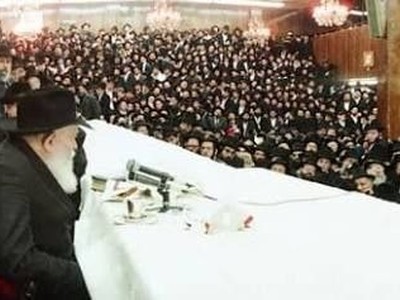
🕊️ The story of the niguna "Shamil": from the Caucasian mountains to the prayer "Kdusha"
Community
There are melodies that can speak without words. They touch the innermost strings of the heart and express what no human language can convey. One of the most famous and deepest Hasidic niguns is Shamil.This touching and sublime melody first sounded in the walls of "770" — the central Lubavitcher synagogue in New York — in the morning, after the Simhat Torah holiday of 5719 (1958), when the Lubavitcher Rebbe unexpectedly taught it to the Hasidim.🏔️The story of a leader who lost his freedomBefore singing, the Rebbe told the Hasidim the story that formed the basis of this melody.In the first half of the 19th century, mountain tribes lived in the hard-to-reach highlands of the Caucasus. They were completely free — they knew neither the royal power nor the limitations of civilization, feeling as free as the eagles in the sky.When the Russian Empire began to expand its borders, the Highlanders resisted desperately. They were headed by the legendary military and spiritual leader — Imam Shamil. Although the royal army prevailed over the Highlanders in numbers and armaments, Shamil successfully waged guerrilla warfare for many years, using the impregnable mountainous terrain.Realizing that the highlanders could not be broken by force, the tsarist generals resorted to tricks. They offered peace, but as soon as the Highlanders laid down their arms, the Russians captured Shamil and sent him to a distant exile in Kaluga.Being in captivity, far from his native peaks, Shamil often plunged into memories of his former freedom, where there were neither prison walls nor city rules. From this deep, burning longing, his song was born: its first part — crying, nostalgia and thirst for freedom, and the end — light faith and confidence that he would eventually escape from captivity and return to his homeland.💡Hasidic Content: A Journey of the SoulThe Hasidim translated this story "in their own language" and saw it as a deep allegory of the path of the human soul.️1ლHigh mountains are leaks.The root of the soul is under the Throne of Glory of the Almighty. Before ascending into this world, the soul is in complete unity with the Creator. It is free from material shackles, bodily passions, and limitations of the body.️2ლCaptivity and exile — ascent.This is the moment when the soul puts on the physical body and the animal soul. Hasidism calls it the ascent "from a high peak into a deep pit" — "meigra ram amicta". Here the soul is confronted with hustle and bustle, material worries and routine.️3ლThirst and anguish are the first part of the niguna.When a person stops and realizes how far he has moved away from his source, a spiritual hunger awakens in him: “My soul longs for You, my body longs for You.”4️ლHope and confidence are the end of the nigun.The ultimate goal of the ascent of the soul is not punishment, but exaltation. The second, energetic part of the niguna expresses a firm conviction: the soul will overcome all obstacles and rise to an even higher level than the one at which it was before the ascent!🎵In the prayer "Kdusha": "Mimkomkha"Approximately two years after the Rebbe taught the Hasidim of this nigun, one of them — the river Zvi-Hirsh Spritzer — during the Sabbath prayer in the Rebbe synagogue began to perform the nigun "Shamil" in the fragment "Kdusha", during the repetition of the prayer by the chazan, to the sacred words:“Mimkomha malkenu tofia…”“From your place, our King, appear and reign over us, for we are waiting for you…”When he closed his eyes, the Rebbe began to cheer up the singing with vigorous hand movements, and the whole hall picked up the melody.Today, in many synagogues of Chabad around the world, it has become a good tradition to perform the nigun "Shamil" precisely during the pronunciation of "Kdushi" — to the words "Mimkomkha" — on Shabbat.At this moment, the anguish of the highlander for the lost home is combined with the plea of the Jewish soul for the revelation of the Almighty and the speedy liberation.Source:Lubavitcher calendar

A moment of silence.
Community
Every day at 9:00, Ukraine stops for a minute.In this silence, we honor the memoryof the military and civilians, adults and children — all who were taken by the Russian war.This is a moment of our common pain, honor and promise to remember.Let's stop together. Let's bow our heads.We remember everyone.

Psychologist's page:💙 How to be a resource during the war
Community
Tips from a psychologistWar takes a lot of strength — physical and emotional. Anxiety, uncertainty and constant tension are exhausting, so taking care of yourself becomes an important part of everyday life.🌿Our forces can change on a daily basis. It is natural and necessary to indulge in fatigue, rest and support.🔋What is a resource state?This is a condition where you have enough physical, emotional and spiritual strength to cope with everyday tasks and difficulties.Our inner energy is replenished through rest, sleep, communication, enjoyable activities and a sense of meaning. Each of these sources has its own, so it is important to notice what helps you.🧭What helps you stay strong?🛌Allow yourself a break.When you feel tired, pause. If possible, reduce the workload, postpone secondary matters or ask someone to replace you. Even in important work or volunteering, it takes time to recover.🏡Keep up the good work.Cooking, cleaning, plant care, and other daily activities can return a sense of orderliness and control over the part of your life that you can influence.🥗Take care of basic needs.Regular nutrition, feasible movement and sleep at the first safe opportunity are the basis on which our strength is kept.🤝Help others to the best of your ability.Taking care of loved ones, supporting neighbors or participating in community life can give a sense of connection and self-efficacy. At the same time, keep your strength for yourself.🛡️Take care of your personal boundaries.Exhausting arguments and provocations take energy. You can postpone the response, end an unpleasant conversation or limit communication, after which you feel worse.📝Make your own support listWhen we are exhausted, it can be hard to remember what brings relief. Therefore, write down in advance what usually gives you strength.This may be:Favorite music📚 a book or familiar series;🧶 needlework or other creative activity;🌳 a walk in a safe place;A cup of tea in silence.💬 talking to a person who knows how to listen;🙏 prayer and spiritual practice.Choose one small action available to you today.You don't have to havea lot of time or a complicated plan to recover.🔄Change the type of loadAfter prolonged mental work, a light movement can help, after physical exertion — a calm rest. After intense communication, silence is sometimes needed, and after a lonely day — a warm conversation.Listen to yourself:what do you currently lack — peace of mind, movement, intimacy, or a change of occupation?🌈Six sources of internal support🙏Faith & ValuesPrayer, traditions, spiritual life and awareness of what is important to you can give support in difficult times.💛EmotionsNotice your feelings and find safe ways to express them: in conversation, music, creativity, or personal recordings.👥People & CommunityKeep intouch with loved ones and the community. It is important to have those with whom you can share your experiences and ask for help.🎨Imagination and creativity.Drawing, crafting, improvisation, and humor can give you respite and open up space for pleasant emotions.📋Knowledge and planningWrite down cases, determine the nearest feasible step, divide large tasks into smaller ones. Focus on what you can do now.🚶BodyNecessary physical activity, nutrition, rest and being in nature in a safe environment help to maintain well-being.🫂How to support yourself when you run out of strength?💧Make room for the senses.Tears, sadness or anger can be a reaction to the experience. Try to express them safely for yourself and others.💬Share what you're going through.Sometimes the first step is a simple phrase to a loved one: “It's hard for me right now. Please stay with me.”🧑⚕️Seek professional support.If exhaustion, anxiety or depression continues and prevents you from sleeping, working or taking care of yourself, you should talk to a psychologist or doctor.🌿Take good care of yourself.During a war, people react differently to stress. Fatigue, confusion and the need for help deserve attention and compassion.💙You too deserve the care you give to others.

📖 Lessons of the weekly chapter of the Torah "Lech Lech" 🧭 Where should a poor Jew go?
Community
Mystical content of the first commandment to AbrahamFrom the works of Lubavitsky Rebbe; brief adapted summaryThe words that begin the chapter of Lech Lech have long attracted the attention of many Hasidic commentators. Perhaps because behind their apparent simplicity lies a deep cabalistic content.Let's also look behind the veil of the literal meaning of this phrase:📜 **“And He said to the Most High Abram, 'Go your way from your country, from your homeland, from your father's house to the land that I will show you…'”**¹Alter Rebbe — the first Rebbe of Chabad, the author of the book “Tania” — explains that this path consists of two separate stages, as it is said: **“And he walked with his transitions…”**²The word "transitions" is used in the plural, and therefore there were at least two of them: movementBottom to Topand movementTop To Bottomabout themselves.”Let's take a closer look.⬇️From top to bottom: from comprehension to enlightenmentThe original nameof the first of our forefathers isאברם,Avram— can be read as אב־רם"Av Ram", that is, "the exalted father".This name contains a hint of the highest level of intelligence — “the mind hidden from any understanding”.And from this height, the Almighty directs him"unto the land which I will show thee". But this is an obvious ascent from the top down!As a result of this ascent, the great solitary philosopher was to become a great enlightener of the pagan peoples. Related to this is the change of his name:📜 **“You will no longer be called Abram (אברם), but your name will be Abraham (אברהם), for I will make you the father of many nations.” **³Adding a letter to the nameה — "gay"it is connected with his ascent from the sky-highs to the world of idolaters to become their "father".Preparing Abraham for such a deep immersion, the Almighty first raises him to an even higher level.👨🏫 This can be seen in the example of a sage who seeks to teach a student or positively influence him. This requires additional knowledge, skills and abilities — exactly those that distinguish a sage from a teacher.Forto know and be able to explain — different abilities!A classic example of such pedagogical talent is King Shlomo, about whom it is said that he was able to explain any opinion in three thousand ways.Hasidism explains: it could "lower" any idea to three thousand levels and find an appropriate image for its understanding on each. This is the additional wisdom in question.Likewise, for Abraham to descend from “a mind concealed from all understanding” to “a land that I will show you,” and later to become “the father of many nations,” required an additional power. In this case, it is hidden in the letterה — "gay"about themselves.”We have reviewed the first stage of Abram's ministry — the movementTop To Bottom. However, there was a second one.Even without delving into the secrets of the Torah, it is clear: leaving Haran full of lawlessness and the house of an idolatrous father for the sake of the country that the Creator Himself wants to give you is an undeniable exaltationBottom to Topabout themselves.”⬆️From the bottom up: from idolatry to the service of the AlmightyIn those years, the Canaanites began to displace the pious descendants of Shem from their rightful land, gradually turning the Holy Land into the land of Canaan.However, even in this turbulent time, the Promised Land remained incomparably more spiritual than Ur-Kasdim and Haran, where Abram came from.As it is said:📜 **“Your parents have long lived on the other side of the river: Terah, the father of Abraham… and served other gods.” **ᐈThere is a cabalistic interpretation, according to which "the other side of the river" indicatesסטרא אחרא — "Setra Akhra", that is, the “other side,” the opposite of holiness and hostile to G-d.How unbearable it must have been for Abram to be in such an environment for 75 years!Therefore, the command of the Almighty to immediately leave“my country, my homeland, my father's house”was certainly a spiritual uplift for himBottom to Topabout themselves.”Back in Haran, living with his idolatrous father, Abram began to fight paganism, smashing all the idols in the house of Terah. However, a new stage of his ministry to G-d began after the arrival of Israel in the Land.If earlier people at best considered the Almighty "G-d of heaven", understanding it as follows: "G-d is in Himself, and the world is in itself", then thanks to the daily efforts of Abram, they began to realize the unity of the world with its Creator.Therefore, even the Canaanites began to call the Creator"God of the Universe"about themselves.”💡Understood yourself? Teach another!So you can convey the content of two interrelated "transitions" of our forefather Abraham —from top to bottom and from bottom to topabout themselves.”To pass fruitfully from the top down — from high intellectual ideas to their understanding by people far from this knowledge — you first need to acquire additional skills.For example, mastering the art of transformingknowledge of available explanationsabout themselves.”And only then, having risen above your own previous level, you can start a long ascent to“the land that I will show you”about themselves.”The result will be the revelation of the Infinite Creator in our limited material world, as it is said of Abraham at the beginning of the next chapter:📜“And the Most High appeared to him… and he sat at the entrance to the tent.”🌅A Day in the Life of a JewHence, the name "Jew", which Abraham received from his non-Jewish neighbors, becomes clear:עברי — "Ivri", that is, "the person on the other side".In the spiritual sense, the Jew often finds himself on one side of the "barricades", while the whole world is on the other.Fortunately, each of us has the legacy of Abraham: perseverance, optimism and, of course, his way of fruitful service to the Almighty.There is no secret about it.🙏Beginning of the day — movement from bottom to topEvery day of the Jew must begin with spiritual exaltation.We are talking about the "ladder" of prayer: morning blessings, then "Shema", "Schmone-esre" — step by step up.It is at this time that the command of the Almighty is carried out:“Go away from your country, from your homeland, from your father's house.”For us, this means going beyond our own desires, habits, thoughts and emotions every day. This is how the spiritual ascent takes place from the bottom up — increasingly higher.💼Everyday things — top-down movementAfter that, we can take up daily affairs — start our ascent from the top down, earning bread for ourselves and our family, go to“the land that I will show you”about themselves.”At this stage, special attention is required: it is in everyday life that we find out what our spiritual exaltation is worth.After all, being a Jew in a synagogue is not difficult. And you stay faithful to your Jewishness at work!Therefore, Hasidism explains: during this ascent, the true essence of our soul is revealed, and at the same time it rises above its previous level.It's worth going to work for!✨On the fronts of a great spiritual struggleThe result of this work of the people of Israel in both directions will be an open disclosure of G-dhood in the era ofGeula — true and complete Liberationabout themselves.”While giving the Torah on Mount Sinai, a clear revelation of Godhood stunned the Jews. However, it was only a small part of the revelation that awaits us in the days of the Messiah.After all, in the future world, the spiritual will be perceived as directly and clearly as we see material things today. This is explained in detail in the book"Shaar ha-Emuna" — "Gate of Faith"about themselves.”Each of us lays the foundation for this future today — with our daily work in both directions of the spiritual movement.📚The study of Torah is a top-down movement, as it is said: "He gave you to hear His voice from heaven..."🕯️Fulfilling the commandments is an elevation from below to above, when material objects acquire holiness.Thanks to constant efforts "on both fronts", we are getting closer to the goal of our journey every day -of the Third Temple in rebuilt Jerusalem.🙏Нехай це здійсниться якнайшвидше, у наші дні!Based on the Rebbe's maamaru, pronounced on the Shabbat chapter of Lech Lech, 5742 (1982).📌Notes¹ Bereshit, 12:1.² Bereshit, 13:3.³ Bereshit, 17:5.⁴ Joshua, 24:2. source: 📖 Chabad.org

🌊 Opinion on Noah's Weekly Chapter | Real Peace After the Storm
Community
📖ВступOur weekly chapter is called “Noah” and details a great catastrophe — the Flood, which destroyed the whole world because of the grave sins of the people of that time.🤔QuestionIt is known that the title of the chapter reflects its main content.So why is a chapter that tells about such a tragic and turbulent event for all mankind and the world named afterNoach, which in Hebrew means"peace" and "tranquility"?!💡ResponseAt first glance, the Flood seems to be an absolute evil.However, a deeper look at its inner meaning reveals: the whole point of the Flood was to bring the world"Noah" — real peaceabout themselves.”The Flood was to cleanse the world of the defilement of those who had defiled it with their evil deeds. After this global cleansing, which outwardly could seem harsh and terrible, the world acquired a new face — the face of peace, justice and order.📌Practical lessonSimilarly, when we sometimes think that our lives are overshadowed by unpleasant events, we must remember that behind everything that happens, there is a hidden good.The Almighty, who is the absolute Good, desires only good for us. Therefore, we firmly believe that behind every test and every event there is a higher, full of good purpose.Based on the materials of itvaaduta after the completion of the Sabbath of the chapter of Noah, 5738.Source:Lubavitcher calendar
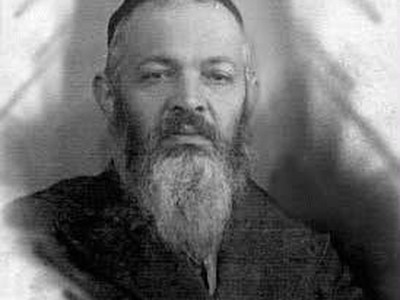
🕯️ To Yortsait (8 hashvana): the great Chassid and Rabbi — Rabbi Avrom Ele Plotkin
Community
“Look at the sweat that was shed for the sake of the commandment… All the rudeness disappeared, and the face of a real person appeared!”Rebbe Rashab from Lubavitches📜Biographical Information👤Name:rabbi Avrom Eliyahu (Avrom Ele) Plotkin.📅Years of life:10 Tishrei 5649 (Yom Kippur, circa 1888) — 8 Hashvanah 5709 (10 November 1948).🎓Spiritual path:one of the outstanding first students of the Lubavitcher yeshiva "Tomhei Tmimim", a profound connoisseur of the Talmud and Hasidism, endowed with phenomenal abilities.🛡️Commitserved as a rabbi and spiritual mentor (mashpia) in several cities of the USSR, faithfully supporting Jewish life during the years of communist persecution.🏫After the war. he led the Tomhei Timimim yeshiva in the displaced persons camp in Pokking (Germany) and was the head of Agudat Hasidei Chabad in the region.📖The first story: how the Rebbe grows a fruit-bearing treeFrom the memoirs of the Sixth Lubavitcher Rebbe Rajac — "Likutey Diburim".When the young Avrom Ele joined the Tomhei Tmimim yeshiva in Lyubavichy, the admissions committee was delighted with his abilities. However, from the confidential report of Rebbe Rashab, it became known that the young man had a rather rude character.TheFifth Lubavitcher Rebbe Rashab said:“Accept him! But pay special attention to his upbringing.”His son, the future Rebbe Rajac, was entrusted with:🔹Strengthen training supervision:strictly monitor how the young man learns.🔹Involve in the work for the sake of the commandment:during the preparation for Passover, all the hard work — sorting out wheat, installing a mill, grinding — was laid on him. For two weeks he had no rest, day or night. At the same time, everything was arranged imperceptibly: among the "tmimim" it was not customary to ask "why".On the night before Passover, he checked the premises of the yeshiva for the presence of hamets until three o'clock in the morning, and at seven in the morning he was preparing a bakery. At five in the evening on the eve of the holiday, when he was extremely exhausted, he was instructed to study an extremely complex Hasidic treatise and come to the exam at seven in the morning!Despite working during the Easter Seder and a sleepless night, at seven in the morning he knew the treatise by heart.✨Amazing resultUpon learning of this, Rebbe Rashab was pleased to say:“With God's help, we planted a fruit-bearing tree!”And after the completion of the Passover, the Rebbe quietly pointed his son at Abroma Elea:“Look at what the sweat that was shed for the sake of the commandment did — it has a completely different face! All rudeness disappeared, and the face of a real person appeared!”🚂The second story: goodbye and tears of holy loveleningrad, after the Simhat Torah holiday, 1927.The Sixth Lubavitcher Rebbe Rajac left the USSR after his arrest. A huge crowd of Hasidim gathered at the station in Leningrad to hold their Teacher.The train was already moving, the Rebbe was sitting in the car. Rav Avrom Ele was late, and the guards categorically refused to let him in. But, gathering all his strength, he literally broke through the encirclement and broke into the car!Seeing him, the Rebbe took a step towards him. In front of the sobbing crowd, they hugged tightly and stood for a long time, shedding tears. This farewell became a symbol of the unbreakable bond between the Hasidim and the Rebbe.🕯️May the merits of Rabbi Avrom Eliyahu Plotkin protect the entire Jewish people!📖 Lubavitcher calendar